
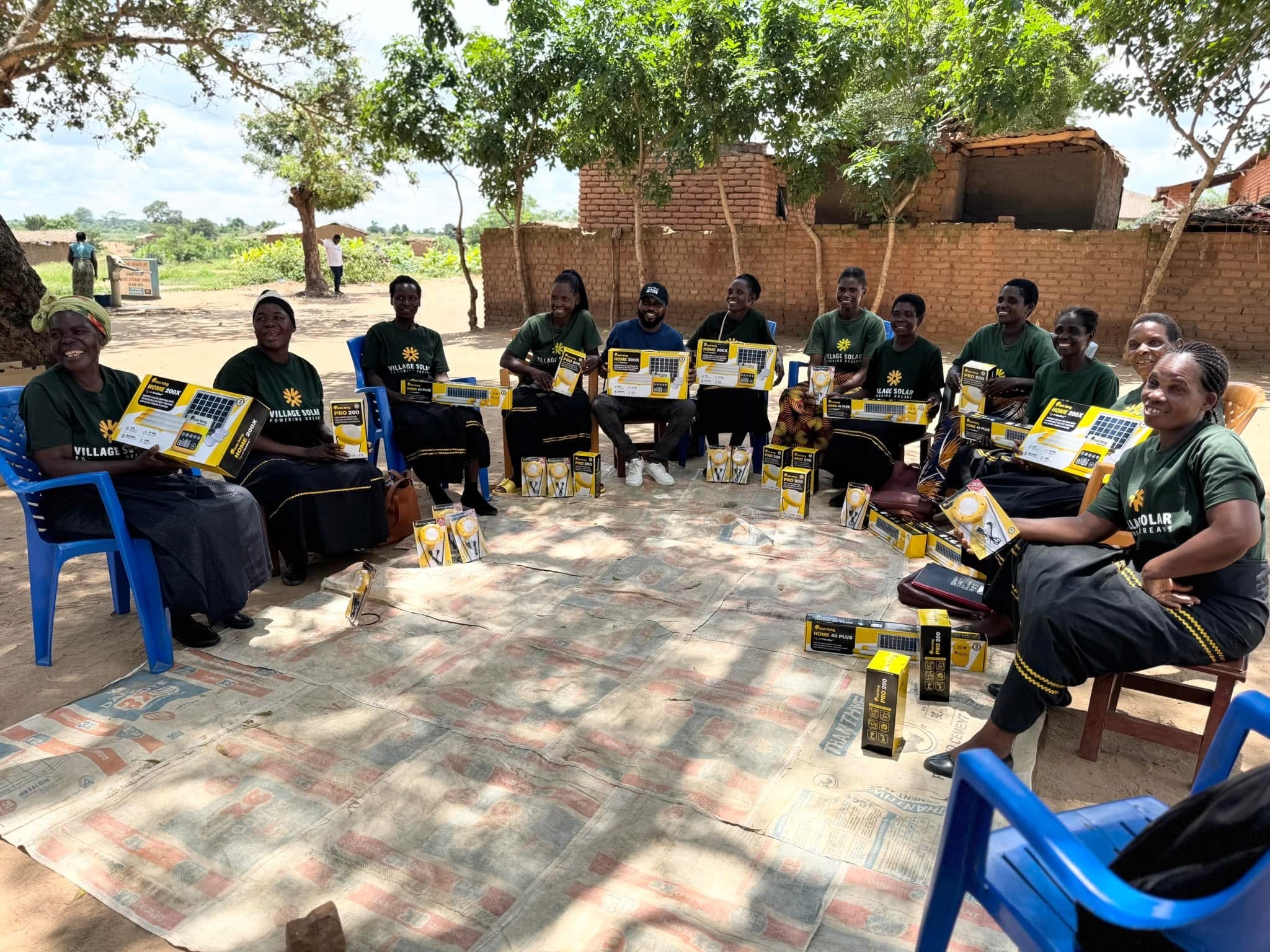
Steve Kubate Salifu in (cap) visited Malawi to provide clean energy solutions to rural areas through the Global Distributors Collective
* I stand to be corrected, but has anyone ever visited an airport that closes after regular working hours?
* I experienced this in Malawi, where nothing was operating outside of business hours
* This situation shows the consequences of ineffective leadership and how it can stagnate a nation
By Duncan Mlanjira
Steve Kubate Salifu, a public relations practioner & marketer for Practical Action, who was in Malawi to provide clean energy solutions to rural areas through the Global Distributors Collective, describes that his trip was an eye-opener in many ways — while lamenting that such a poor country can have its businesses closing at 5pm.

Advertisement
He wrote on his Facebook page that he visited several remote communities in Malawi, where only 15% of the population has access to electricity.
“Traveling across Africa can leave one feeling very frustrated,” he wrote. “It’s difficult to understand how, with all the resources we have, so many people continue to live in poverty.
“International development organisations are doing far more than the government in addressing these issues. I visited nearly 10 hard-to-reach communities where we have deployed clean energy solutions to meet their energy needs.”
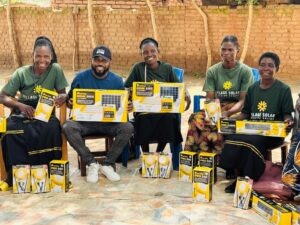
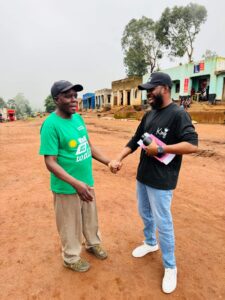
He then goes on to narrate an experience many Malawians seem to ignore or don’t realise it as being odd — businesses closing at 5pm: “I stand to be corrected, but has anyone ever visited an airport that closes after regular working hours?
“I experienced this in Malawi, where nothing was operating outside of business hours. When I returned to the airport a day after my arrival to pick up my delayed luggage, I found that they were closed at around 8pm.
“There were no flights, no activity — everything was eerily quiet, as if someone had locked the doors and taken the key home. There is no serious economic activity happening at the country’s only international airport.
“This situation shows the consequences of ineffective leadership and how it can stagnate a nation. May God help Africa,” he concluded.

Advertisement
In response, Moses S. Konlan said: “Explicit enough to explain the meaning of a 24 hour economy — an economy where key sectors never sleep”, to which Martin Welford Chithambo commented: “Any international airport protocol operates 24hrs, [however] Malawi receives fewer planes than most international airports.”
He described Kubate Salifu’s observation “to say nothing happens for 24hrs in Malawi a daylight lie” and goes on to give an example that the popular drinking place of Bwandilo in Lilongwe — and hospitals — operate 24hrs.
Evans Aziamor-Mensah was also blunt in agreeing with Kubate Salifu, saying it is “quite shocking that a country’s only international airport could close after a day’s activities”.
He also agreed with Kubate Salifu of “heartbreaking stories of many hard-to-reach communities exist” and called for communal action from citizens, government and the developmental agencies.
“Sometimes, I am tempted to believe that if our local communities go the extra mile to demand for proper accountability from duty bearers, things could be better.
“Just imagine, our own Ghana with many resources still struggling to provide access to common water, healthcare and education. It’s sickening and gets me frustrated and demoralised all the time.”

Advertisement
Malawian, Manice Abiti William Dawood, posted a screenshot of Kubate Salifu’s post on her Facebook page and it also attracted some comments, with Henry Ntholowa’s being: “I quote; ‘there is no serious economic activity. The whole country is shut down by 6pm, I always wonder how we are going to progress with this approach.”
He also quoted former President late Hastings Kamuzu Banda, who said in 1975: “No country is poor if the man at the top knows what to do. The country is poor only because the man at the top is poor in brains, he has not got anything there”.
Linda Kuntembwe also agreed with Kubate Salifu, observing that “this country is generally too slow — other countries have cities that don’t sleep”, to which Joseph Earl Charlie, who is in the diaspora, agreed,:saying they work in shifts — there’s no night and day.
“Everybody just go to work and to shop any time they want — that’s 24/7. That’s how these countries develop so much.
“And you find a poor country like Malawi businesses closing at 5pm. We are not serious about anything. We are backwards and to add into that akumatsekanso ndi airport yomwe — airport yakenso yomvetsa chisoni.”
Theresa Malila agreed with Joseph Earl Charlie, saying “living in the diaspora one can have three different jobs” but in Malawi “people watch the clock. Don’t try to do anything before 8am after 4pm.

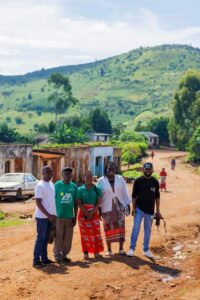
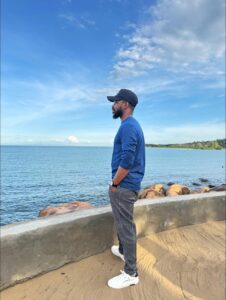
Despite everything, Kubate Salifu narrated some positive experience he had in the provision of clean energy solutions to rural areas through Global Distributors Collective (GDC).
GDC brought together more than 200 last-mile distributors who sell essential energy products, such as solar lights, solar pumps,,solar fridges among others, “to some of the hardest-to-reach and underserved communities around the world”.
“It has been an interesting journey so far speaking with local chiefs, women’s groups, customers and sales agents of GDC members Village Solar and Green Impact Technologies.
“These conversations have helped me gather evidence of the impact that last-mile distributors have made on people’s lives and the need for the work of the GDC.
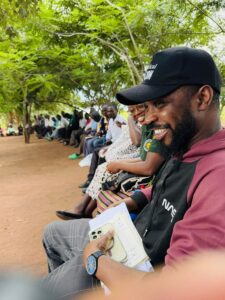
“For many of us, we operate under the mistaken belief that energy resources are accessible to the entire global population. However, my visit to Malawi has shown me that much more needs to be done to ensure that the world’s poorest and hardest-to-reach areas have access to essential energy solutions.
“It is an eye-opening experience to see how simple clean energy solutions, such as solar lamps, solar fridges, and solar water pumps etc, can significantly improve the lives of the people and communities we are working with.”
On his visit to remote communities in the Central Region, where Practical Action is making a significant impact through the GDC, Kubate Salifu reported: “For many of us who have access to energy for personal and productive use, we may not fully understand what it means for people who lack any form of energy resources to meet their needs.
“I’m excited that we are leading the charge globally by working with last-mile distributors to ensure that renewable energy products reach rural communities, providing access to clean energy solutions.
“It is truly inspiring to witness the impact of our work on a global scale. A career in development communications can be both rewarding and fulfilling,” he said.


Advertisement