
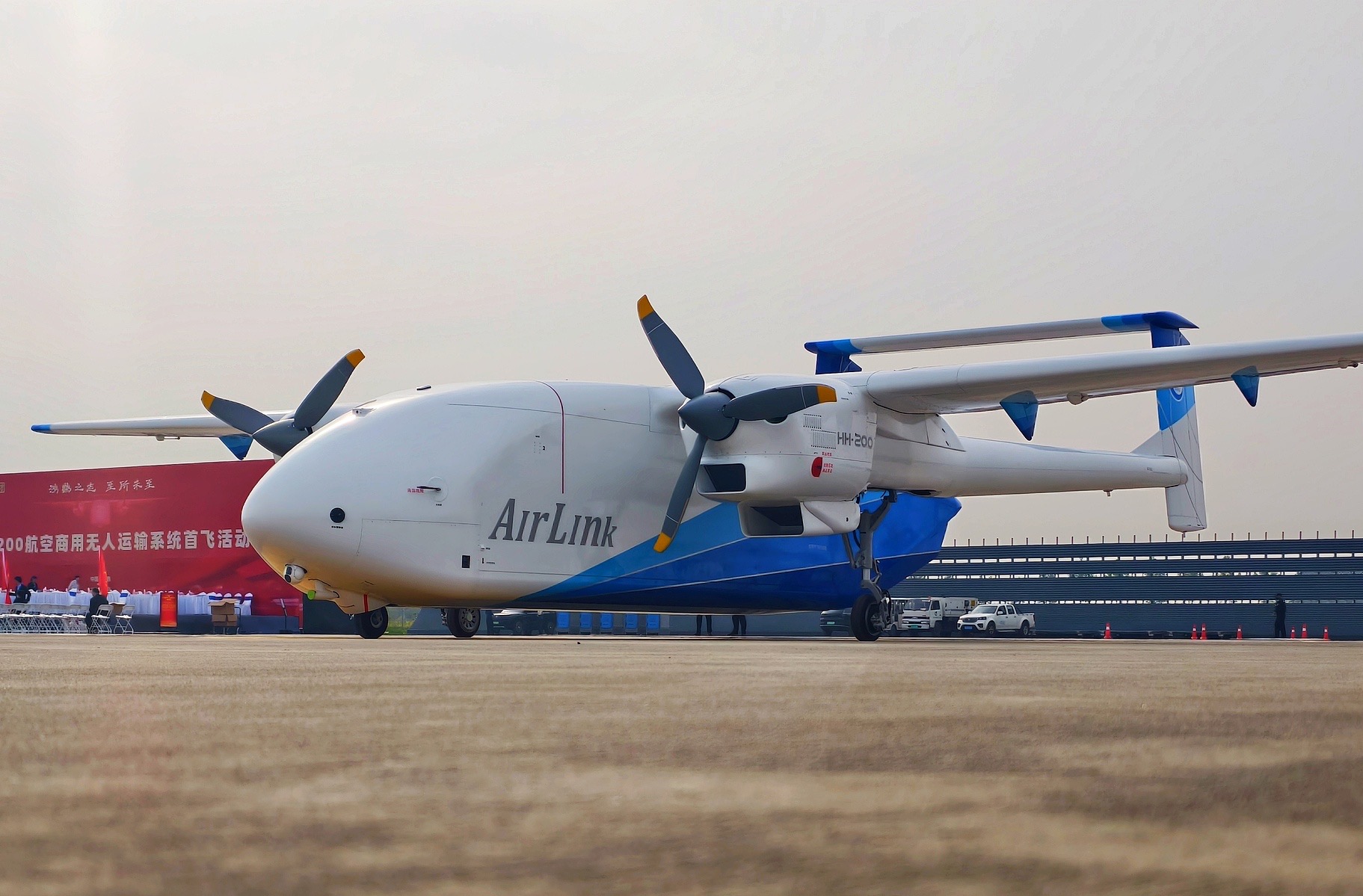
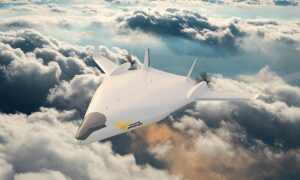
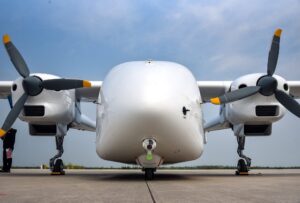
China’s HH-200 (top) and USA’s N3.8T prototype
* The N3.8T blended-wing cargo drone being built by San Diego company has a target payload of 8,500 pounds and a range around 1,035 miles
* China’s HH-200 payload is 3,307 pounds and maximum range is 1,466 miles and top cruise speed of 193 mph
* China has built uncrewed aviation capacity across the civil and commercial stack while US policy attention sits almost entirely on the defense and counter-drone side
Maravi Express
The USA’s comparison point to China’s first commercial unmanned cargo aircraft system, the HH-200 is the Natilus N3.8T blended-wing cargo drone, which is being built by San Diego companyand is still in development stage.

Advertisement
This is reported by Rafael Suárez, a writer, photographer, and commercial drone pilot, who serves as a primary contributor and editor for the publication, DroneXL.
Suárez indicates that, while China’s HH-200 payload is 3,307 pounds and maximum range at 1,466 miles, the American’s N3.8T has a target payload of 8,500 pounds and a range around 1,035 miles.
“Here’s what I find genuinely significant about the HH-200,” writes Suárez. “The American cargo drone conversation has been stuck in the funding-round and wind-tunnel phase for about four years.
“China just moved a 55-foot twin-engine autonomous freighter from press release to first flight, and it did so in the same quarter that Pentagon counter-UAS procurement is burning through budget lines in preparation for the 2026 FIFA World Cup.
“Those two things are not the same problem, but they’re part of the same picture. China is building uncrewed aviation capacity across the civil and commercial stack while US policy attention sits almost entirely on the defense and counter-drone side.
“That gap compounds. Civil cargo drones generate flight hours, maintenance data, manufacturing volume, and pilot-free operational experience that feed directly back into anything those airframes might eventually be asked to do.
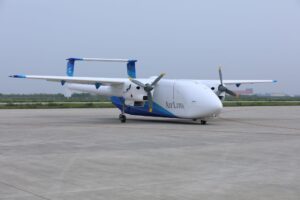
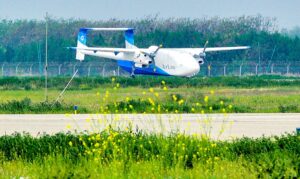
The HH-200 is not a stealth aircraft, not a weapon, and not a mystery — it’s a civil cargo drone that flew on schedule with specs the manufacturer has been publishing for months.
“[China’s leading aircraft manufacturer, Aviation Industry Corp (AVIC)], says it will serve belt and Rroad cargo networks. That’s the part worth paying attention to — the aircraft is the delivery mechanism for a logistics relationship, and the logistics relationship is the strategic asset.”
Suárez hails China putting the piece of the low-altitude cargo strategy in the air, the HH-200 twin-engine unmanned freighter built by AVIC Xi’an Aircraft Industry Group, which completed its maiden flight on April 15 at Pucheng, in Shaanxi Province.
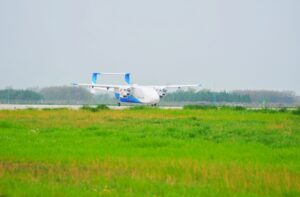
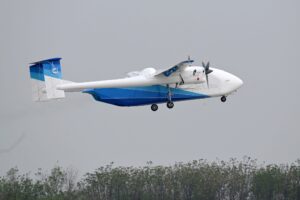
Its programme, as reported by Suárez, China Daily and Xinhua News — quoting the State-owned conglomerate’s press release — targets short-haul freight routes, cross-island logistics in Southeast Asia, and Belt and Road cargo networks.
“The HH-200 is not a small quadcopter with a package strapped to it,” emphasises Suárez. It’s a full-scale twin-engined turboprop freighter with a 55-foot wingspan and a 40-foot fuselage, designed to civil aviation standards and flown without a pilot onboard.
“AVIC says the aircraft uses a square straight-through fuselage, a twin-boom tail, and a high-wing layout that keeps the cargo bay low to the ground so that standard forklifts and pallets can load it directly.
“Top cruise speed is 193 mph; maximum range is 1,466 miles; the cargo bay holds roughly 424 cubic feet in standard configuration and expands to about 636 cubic feet — depending on how operators arrange the interior.
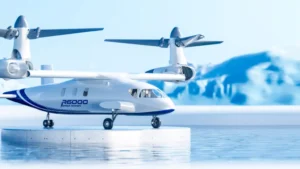
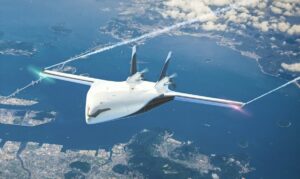
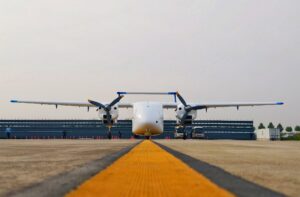
Other designs of the HH-200
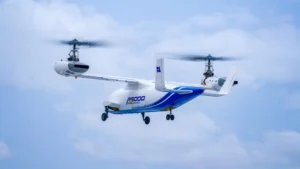
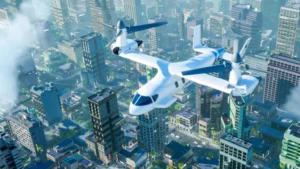
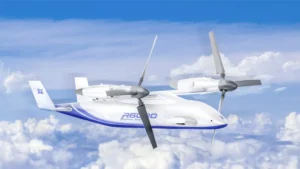
“AVIC credits heavy use of composite materials for a 20% structural weight reduction compared with conventional builds, which is how the aircraft hits that range-payload ratio.”
Suárez further analyses that the HH-200 is designed for fully autonomous flight with AI-based obstacle avoidance, and the ground control segment is part of the system as delivered.
“AVIC lists a service life of 50,000 flight hours or 15,000 takeoff and landing cycles, which is aimed squarely at the civil freight segment rather than a short-duration defense role.
“Runway requirements are the specs worth paying attention to. AVIC says the aircraft can operate from fields as short as 1,640 feet and from high-altitude strips above 13,780 feet. It targets temperature tolerance from minus 40 to 122 degrees Fahrenheit.
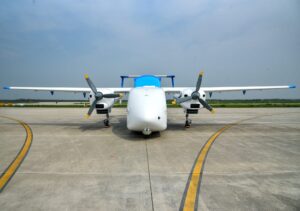
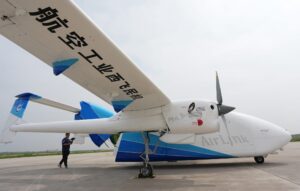
“The published operating cost is roughly 69 cents per metric ton-kilometer, which works out to about US$1.00 per short ton-mile based on direct conversion of the company’s figure. That cost number is a manufacturer claim, not an independently audited figure, and real-world operations tend to drift upward from launch estimates.
“AVIC is clear about where this aircraft is intended to earn its keep. The stated mission set covers border and coastal freight, inland point-to-point cargo in western China, cross-island transport in Southeast Asia, and feeder cargo into Belt and Road partner countries.
“The HH-200 sits in the medium-cargo uncrewed segment and is meant to connect secondary airports and small strips that a regional turboprop can reach but struggles to make profitable with a crewed operation.
“The platform is designed for conversion. AVIC lists emergency rescue, forest firefighting, cloud seeding, aerial remote sensing, and agricultural spraying as future role variants. That multi-role framing matters because it broadens the customer base from pure logistics operators to provincial governments and emergency services.”
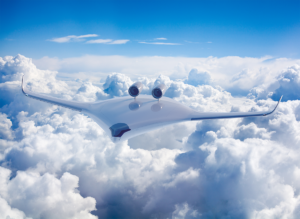
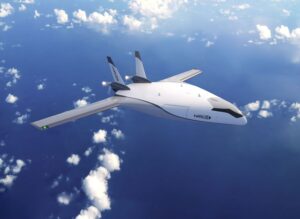
In comparing with the American version, Suárez takes note that the N3.8T blended-wing cargo drone’s robotics system “is taking a different path, retrofitting autonomous flight systems into existing Cessna Caravan airframes for cargo operators”.
“Both are serious programs, but neither has flown a clean-sheet, purpose-built large cargo drone yet — China just did. One honest qualifier: this is a maiden flight, not a production handover.
“The gap between a successful first sortie and sustained commercial operations is where most aircraft programs lose schedule and cost control. Certification to civil aviation standards, cross-border airspace access, and insurance frameworks all still need to catch up.
“But the airplane flew. That’s more than most of the Western competition can say this week.—Reporting by Rafael Suárez, DroneXL; edited by Duncan Mlanjira, Maravi Express

Advertisement