
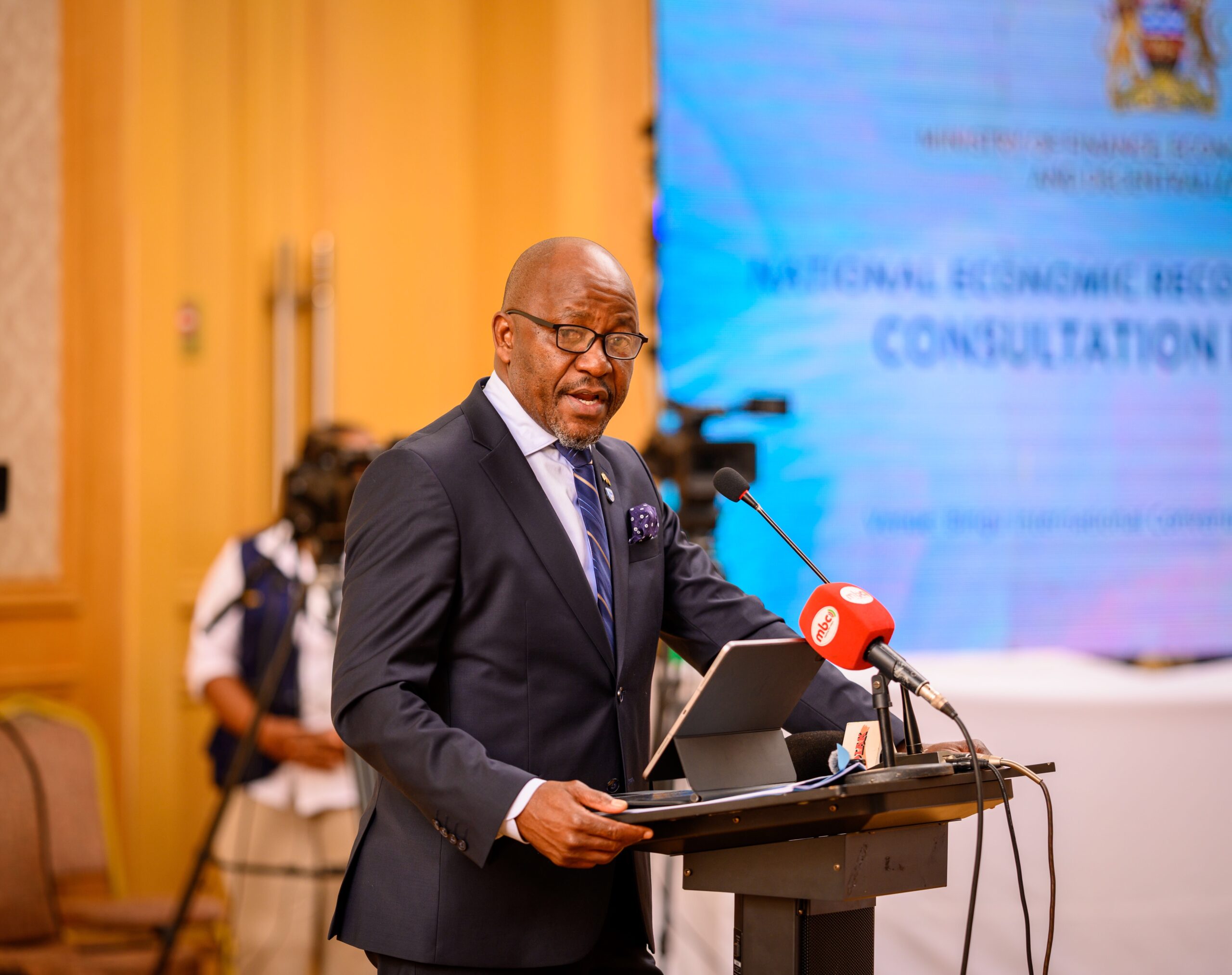
Phillip Madinga, Standard Bank Chief Executive and Bankers Association of Malawi president
* The National Economic Recovery Plan (NERP) workshop moved beyond policy, acknowledging the challenges and committing to decisive recovery
* What emerged clearly is that Malawi does not suffer from a shortage of ideas. Our greatest challenge and opportunity lie in execution
By Phillip Madinga, National Planning Commission Board Commissioner
Malawi stands at an inflection point. At Standard Bank, we believe that growth starts with honest conversations. The choices we make now around policy, reform, and collaboration will determine the pace and sustainability of our recovery.
At Standard Bank, we believe that growth starts with honest conversations, and is what inspires us to promote national dialogue under our Growth-Conversations platform.
That is precisely why the recently concluded National Economic Recovery Plan (NERP) workshop mattered. This engagement moved beyond policy, acknowledging the challenges and committing to decisive recovery.
What emerged clearly is that Malawi does not suffer from a shortage of ideas. Our greatest challenge and opportunity lie in execution.
Through our Growth-Conversations-interactive-platform, we have consistently created space for dialogue around the country’s most pressing economic questions. The NERP workshop brought many of those conversations into one room and moved them closer to action.

A shared understanding of the challenge
The diagnosis presented is both sobering and necessary. In recent years, the economy has come under sustained pressure: rising inflation, widening fiscal deficits, increasing public debt, and persistent foreign exchange shortages have constrained growth and undermined confidence.
These pressures have been driven not only by global shocks such as CoVID-19, climate-related events, and geopolitical disruptions but also by structural and policy challenges at home.
This clarity is important. Sustainable recovery begins with a shared understanding of the problem.

Advertisement
From ambition to execution
The NERP sets out a bold and necessary agenda: restoring macroeconomic stability, achieving fiscal & debt sustainability, strengthening productive sectors, and safeguarding vulnerable populations.
Its targets of reducing inflation to single digits, lowering debt, increasing exports, and returning to sustained growth are ambitious. But ambition alone will not deliver results.
During the workshop, a consistent message emerged: success will depend on prioritisation, policy consistency, and disciplined implementation. Malawi’s challenge is no longer defining what needs to be done, it is ensuring that what is planned is delivered.
The central role of the private sector
A key shift in the NERP is the recognition that economic recovery cannot be driven by government alone. Private sector investment will be central to bridging the financing gap and unlocking growth across agriculture, manufacturing, mining, tourism, and infrastructure.
For this to happen, we must create an environment where businesses can invest with confidence, where access to foreign exchange is predictable, the cost of capital is manageable, and policy frameworks are clear and consistent.
Growth follows confidence, and confidence is built through consistency.

Advertisement
Financing recovery: Role of banks
As financial institutions, we have a critical responsibility to support this journey by mobilising resources, expanding access to credit, and channelling capital into productive sectors.
At Standard Bank, we see three clear priorities, thus;
1. Supporting productive sectors
We continue to channel financing into sectors that drive exports, create employment, and strengthen economic resilience. This includes sustained support for key agricultural value chains, including tobacco as one of the country’s major sources of foreign exchange, complemented by regional financing.
We have also financed local manufacturing capacity, enabling businesses to expand production, reduce import dependence, and strengthen export potential.
The impact goes beyond the financing of the business but also creating jobs for workers from the factory floors to the flea markets.
2. Expanding access to finance
Local corporates, SMEs and family-owned businesses remain the backbone of our economy. Over the past year, we have demonstrated our commitment through sustained lending to businesses of all sizes, alongside initiatives like the Phuka SME Programme, supporting growth through training, market access, and funding opportunities.
3. Enabling innovation and financial inclusion
Digital and inclusive financial services are critical to broadening participation in the economy. Through our digital banking platforms such as Business Online, Enterprise Online and our 247 channels, we are equipping businesses and individuals with tools to operate more effectively.
More recently, the rollout of our Kwacha-Point-Agency-Banking-Service is extending this access even further bringing banking services closer to communities and reducing barriers for underserved and unbanked populations.


This is a critical step in ensuring that growth is inclusive and that more Malawians can actively participate in the formal economy.
Partnerships that deliver impact
Public–private partnerships will be central to translating the NERP into tangible outcomes.
We have seen first-hand how effective these models can be. Our role as lead arranger in mobilising funding for the Dr Saulos Klaus Chilima Highway demonstrates how innovative financing can unlock large-scale infrastructure development.
Similarly, our support for fuel imports has helped maintain energy supply and economic stability during periods of pressure. These are practical examples of how collaboration between the public and private sectors can move from concept to impact.
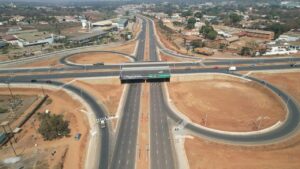
Saulos Klaus Chilima Highway
The discipline of implementation
If there is one lesson from the workshop, it is this: implementation is everything. This requires:
* Clear prioritisation of high-impact interventions;
* Strong coordination across institutions;
* Accountability and performance management;
* Transparency in public financial management; and
* Rigorous monitoring and course correction.
In simple terms, execution must become the strategy.
Restoring confidence
Malawi’s economic recovery hinges on confidence: confidence in it’s fiscal discipline, faith in a stable foreign exchange market, assurance in governance systems and in the commitments made by institutions. This is where leadership across both the public and private sectors will be tested.

A collective responsibility
The NERP provides a credible foundation. But its success will depend on what happens next. As the private sector, we stand ready to partner with government, development partners, and civil society to translate this plan into tangible outcomes, jobs created, businesses grown, exports increased, and livelihoods improved.
At Standard Bank, we are committed to playing our part deploying capital, supporting enterprise, and enabling inclusive growth.
The path to recovery will not be easy. But with discipline, partnership, and a relentless focus on execution, it is within reach. As a purpose-driven organisation, we remain clear in our role: Malawi is our home, and we are committed to driving her growth.
* Editor’s Note
Phillip Madinga is the Chief Executive of Standard Bank Plc, listed on the Malawi Stock Exchange (MSE), and also president of Bankers Association of Malawi (BAM) as well as a serving Commissioner on the board of National Planning Commission (NPC).
Madinga was the moderator of the recently held National Economic Recovery Plan (NERP) Workshop organised by the Malawi Government through the Ministry of Finance, Economic Planning & Decentralisation.
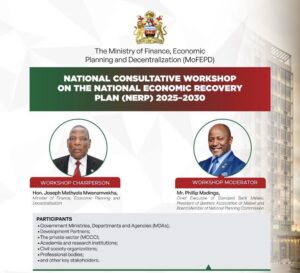
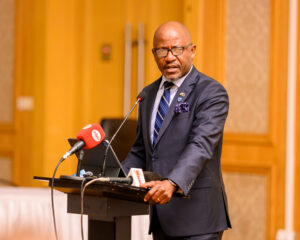
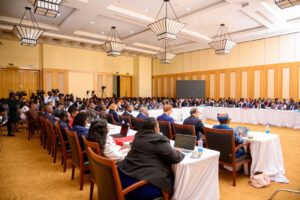
The NERP has been developed as a strategic framework aimed at restoring macroeconomic stability, accelerating economic growth, and addressing fiscal and debt challenges among others.
Chaired by Minister of Finance, Economic Planning & Decentralisation, Joseph Mwanamvekha, participants included Minister of Information & Communications Technology, Shadric Namalomba, Chief Secretary to the Government, Justin Saidi, representatives from government ministries, development partners, the private sector, and civil society organisations.
The Finance Minister unveiled that the government has rolled out tough fiscal reforms to rebuild confidence in the economy and confront reality rather than postpone problems — which include serious fiscal consolidation, revision of tax policies, VAT rate adjustments, increases in selected fees and levies, and reforms to boost domestic revenue.
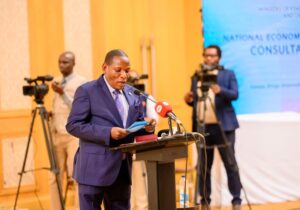
He added that difficult decisions have also been made in the energy and fuel sector, including fuel price adjustments, to ease fiscal and external sector pressures, saying: “Government fully recognises the impact that these measures are having on households, businesses, transport operators, farmers, and the construction sector. We understand the pressure that rising costs are placing on ordinary Malawians.
He argued that taking the difficult decisions shows seriousness and commitment, stressing that the nation must choose between temporary discomfort from reforms and permanent economic decline caused by inaction.
Mwanamvekha emphasised that the National Economic Recovery Plan is built on realism, discipline, sacrifice, and implementation not promises of easy solutions.—Additional reporting by Malawi News Agency (MANA)