
* Stressing that attendance in plenary and committee siting is a fundamental duty that upholds the credibility of Parliament
* He, however, commended committees for their diligence, singling out the Public Accounts Committee and the ad hoc Committee on the Chikangawa plane crash for ongoing inquiries
Malawi News Agency (MANA)
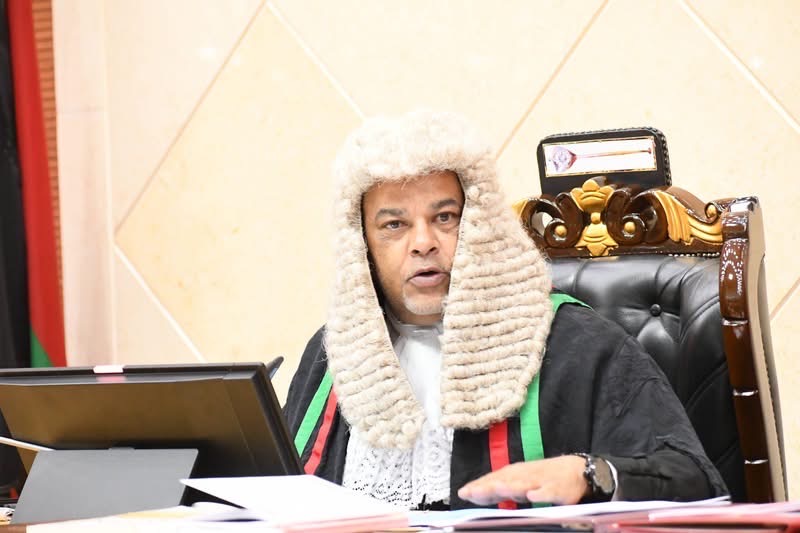
As the 3rd meeting of the 52nd session of the National Assembly rose sine die on Friday, Speaker Sameer Suleman — while commending Members of Parliament for their commitment during the sitting — flagged absenteeism as a serious concern.
He stressed that attendance in plenary and committee sitting is a fundamental duty that upholds the credibility of Parliament.
He commended committees for their diligence, singling out the Public Accounts Committee and the ad hoc Committee on the Chikangawa plane crash for ongoing inquiries.
“I urge Cabinet Ministers to respond to adopted committee reports within 14 days as required by Standing Order 186 and I call upon Members of Parliament to focus on urgent issues affecting Malawians.
He also applauded improved ministerial attendance, with special recognition to the Minister of Health for answering the most questions during the meeting.
The Speaker further thanked President Arthur Peter Mutharika for his support to the august House, including approving a one-week extension that allowed deliberations to pass 12 Bills and for approving Malawi to host the 55th Conference of the Commonwealth Parliamentary Association which commence from August 9-16, 2026.
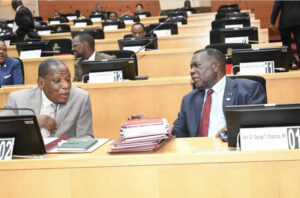
During the sitting, the Parliamentary Committee on Natural Resources, Energy & Climate Change presented its report on suspected irregularities at Kangankude Rare Earths Mine in Balaka and on Wednesday, Minister of Mining Thoko Tembo reported back to the House.
He assured Malawians that the Government will ensure the Kangankunde rare earths project is developed transparently, legally and in a manner that protects national interests.
According to the Minister, government inspections had found no evidence of unauthorised commercial mining or illegal exportation of rare earth minerals, explaining that exported materials were approved for metallurgical testing and laboratory analysis.
Tembo Government is strengthening environmental compliance and mineral governance through collaboration with the Malawi Environmental Protection Authority, while prioritising modern geological laboratories and mobilising resources for improved mineral analysis and valuation.
Tembo also emphasised that Government is enforcing the Mines and Minerals Act, 2023, against Rift Valley Resource Developments Limited over compliance issues, warning that investors violating the law could face suspension or revocation of mineral rights.
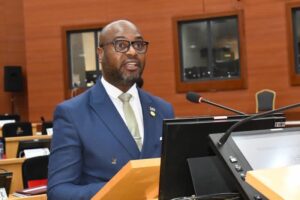
Mining Minister Thoko Tembo
On his part, Minister of Justice & Constitutional Affairs, Charles Mhango said the government will address challenges in the mining sector by following Malawi’s laws while protecting national interests and legitimate investments.
Mhango said this on Friday in an interview with MANA after the deliberations, saying the government could not arbitrarily suspend activities at the Kangankunde because such action could violate the Constitution and expose Malawi to legal claims.
Mhango quoted Section 12(1) of the Constitution that states that all legal and political authority of the state derives from Malawians and must be exercised according to the Constitution to protect their interests.
Mhango said Section 8 of the Constitution requires Parliament to ensure its decisions reflect national interests and constitutional values, warning that unlawful suspension of investments could force investors to seek compensation through courts.
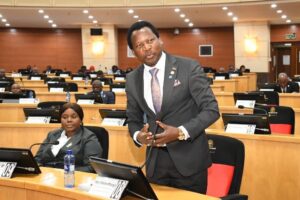
Charles Mhango
Meanwhile, Parliament has passed the Economics Society of Malawi (ESOMA) Bill alongside several other bills aimed at updating financial laws and introducing regulations for the economics profession.
The ESOMA Bill creates a statutory body to govern economists in the country, moving the profession from a voluntary trust under the Economics Association of Malawi (ECAMA) to a legally recognised regulatory authority.
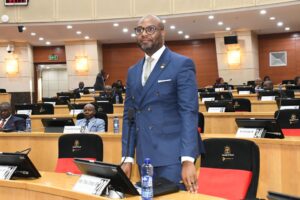
Minister of Finance, Economic Planning & Decentralisation, Joseph Mwanamvekha welcomed the support from the House, saying the new laws address long-standing gaps in financial regulation and digital payments.
He explained that four bills were passed in a single sitting, three of which amend old financial laws to align with the Bills of Exchange Act, phasing out paper cheques in favour of digital payment systems.
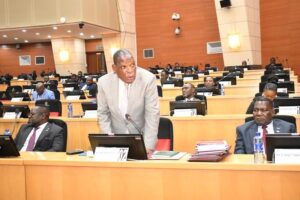
Mwanamveka
Mwanamvekha noted that regulating economists brings the field in line with other professions in Malawi: “This is a Bill that is meant to regulate and govern economists in Malawi.
“Unlike the Law Society of Malawi, unlike the auditors or the accountants, I think we were not governed by any piece of legislation.
“So, I feel that it’s very important that we should have this piece of legislation so that when we know that we have an economist, and when somebody is speaking as an economist, he’ll be speaking on the basis of authority.”
Mwanamveka added that unregulated economic commentary on social media has often made it difficult for government officials to engage in informed policy debates.

Advertisement
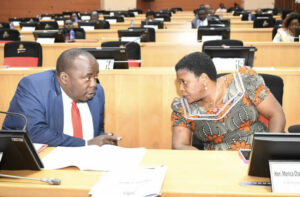
Commenting on the Bill, co-chairperson of the joint Committee on Legal Affairs & Budget, Sosten Gwengwe, said the law will protect the public and businesses from unqualified individuals.
“Basically, we would want to guide the economy, so to speak, so that once they want to get services of somebody billed as an economist, they should be assured that that person is a member of a body that has got its own code of conduct and ethics.
“Because as we speak right now, people are just coming up with a bill that ‘I’m an economist,’ maybe getting jobs in disguise and the population and the business is vulnerable to such kind of imposters.”
Gwengwe added that the committee ensured the licensing rules will not create unfair barriers for new graduates: “Our universities are releasing quite a lot of graduates in both economics and applied economics.
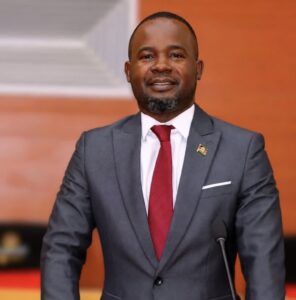
Sosten Gwengwe
“Some of them, the only way to be employed, is by having a job in a company or in government, and it ends there. We wanted to differentiate the licensing regime so that it should not be mandatory, but it should be optional to them.”
He also assured the public that ESOMA will fund its own operations through membership fees rather than relying on public funds.
“ESOMA will be a self-governing institution, and they will be running their affairs mostly from the subscriptions from their members.
“It shouldn’t really be an institution that drains government resources,” he concluded.—Reporting for MANA by Patience Longwe, Innocent Manda & Chisomo Kayla Mbalame; editing by Duncan Mlanjira, Maravi Express

Advertisement