
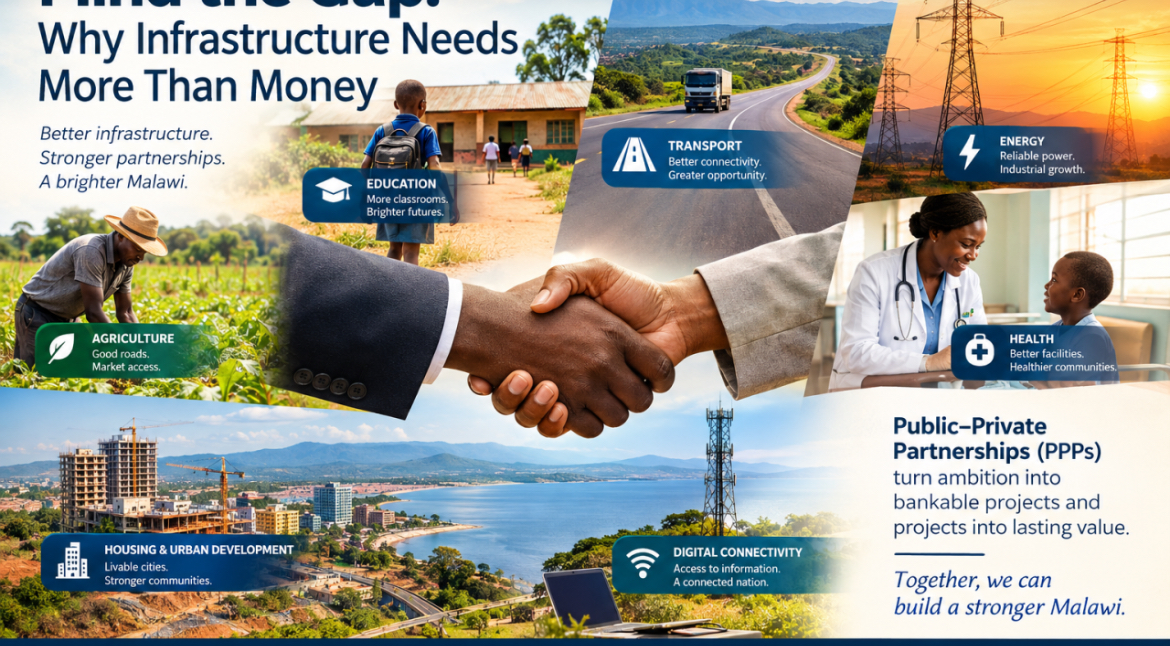

* It includes energy, railways, airports, water & sanitation, hospitals, universities, housing, tourism facilities, logistics hubs and digital connectivity, to mention a few
Analysis by Washington Chimuzu
Across Malawi and most of Africa, many children walk several kilometres to school because the nearest classroom is overcrowded or non-existent.

Advertisement
Many farmers watch hopelessly as their produce spoils because roads become impassable after heavy rains. The few existing manufacturers spend more on electricity interruptions than on innovation.
Patients wait months for specialist treatment because critical medical facilities and skilled personnel are in acute supply.
These are neither isolated nor fictitious stories — rather, they are the most realistic ways to describe the infrastructure gap in Malawi and most of Africa.
Infrastructure is often imagined as roads and bridges, but project managers know it is much broader.
It includes energy, railways, airports, water and sanitation, hospitals, universities, housing, tourism facilities, logistics hubs and digital connectivity, to mention a few.
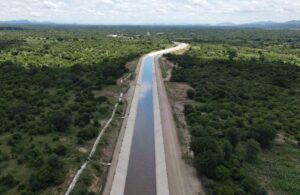
Agriculture irrigation infrastructure through the Shire Valley Transformation Programme
Every sector depends on infrastructure, and every delay carries both an economic and social cost.
The Public Private Partnership Commission (PPPC) recently unveiled an ambitious portfolio of projects spanning transport, energy, tourism, education, mining, industrialisation and health.
Collectively, they represent billions of dollars in potential investment and a powerful vision for national development.
Yet ambitious project lists alone do not build economies. Successful projects require something even more important: investment readiness.
That message was reinforced during the Infrastructure Financing Forum by Standard Bank Chief Executive Phillip Madinga, who challenged stakeholders to stop asking only, “Who will fund this project?” and instead ask, “Would I invest my own money in it?”
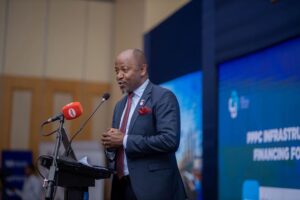
Madinga making his presentation
It is a remarkably simple question that captures one of project management’s most important principles — value must be demonstrated before capital is committed.
This is where Public Private Partnerships (PPPs) become more than financing arrangements. A PPP is fundamentally a collaboration in which the public sector and private investors combine resources, expertise and risk-sharing to deliver infrastructure that creates public value.
The objective is not to privatise development but rather to accelerate it through well-structured partnerships.
The Project Management Institute’s Project Management Body of Knowledge (PMBOK) Guide reminds us that projects succeed by delivering value to stakeholders rather than merely completing a checklist of scope, schedule and budget targets.

In infrastructure, value means reliable services, economic productivity, environmental stewardship and sustainable communities.
A new road that cannot be maintained or a mega farm without a viable operating model is not a successful project, regardless of whether it was completed on time.
Suffice it to say, these gaps represent an opportunity for reflection and, at this rate, a much-needed shift and greater sense of urgency.
Before serious investors examine drawings and concepts, they examine governance. Before banks approve loans, they examine risks.
Before construction begins, successful projects spend considerable time developing credible feasibility studies, predictable revenue models and transparent institutional arrangements.
The future of Malawi’s infrastructure will, therefore, depend less on how many projects appear in a national compendium and more on how many become genuinely investable and, most importantly, executable.
The conversation about PPPs is not new, nor is it confined to Malawi. Since the establishment of the PPPC in 1996, a number of projects have been undertaken, including student accommodation at the Kamuzu University of Health Sciences (KUHES).
Further afield, the 27.1-kilometre Nairobi Expressway, delivered through a Public Private Partnership at a cost of approximately US$600 million, serves as a reminder of the transformative potential of well-structured PPPs.
The infrastructure gap remains, and events such as the Infrastructure Financing Forum are key to aligning, and hopefully expediting, the efforts of the public and private sectors in delivering projects that create lasting value for many.

Washington Chimuzu
* Editor’s Note:
Washington Chimuzu is a prominent Malawian corporate executive who currently serves as the Chief Executive Officer (CEO) of Eris Properties Malawi and ICON Properties Plc, both of which are prominent real estate subsidiaries of the Malawi Stock Exchange-listed NICO Holdings Plc.
Appointed to the executive leadership role in May 2025, Chimuzu is a certified Project Management Professional (PMP) and a registered civil engineer with extensive expertise in property development, infrastructure, and corporate strategy.

Advertisement