

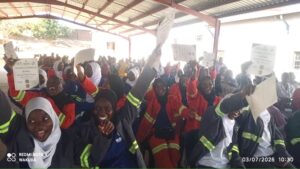
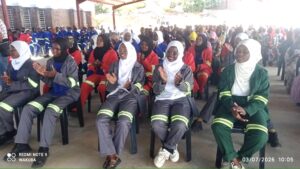
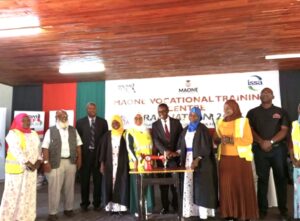
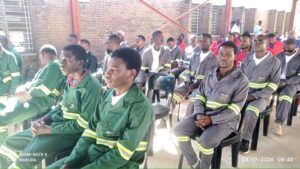
* At the graduation of 79 students highly trained in various artisan skills at Maone Technical College in Chiradzulu with sponsorship from Malawi Relief Fund (MRF)-UK and Issa Foundation
* Artificial intelligence (AI) can design a building, but it cannot lay bricks, install plumbing systems, construct roofs or produce quality carpentry with the precision, judgement and craftsmanship of a skilled artisan
* Technology will continue to evolve, but there will always be a need for people with practical skills who can build, repair, create and innovate
By Duncan Mlanjira
As Malawi pursues the aspirations of MW2063 national vision, skilled artisans will play an increasingly important role in the nation’s economic development.

This was amplified by Malawi Relief Fund (MRF)-UK Chief Executive Officer Muhammad Mangera when he — alongside MRF-UK Trustees led by Muhammad Valli, presided over the graduation of 79 students in various artisanal skills attained at Maone Technical College in Chiradzulu — with sponsorship from MRF-UK and Issa Foundation.
Mangera highlighted the growing value of technical skills, saying: “There is an important lesson the world is beginning to recognise. For many years, success was often measured only by obtaining a university degree — today, that perception is changing.
“Recent surveys in the United Kingdom have found that around one-third of university graduates say they wish they had pursued vocational or technical education instead.

Advertisement
“Employers increasingly value practical skills alongside academic qualifications because skilled artisans are essential to every growing economy.
“At a time when artificial intelligence (AI) is transforming many industries and replacing certain routine office-based jobs, practical technical skills remain highly valuable.
“Artificial intelligence can design a building, but it cannot lay bricks, install plumbing systems, construct roofs or produce quality carpentry with the precision, judgement and craftsmanship of a skilled artisan.
“Technology will continue to evolve, but there will always be a need for people with practical skills who can build, repair, create and innovate,” he said.

Trustee Valli
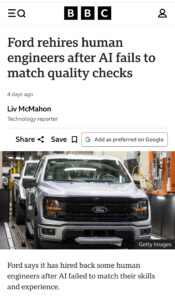
Just this week, international media reported that US car manufacturer, Ford, hired back some human engineers after AI failed to match their skills and experience after it tried to reap the benefits of the tech, which developers claim can cut costs and boost productivity.
The US carmaker adopted it across some parts of its operations including for quality checks — but the firm decided to rehire more than 300 veteran quality inspectors in recent years to make up for the pitfalls of automated systems — reported the BBC News some four days ago.
“Artificial intelligence is a fantastic tool, but it’s only as good as the information you use to train it,” Charles Poon, vice-president of vehicle hardware engineering, is quoted as saying.
“Over prior years, we didn’t pay as much attention as we should have to the experience of our most knowledgeable engineers that have been with us through many product cycles,” he further said.
MRF-UK and Issa Foundation thus attest to that the contribution of artisans to Malawi’s economy cannot be overemphasised in pursuit of achieving the aspirations of MW2063, saying:
“Every classroom, health centre, house, market, bridge and business premises depends on the skills of bricklayers, carpenters, plumbers and electricians.
“Without artisans, infrastructure development cannot take place. Without infrastructure, economic growth slows. Beyond construction, skilled artisans create employment — not only for themselves but for others.
“Many of today’s small workshops and construction businesses become tomorrow’s employers. They purchase local materials, pay taxes, train apprentices and keep money circulating within local communities.
“When we invest in vocational education, we are not simply training individuals — we are investing in productivity, reducing unemployment, supporting entrepreneurship and building a stronger, more self-reliant Malawi.
“This is why programmes such as the one we celebrate today are not an expense — they are an investment in our country’s future,” the Trustee impressed on the graduates.
In recent years, MRF-UK-and-Issa-Foundation, partnered to train underprivileged community members in various skills — extending it even to Chiradzulu-women-who-graduated-in-tailoring-and-design-training.
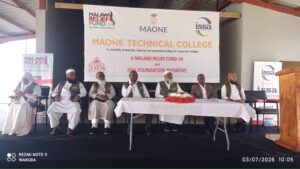

The two charities also partners with TEVETA-which-applauded-the-two-organisations-in-2024–for-empowering-informal-business-sector-through-vocational-training, which are complemented with donations of starter pack toolkits.
The investment of toolkits along with the certificates of successful completion was also extended for the Class of 2026, and on his part Trustee Valli described the occasion as “a celebration of lives transformed, dreams realised, and futures made possible”.
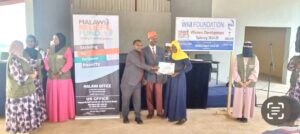
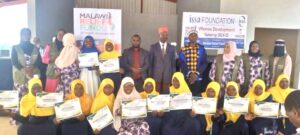
He further impressed on the graduates that they stand as qualified artisans, ready to make a meaningful contribution to their families, the communities and the nation at large.
“Today, we celebrate not only your academic achievement but also the return on that investment. We have seen young people grow in confidence, discipline, competence and character. We are proud of each and every one of you.
“At MRF UK and Issa Foundation, we believe that every young person deserves an opportunity to succeed regardless of their background. That belief is the foundation of our investment in this programme.”
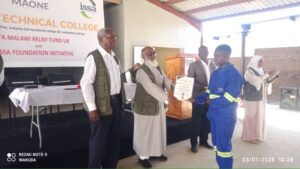
He highlighted that the starter toolkits they have been given should help them to begin their journey into employment or self-employment — adding that their greatest asset is not the tools they carry home.
“It is the knowledge, work ethic, resilience and integrity you have developed over the past three years. Those qualities will open more doors than any certificate ever can.”
He also encouraged them that the skills they possess “are needed today, and they will continue to be needed for generations to come — thus use them with excellence, honesty and innovation”.
“Continue learning, embrace new technologies — including artificial intelligence where it can improve your work — and never stop striving to become better professionals.
“The future belongs not only to those who work hard, but to those who combine practical skills with creativity, technology and entrepreneurship.
“You should, therefore, never underestimate the value of the skills you have acquired. They are not second to any profession — they are essential to the future of every nation.”
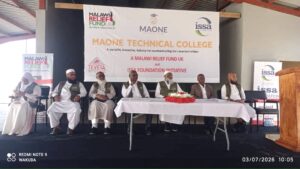

In his concluding remarks, Mangera advised the graduates that for Maone Technical College to be recognised in the economic system as an institution of excellence, they should exhibit its Values of ‘respect’, ‘trust’, ‘compassion’ and ‘excellence’ — so the business industry should seek Maone graduates.
“Work with honesty and integrity. Let your reputation be built on quality workmanship, reliability and professionalism. In every project you undertake, strive for excellence because your work reflects your character.
“Remember that your success is not yours alone. It carries with it a responsibility to uplift others. As your businesses grow and your experience increases, train apprentices, mentor young people, share your knowledge, and give back to the community.
“In doing so, you will multiply the impact of the opportunity you have received today. Go out and build more than structures. Build businesses. Build employment. Build communities. Build Malawi.”
While applauding Maone management for their dedication, professionalism and commitment, that “have shaped young people into capable and confident graduates and workers with good character and professionalism”, Mangera also profoundly thanked Issa Foundation and all at MRF for investing in Maone.
“Our beloved Prophet Muhammad — Peace and Blessings be upon him — teaches us that whoever does not thank people has not thanked Allah.
“I know that all of us agree that there is a lot to be thankful for the 3 years we have had at Maone. All of you have a duty to express your gratitude in the way know best for the investment, support, education, personal and professional development you have received from donors.
“Donors who are thousands of miles away and have no connection to Malawi, but only one objective — to transform your lives, to give you the opportunity you deserve and to improve your life chances.”

Advertisement