
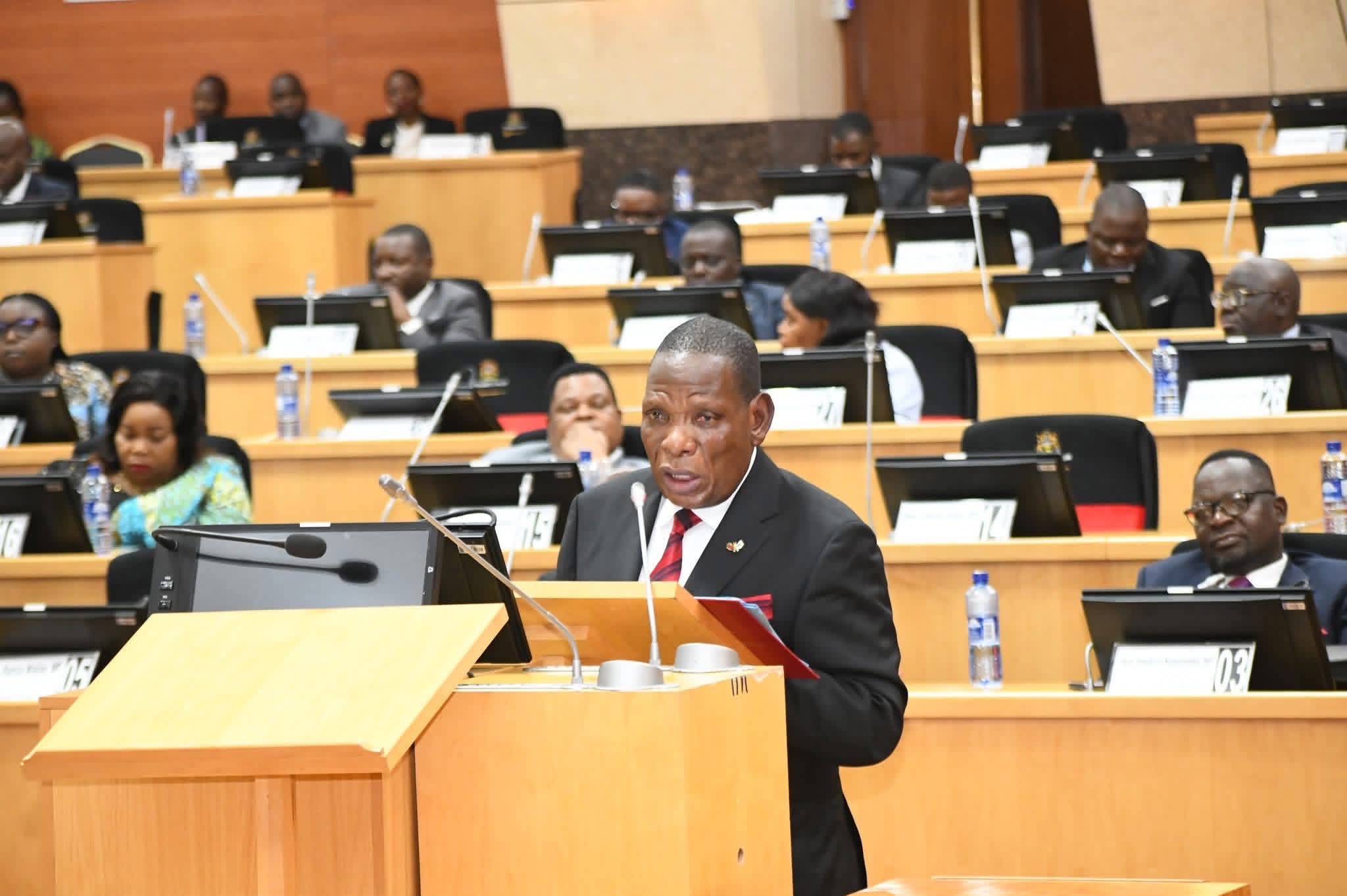
Minister of Finance, Economic Planning & Decentralisation presenting the Mid-Year Budget review yesterday
* Malawi faces significant fiscal pressures, but the Mid-Year Budget review demonstrates a new level of transparency and practical adjustment
* If the government sustains revenue reforms, strengthens expenditure controls, and improves project execution, it can gradually stabilise the economy and rebuild fiscal space
* The road ahead requires discipline, coordination, and a commitment to structural reform—DCG Chief Economist Chifipa Mhango
By Duncan Mlanjira
The 2025/26 Mid-Year Budget review, which Minister of Finance, Economic Planning & Decentralisation, Joseph Mwanamvekha presented in Parliament yesterday “provides a transparent snapshot of the fiscal strain Malawi continues to face, much of which reflects the legacy of structural weaknesses and fiscal mismanagement under the previous 2020-25 MCP administration”.

Advertisement
“Key indicators reveal a series of persistent fiscal challenges that the current administration has inherited,” observes economic analyst, Chifipa Mhango, who is Chief Economist and Director of Economic Research & Strategy for South Africa’s Don Consultancy Group (DCG).
“Domestic revenue underperformed by 3.8% at mid-year, with collections reaching K2.057 trillion against a target of K2.139 trillion. Tax revenue alone missed the mark by K91.6 billion, underscoring long-standing weaknesses in revenue mobilisation.
“Grant inflows also fell sharply, declining by 43% and resulting in a K245.9 billion shortfall. This was driven by project implementation delays and persistent foreign exchange constraints, conditions that have historically undermined development partner confidence.”
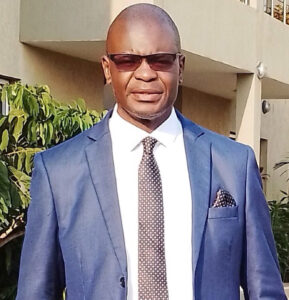
Chifipa Mhango
On the expenditure side, Mhango observes that “pressures continue to mount as id-year spending reached K4.420 trillion, exceeding projections by K175.7 billion, or 4.1%”.
“These overruns were primarily driven by recurrent obligations that were not sustainably managed in previous years, including wage pressures, rising interest payments, and election-related costs.
“Domestic interest payments alone overshot their target by 6.4%, reaching K974.8 billion. This highlights the heavy reliance on domestic borrowing that has accumulated over time and now poses a significant fiscal risk — as a result, the fiscal deficit has widened substantially to K2.037 trillion at mid-year, 32.8% above projections.
This reflects deep expenditure rigidities and years of structural imbalances that continue to constrain fiscal flexibility,” says the DCG Chief Economist.

Reserve Bank of Malawi
He further takes note that “the data clearly indicates that Malawi’s fiscal pressures have been accumulating over several years with persistent revenue underperformance, rising domestic borrowing, and expanding recurrent expenditure, reflecting long-term mismanagement and weak fiscal discipline”.
“The current government has inherited a structurally weak fiscal position requiring decisive reforms,” emphasises the Chief Economist and goes further to highlight some commendable corrective steps that have been undertaken by President Arthur Peter Mutharika’s administration — while also cautioning about critical risks that must be managed to stabilise Malawi’s fiscal outlook.
Transparent reporting and fiscal honesty
Despite the challenging fiscal baseline, Mhango acknowledged notable improvements and transparency measures introduced in the budget review and applauds the government for its transparent reporting and fiscal honesty.
He commended Minister Mwanamveka for presenting “the most detailed and candid mid-year budget breakdown in recent years” adding: “Fiscal transparency is the first step toward rebuilding credibility. The openness shown in this budget review is commendable and signals renewed commitment to accountability.”
Mwanamveka given a standing ovation after his presentation
He takes note that:
* On revenue improvements expected in the second half, the Government has revised domestic revenue upwards to K4.478 trillion, supported by enhanced tax administration, improved compliance, and stronger monitoring mechanisms.
* On renewed support for social services, the review reflects a strong emphasis on social protection and welfare, including the introduction of free primary and secondary education, increased allocations to pensions and gratuities to clear outstanding arrears, and a significant boost to FISP, now covering 1.1 million beneficiaries.
* On strong prioritisation of critical sectors, development expenditure remains substantial at K1.926 trillion, despite reduced foreign inflows — demonstrating government’s commitment to priority sectors such as infrastructure, agriculture, and social services.
* On management of outstanding obligations, the budget review recognises major expenditure rigidities, especially pensions, wages, and debt, and outlines steps toward rationalising these obligations through improved disclosures and forward adjustments.

While praising the positive steps, Mhango emphasises that Malawi’s macro-fiscal environment remains fragile, with several key risks requiring urgent policy action.
* The fiscal deficit is projected to widen to K3.128 trillion (11.9% of GDP), the highest level in years — posing risks to fiscal sustainability.
* Net domestic borrowing reached K1.955 trillion by mid-year, exerting upward pressure on interest rates and worsening private-sector credit access.
* Foreign-financed development projects underperformed by K235.4 billion, reflecting persistent foreign exchange shortages that hinder import-dependent project execution.
* Multiple expenditure lines recorded significant overruns — compensation employees: +18.3%; public debt interest: +6.9%; goods and services: +6.9%; social benefits: +9.9%; and domestic development: +42.3%. These structural rigidities threaten fiscal consolidation efforts.
* With grants down by 43%, the financing gap has widened further, placing additional pressure on domestic resources and borrowing.

Advertisement
In light of the fiscal pressures highlighted in the Mid-Year Budget review and the downside risks to budget implementation, the DCG Chief Economist makes some recommends on priority policy actions necessary to stabilise the fiscal environment and restore investor confidence.
1. Strengthen domestic resource mobilisation
Emphasis is on the need to broaden and modernise Malawi’s revenue systems, stating that improved mobilisation is essential for reducing reliance on borrowing.
Key measures include:
* Expanding the tax base by targeting high-informal sectors;
* Accelerating the rollout of digital tax administration systems to minimize leakages; and
* Reviewing low-yield taxes and eliminating distortive exemptions that undermine revenue performance
2. Contain the wage bill
Mhango notes that the wage bill continues to absorb a disproportionate share of recurrent expenditure and must be managed more efficiently, with recommends to:
* Implementing medium-term hiring controls as announced;
* Prioritising essential recruitment (teachers, health workers, security) with monitored implementation; and
* Reforming and consolidating allowances to reduce duplication and inefficiencies.

Advertisement
3. Rationalise expenditures
He stressed the importance of curbing non-priority spending to create fiscal space for development and social programmes — suggested interventions include:
* Conducting comprehensive expenditure reviews for subvented organisations — ie state-owned enterprises (SOEs);
* Accelerating procurement reforms to eliminate inflated contract pricing and improve value for money.
4. Improve project execution
Foreign-financed projects continue to underperform due to operational and forex constraints, the DCG recommends:
* Prioritising foreign exchange allocation for critical development projects;
* Strengthening project management capacity to enhance timely and effective implementation; and
* Fast-tracking disbursement discussions with development partners to unlock delayed financing
5. Manage domestic borrowing prudently
With domestic borrowing pressures rising, Mhango emphasised the need for a more sustainable debt strategy:
* Gradually lengthening the maturity profile of domestic debt to reduce rollover risks;
* Increasing issuance of medium- and long-term bonds to support market stability; and
* Strengthening cash-flow forecasting to minimise short-term borrowing spikes and interest costs.

Mhango believes that the Government “can, thereafter, cushion ordinary Malawians from the impact of value added tax (VAT) increases through targeted measures such as maintaining exemptions on essential goods, providing direct cash transfers to vulnerable households, offering temporary subsidies on staple foods and utilities, and ensuring competitive markets to prevent excessive price hikes”.
“Complemented by clear public communication and support for local producers, these steps can protect low- and middle-income citizens while allowing the government to mobilise revenue for critical development priorities.”
Mhango concludes: “Malawi faces significant fiscal pressures, but the Mid-Year Budget review demonstrates a new level of transparency and practical adjustment. If the government sustains revenue reforms, strengthens expenditure controls, and improves project execution, it can gradually stabilise the economy and rebuild fiscal space.
“The road ahead requires discipline, coordination, and a commitment to structural reform,” says the DCG Chief Economist, who had constantly offered solutions to the Malawi Congress Party (MCP) administration for the country economic recovery for the past five years.
But his proposa fell on deaf ears despite that his media statements were being copied to the President’s economic advisor, the Minister of Finance, the Reserve Bank of Malawi Governor and his deputy and other relevant stakeholders.


Advertisement