
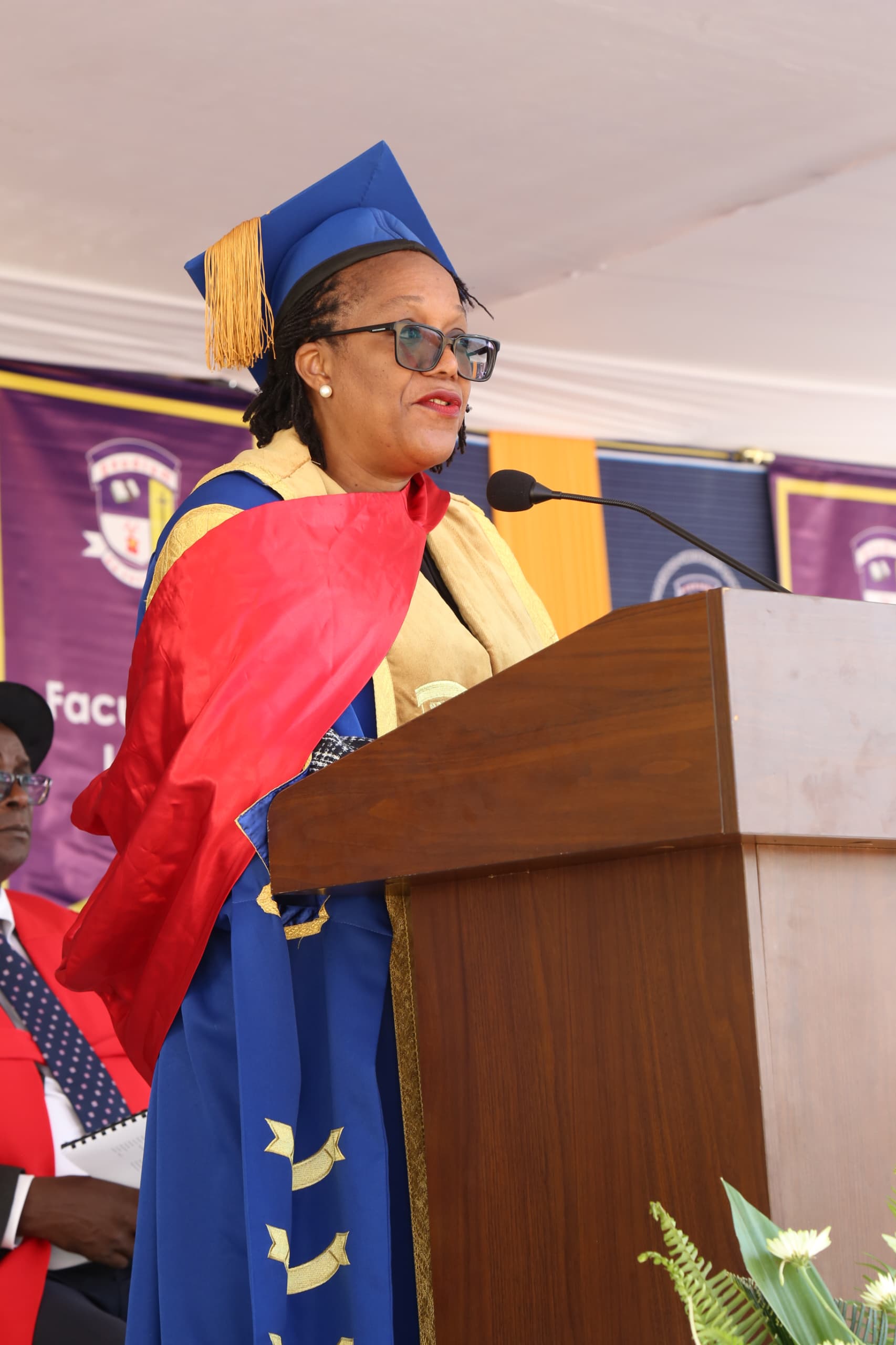
* As she graces the 25th graduation ceremony of the Catholic University of Malawi (CUNIMA)-Montfont Campus where a total of 1,704 students have been awarded degrees, diplomas and certificates in various programmes
* Success in life depends on more than intelligence — it requires humility, discipline, hard work, ethics and integrity, emotional maturity, timing, faith, and perseverance
By Duncan Mlanjira
Malawi Electoral Commission (MEC) chairperson, Justice Annabel Mtalimanja has asked Catholic University of Malawi (CUNIMA) graduands to thrive for critical thinking by rejecting rapidification; corruption; hopelessness — by being thoughtful professionals, ethical leaders, responsible citizens and faithful servants of God and country.

Advertisement
She said this when she graced CUNIMA’s 25th graduation ceremony at Montfont Campus this Friday, May 29, where a total of 1,704 students have been awarded degrees (1,135), diplomas (515) and certificates (54) in various programmes.
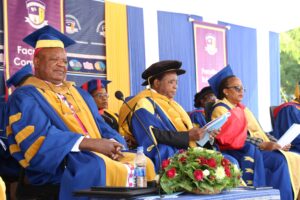
The ceremony was presided over by CUNIMA Vice-Chancellor, Rev Martin Anwell Mtumbuka, who is also President of Malawi Conference of Catholic Bishops and Archbishop Thomas Luke Msusa of the Archdiocese of Blantyre — and also graced by legislator, Matthews Mtumbuka.


“Today we all pause to celebrate your perseverance, sacrifice, resilience, discipline, faith and hard work. As we celebrate you, we are acutely aware that behind every gown here today is a story of determination.
“Some of you faced financial difficulties; some of you endured moments of uncertainty and self- doubt; some balanced work, studies, and family responsibilities; some nearly gave up along the way — yet today, through your hard work and by the grace of God, you stand victorious.”
She thus recognised and honoured parents, guardians, spouses, sponsors, lecturers, and all those who supported the graduans throughout their academic journey, saying: “Many sacrificed their resources and comfort to ensure that you reach this important day — therefore, today’s achievement belongs not only to you, but also to everyone who believed in your dreams even when the road was difficult.”
The ceremony was celebrated under the graduation theme; ‘Put Out Into the Deep’, inspired by Luke Chapter 5, which Justice Mtalimanja said it “is profoundly relevant to the realities of our time, saying: “In the Gospel account, Jesus instructs Simon Peter to move away from the shallow waters and launch into the deep.
“It was an instruction that demanded courage, faith, trust, and willingness to leave doubt and comfort behind. The shallow waters represented familiarity and safety, but the deep represented possibility, abundance and transformation.
“We live in a generation that increasingly celebrates speed over substance, visibility over depth, likes over character and noise over wisdom.
“Pope Francis, in his Encyclical letter Laudato Si’ of May 2015, warned about what he described as ‘rapidification’ – the accelerated pace of modern life that leaves little room for reflection, depth, and genuine human connection.
“I call it the microwave generation – everything must happen at record speed with minimum or zero effort. Even in academic and professional spaces, there is increasing temptation and indeed tendencies toward rapidification.


“Plagiarism and the irresponsible use of AI tell the story well. Information is consumed rapidly and recycled endlessly without critical and deep reflection; social media trends often shape thinking more than careful study and deep engagement with ideas and the society is becoming impatient with depth.
“A stark illustration of this is the degeneration of a reading culture, even among the supposedly enlightened and educated. Most of us would rather scroll aimlessly and endlessly over content, other than bury ourselves in a book.
“And yet, depth matters.
“Depth in thought produces wisdom; depth in character produces integrity; depth in faith produces resilience; depth in leadership produces trust; depth in the citizenry produces strong nations.
“When societies lose depth, they begin to decline morally and intellectually. We begin to see shallow politics built on slogans instead of constructive ideas; shallow messages from the pulpit. We begin to see professionals without ethics, leadership without vision, and citizens more concerned with appearances than responsibilities.
“This is why the call to ‘put out into the deep’ is timely. It is not merely a spiritual invitation; it is also an intellectual, moral and professional challenge. It is critical to the survival of us as a people and as a Nation.”
She thus implored on the graduands “NOT to become shallow professionals [but] to be deep thinkers; be ethical leaders; be reflective citizens [and] be change makers —responsible change makers”.
“The world you are entering will definitely test you in many ways. It will test not only your intelligence, but also your values, discipline, patience and integrity. As someone who has worked within the legal and public governance environment, I have learned that professional depth is not merely about academic qualifications or intellectual brilliance.
“It is also about emotional inteligence, ethical consistency, and the ability to stand for what is right, even when doing so is uncomfortable or unpopular.
“There will be moments in your professional lives when your degree alone will not protect you; there will be moments when titles and positions will not save you. In a world where corruption appears normal and organised, the real test becomes whether you can remain principled and refuse to take any bribe — notwithstanding the status of your bank account or the needs lining up for your attention.”

Advertisement
She highlighted that one can remain truthful when dishonesty seems profitable, saying one needs to preserve their “humanity in environments that often reward selfishness and shortcuts”.
“One of the painful realities confronting our society today is the normalisation of corruption and unethical conduct. There is no university in Malawi or in the world that teaches corruption; there is no faculty that offers a degree in plundering public resources — cashgating.
“There is no degree in creative accounting — yet when we observe some of the scandals that affect our institutions, we are forced to ask difficult questions; ‘How do educated people become comfortable stealing resources meant for hospitals, vaccines, schools, and vulnerable citizens?’; ‘How do intelligent individuals become prisoners of greed?’
“These realities remind us that education without ethics is dangerous. The purpose of education is not merely to produce employable people — it is to produce responsible human beings capable of serving society with integrity and compassion.”
She quoted Patriach Bartholomew, who stated that “the solutions to the problems we are facing as a Nation lie in change of humanity. We need to replace consumption with sacrifice and greed with generosity.
“Today, therefore, I urge you to guard your character. Protect your name; protect your conscience. Your certificate may open doors, but your character will determine whether you remain trusted once those doors open.”


She thus share an inspiring story of Jimmy Lipunga — the investment banker, financial analyst, business & leadership consultant — who was once offered a bribe of US$300,000, which was left in his room but he refused to take it
He asked the graduands if many present in the hall “would stand on principle and refuse such an amount” but Lipunga did, who “has since gone on to become one of the highly accomplished sons of our soil”.
She impressed on the young minds that they have become ambassadors of CUNIMA, saying: “Your actions will either strengthen or damage the reputation of your alma mater. Like Mr. Lipunga, purpose to live a life of integrity and do what is right.

Jimmy Lipunga (left), chairperson of Illovo Sugar Malawi Board
“The Bible tells us that we are the salt of the earth. Salt preserves; salt influences; and salt adds value. This means your presence in society should make institutions better; your presence in workplaces should inspire professionalism and honesty; your presence in leadership should strengthen accountability and justice; your presence in communities should bring hope and solutions.
“As you prepare to enter the real world, it is important to understand that life has no fixed formula. Many young people graduate expecting life to move in a straight line. They expect immediate success, predictable progress, and clear outcomes.
“But life rarely unfolds that way.
“Some of you will find employment quickly. Others may wait longer. Some will begin with opportunities that seem small or unrelated to their qualifications. Some may start businesses. Others may change careers entirely. Some may experience failure before success arrives.
“This uncertainty should not discourage you. The Bible reminds us in Ecclesiastes 9:11 that ‘the race is not to the swift, nor the battle to the strong, but time and chance happen to them all’. This scripture teaches humility and patience. It reminds us that life is not always predictable.
“Success in life depends on more than intelligence. It requires humility, discipline, hard work, ethics and integrity, emotional maturity, timing, faith, and perseverance.
“This is why you must never look down upon others. Respect people regardless of their position or background. Do not become bitter when others advance ahead of you. Life allows overtaking.
“Complaining about those moving forward does not stop their progress. You must continue moving with determination and purpose as you cast to the deep.
“To those who pursued programmes society often describes as less marketable or less prestigious, I want to encourage you strongly today — do not allow society to define your worth or potential.
“The world has no guaranteed formula for success. We have seen people from the so called modest professions rise to extraordinary levels of achievement because they became excellent at what they do. What matters is not merely the title of your degree, but the depth of your commitment to excellence.”
Justice Mtalimanja further explored today’s modern business world of technology, saying — while the country expects the graduands to be the best at what they do, they should also continue learning and improving and to explore opportunities beyond their comfort zone. “The professional world is constantly changing. New industries are emerging while others are disappearing. Technology continues to transform workplaces globally.
“Continuous learning is no longer optional — it is necessary. Some positions today require postgraduate qualifications and specialised skills.
“As Scripture exalts us in 2 Timothy 2:15, ‘Study to show thyself approved’. Graduation should, therefore, not mark the end of your learning journey — it should mark the beginning of lifelong intellectual growth.
“Graduands, there will also be moments in life when you feel discouraged. Some of you will struggle to find employment immediately after graduation; some will face rejection repeatedly; some may feel forgotten despite their qualifications.

Advertisement
“During such moments, do not lose faith. Sometimes delays are not denials; sometimes God uses waiting seasons to prepare us emotionally, spiritually, and professionally for greater responsibilities ahead.
“Continue believing in yourselves; continue praying; continue working hard even when results appear delayed. To those coming from less privileged families, I especially want you to remember this: your background does not determine your future; your village does not limit your destiny; your lack of connections does not cancel your potential.
“Some of the greatest people in history emerged from humble beginnings. You can become anything you desire through discipline, perseverance, faith, and hard work.
“Your biggest connection is God. When God opens doors, no human being can permanently close them. When you eventually secure employment, remember that your work attitude matters enormously.
“Do not become lazy workers; do not work hard only when supervisors are present. The Bible teaches us in Colossians 3:23-24 that whatever you do, work at it with all your heart, as working for the Lord, not for human masters. Excellence should become your personal standard.”
She enlightened them that today’s “employers value dependable people, saying they value employees who solve problems, respect time, and take initiative”.
“Sometimes promotions are given not to the most academically brilliant individuals, but to those who consistently demonstrate reliability, professionalism, and integrity.”
She concluded by enlightening the graduands and all those present that “as a society, we must honestly confront the challenge of graduate unemployment. While entrepreneurship is important and should be encouraged, it should not become a convenient response to every unemployed graduate.
“A young person who has spent years studying and preparing for a profession deserves meaningful opportunities to enter the world of work. Too often, people who have spent decades in stable employment casually advise graduates to ‘just go into business’, despite not being entrepreneurs themselves.
“As a country, we must create pathways for graduates through internships, mentorships, apprenticeships, and fair recruitment systems. Entrepreneurship should be by choice, not a consolation prize.
“At the same time, graduands must remain adaptable, hardworking, and open to different pathways toward success and service.
“And finally, remember this: depth requires courage. Shallow waters are comfortable, but greatness is rarely found in comfort. The deep demands faith, discipline, sacrifice and resilience.
“It is in the deep where purpose is discovered, where transformation happens, and where miracles occur.
“As you graduate today, I urge you to put out into the deep. Reject rapidification; reject corruption; reject hopelessness. Be thoughtful professionals, ethical leaders, responsible citizens, and faithful servants of God and country.”

Advertisement