
* This is no ordinary legal dispute. It is a test of parliamentary independence, the separation of powers and the government’s willingness to be held accountable
* When the very institutions expected to scrutinise the use of public resources become embroiled in a legal battle over their authority, Malawians have every reason to pay attention
Analysis by Dr. James Kadyampakeni
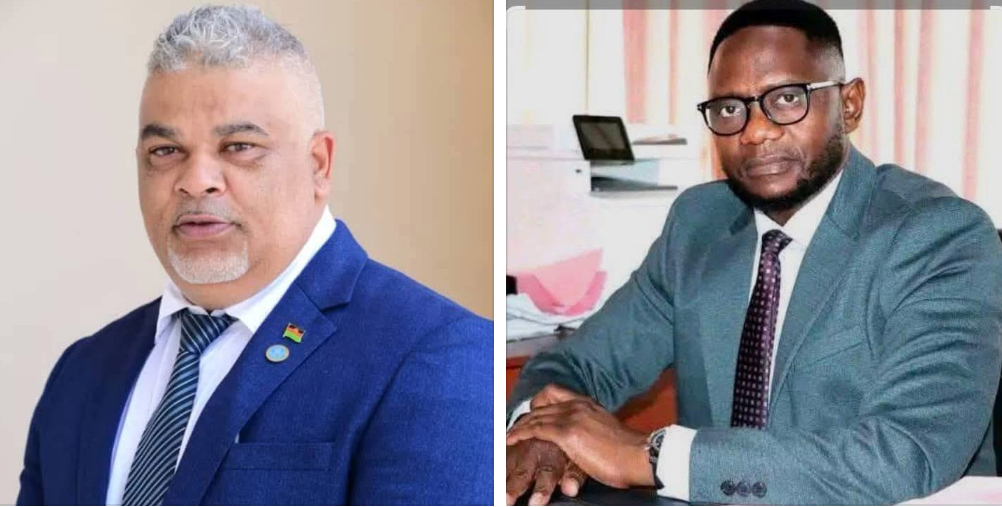
Attorney General (AG) Frank Mbeta has stepped in to represent Parliament and Speaker Sameer Suleman in the legal dispute over parliamentary committees investigating alleged corruption and governance failures.

Advertisement
Reports that the Speaker’s office was not consulted raise an immediate question: who authorised this change, and whose interests does it serve?
This is no ordinary legal dispute. It is a test of parliamentary independence, the separation of powers and the government’s willingness to be held accountable.
When the very institutions expected to scrutinise the use of public resources become embroiled in a legal battle over their authority, Malawians have every reason to pay attention.
Three scenarios deserve serious consideration.
Scenario one: The investigations lose momentum
What happens if the legal challenge prevents Parliament from pursuing allegations involving fuel, electricity, mining, fertiliser and pension management?
These sectors directly affect ordinary Malawians. Fuel shortages, unreliable electricity and failures in public resource management cannot be dismissed as political inconveniences.
Parliament has a constitutional oversight responsibility to scrutinise government expenditure, question public officials and demand explanations about the management of public resources.

To be clear, there is no established proof that AG Mbeta intends to bury these investigations. But citizens are entitled to question any legal intervention that could restrict parliamentary scrutiny.
The danger is that investigations into matters of public interest could lose momentum whenever they threaten powerful interests.
Malawi cannot afford a system in which allegations remain unresolved while citizens bear the economic consequences.
Scenario two: Mbeta defends the Constitution
There is another possibility: Mbeta genuinely believes the dispute raises constitutional questions requiring his intervention.
If so, he should explain the legal basis for taking over the representation and demonstrate how his decision serves the public interest.
The Attorney General has an important responsibility to advise and represent the government in legal matters. However, that responsibility must be exercised consistently with the Constitution and the distinct role of Parliament.
Parliament does not have unlimited authority. Its committees must operate within the law, and courts must independently determine the legality of their actions.
Equally, parliamentary oversight must not be undermined without sound legal justification.
One question demands an answer: Why was the Attorney General’s representation changed, and why was the Speaker’s office not consulted? The precise circumstances and legal arrangements should be clarified rather than left to speculation.
Public confidence cannot be demanded; it must be earned through transparency, consistency and decisions that withstand scrutiny.
If Mbeta is acting in the national interest, explaining his reasoning should strengthen, not weaken, public confidence.

Advertisement
Scenario three: The Speaker joins Cabinet
Consider a further possibility: Suleman is appointed to Cabinet during an upcoming reshuffle, potentially amid debate about Muslim representation in government.
Fair representation matters. Every Malawian, regardless of religious background, deserves equal opportunity to serve. But representation must never become a distraction from accountability.
If Suleman accepts a ministerial appointment, he would have to relinquish the Speakership. He would move from leading Parliament, which scrutinises the Executive, into the Executive itself.
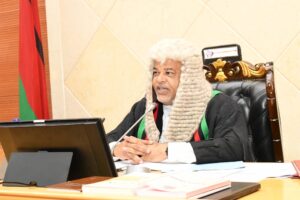
Imagine the sequence: the Attorney General takes over the legal representation, the Speaker subsequently joins Cabinet, and new parliamentary leadership inherits the dispute.
What happens to the investigations? Will the committees continue their work with the same determination, or will the matter gradually disappear from the national agenda?
There is no established evidence that a ministerial appointment is being arranged to influence this case. We must distinguish speculation from fact. Nevertheless, the potential consequences deserve public scrutiny.
Malawi might gain a minister, but it must not lose effective parliamentary oversight in the process. No Cabinet appointment should come at the expense of Parliament’s independence or its obligation to hold government accountable.
Malawians deserve answers
These scenarios lead to a fundamental question: Are our institutions serving the people, or are political calculations taking precedence over the national interest?
The Attorney General must explain the legal basis for his intervention. Parliament must defend its legitimate constitutional responsibilities.
The courts must remain independent, and the Executive must accept scrutiny as an essential feature of democratic government.
Malawians deserve clarity on the change in legal representation, the Speaker’s involvement and the future of the parliamentary investigations.

We cannot continue facing fuel shortages, unreliable electricity and inadequate public services while accountability is treated as a political inconvenience.
Criticism is not disloyalty. Asking difficult questions is not an attack on Malawi; it is an act of civic responsibility.
Parliamentary oversight is not about protecting individuals or political parties. It is about ensuring that public power is exercised lawfully and public resources serve the people.
My loyalty is to Malawi, its Constitution and its people — not to individuals, political parties or positions of power. Malawi belongs to its citizens. Those entrusted with public office must answer to them.
Editor’s Note:
Dr James Kadyampakeni is Canada-based Malawian economist and accountable governance advocate, who regularly comments on Malawi’s economy, governance, and politics.
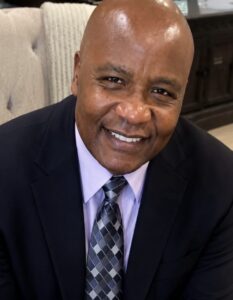
Dr. James Kadyampakeni