
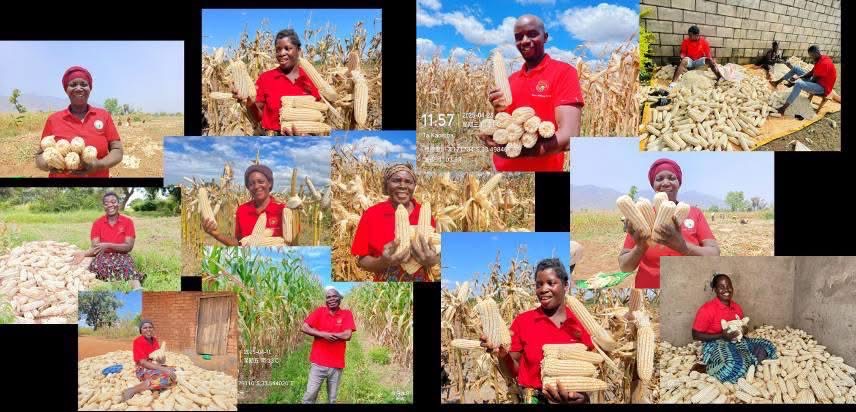

* Exploring opportunities to scale up the innovation beyond Kasungu following promising results that have seen maize yields increase from an average of 2.4 tonnes per hectare to 7.5 tonnes
* The project tackles three major constraints affecting smallholder farmers — declining soil fertility, low productivity arising from traditional farming systems, and limited diversification
By Rabecca Itimu, Malawi News Agency (MANA)
Lilongwe University of Agriculture and Natural Resources (LUANAR) says it is exploring opportunities to scale up its student-led Hope Seed AgroLink innovation beyond Kasungu following promising results that have seen maize yields increase from an average of 2.4 tonnes per hectare to 7.5 tonnes.
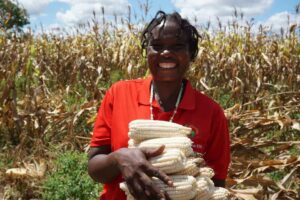
Head of LUANAR’s Department of Horticulture, Dr. Jacinta Nyaika, said the innovation is an integrated, youth-led agricultural service model that brings students and farmers together to identify real-life farming challenges and develop practical, locally driven solutions.
She said the project tackles three major constraints affecting smallholder farmers — declining soil fertility, low productivity arising from traditional farming systems, and limited diversification.
The project promotes manure application, Mbeya fertiliser, soil testing and precision fertilisation to improve soil fertility, while encouraging crop densification through reduced plant spacing that increases plant populations from about 40,000 to over 62,000 plants per hectare.

Dr. Jacinta Nyaika
Nyaika further highlighted that the innovation also promotes maize-legume intercropping, giving farmers an alternative crop and an additional source of income while improving food security.
“Before every season begins, students conduct farm surveys to establish a baseline,” she said. “They monitor crop growth throughout the season and carry out field assessments after harvest to determine yield performance.
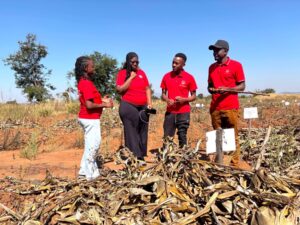
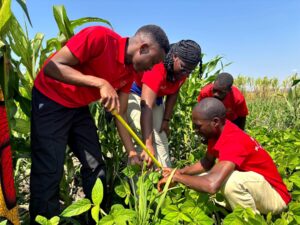
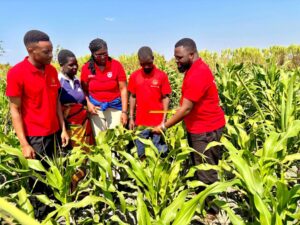
“This is now the third year of the project, and yields have continued to improve,” said Nyaika, adding that the university is working with institutions such as China Agricultural University, private investors and other partners.
The collaboration is to strengthen mechanisation, finance and market access as part of efforts to expand the model to more farming communities.
Nyaika said the selection of three LUANAR students to represent Malawi at the China-Africa Regional Competition in Nairobi demonstrates the country’s growing recognition in youth-driven agricultural innovation.
“It validates LUANAR’s role in nurturing agricultural entrepreneurs and innovators while strengthening Malawi’s position in continental agricultural innovation networks,” she said.

Advertisement
One of the student innovators, Ufulu Kampinga, said Hope Seed AgroLink was inspired by the challenges facing smallholder farmers, including low soil fertility, poor maize yields, limited access to quality inputs, inadequate technical support, lack of finance and poor market access.
“Our model is different because it is youth-led and combines agricultural technology, farmer training, soil testing, mechanisation, finance through Village Savings and Loans Associations (VSLAs), and market linkages into one integrated service,” said Kampinga.
“Instead of providing one-time support, we continuously work with farmers throughout the production cycle, making the project more sustainable.”
He added that the project initially struggled with inadequate funding, limited agricultural inputs and shortages of small-scale machinery before receiving technical and material support from LUANAR, China Agricultural University, seed companies and other partners.


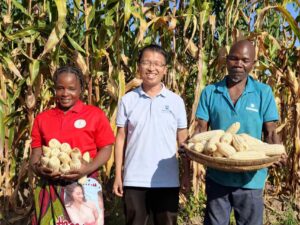
Kampinga said another challenge was convincing farmers to adopt unfamiliar technologies: “We established demonstration plots in farmers’ fields and used actual yield results to prove that the technologies worked.”
The project also addressed difficulties in organising farmers by training 30 lead farmers under a “one farmer leads five” approach, where each lead farmer mentors about five neighbouring farmers.
Agricultural expert Felix Jumbe described the increase in maize yields from 2.4 tonnes to 7.5 tonnes per hectare as a significant development capable of transforming Malawi’s agricultural sector if adopted on a wider scale.
“The critical problem that Malawi is facing is low maize productivity,” Jumbe said. “Malawi averages about 2.4 tonnes per hectare, yet available maize genetics can produce over 11 tonnes under proper management.

Felix Jumbe
He stressed that widespread adoption of technologies capable of producing 7.5 tonnes per hectare could significantly increase national maize production, strengthen food security and positively transform the country’s economy.
Jumbe attributed the reported productivity gains to improved crop genetics, adequate plant nutrition, effective crop management and technologies that improve resilience to drought.
Innovations have historically driven agricultural revolutions across the world and could play a similar role in Malawi if farmers embrace new technologies.
However, Jumbe observed that many farmers are slow to adopt innovations because of the costs involved and uncertainty over markets for increased production.
“There is a need not only to upscale production but also to expand markets so that increased yields become economically beneficial and sustainable for farmers,” he said.
Jumbe further stressed that successful scaling of innovations such as Hope Seed AgroLink will require supportive government policies, institutional backing and stronger protection of locally developed technologies to ensure they benefit Malawian farmers.

Advertisement