

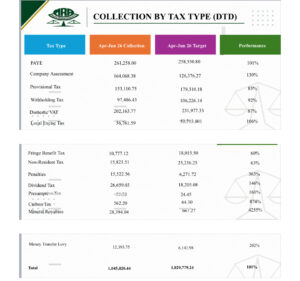
* Representing an increase of 363% from the low K4.2 billion target that MRA estimated basing on past tax flouting activities
* As Money Transfer Levy introduced this year shoots to K12.3 billion from the target of K6.141 billion
By Duncan Mlanjira
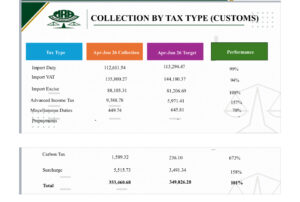
In strengthening tax compliance through digital systems and enhanced enforcement measures, Malawi Revenue Authority (MRA) exceeded its target set for first quarter of the 2026/2027 financial year by recording K1.398 trillion in collections — against the K1.379 trillion that was directed by the government.

Advertisement
And from this total revenue collection, K15.5 billion is from penalties for flouting tax procedures — representing an increase of 363% from the low K4.2 billion target that MRA estimated basing on past tax flouting activities.
This was indicated on Monday during MRA Corporate Affairs office’s engagement with the media in Blantyre where national tax collector attributed its performance to a combination of improved compliance initiatives and strengthened enforcement.
The Mobile Money Transfer Levy that the government introduced this year, has recorded as K12.3 billion in collections beating the target of K6.1 that was set for the same 1st quarter period.
Pay-as-you-earn (PAYE) contributed as the large chunk of collection at K261.258 billion against a target of K258.55 billion, with company assessment reaching K164.068 billion against K126.376 billion.
Over K28 billion was collected as royalties in the mineral sector through sale of gold as announced by the Reserve Bank of Malawi.
Meanwhile, MRA attributed to the strong revenue collection progress on new tax measure of the Electronic Invoicing System (EIS) through which 8,428 businesses registered against its target of 9,000 — representing 90% of targeted traders.
The MRA thus commends the business community for embracing the EIS after initial resistance by some businesses towards end of 2025-26 quarter.



Concerns raised during the media interface included some businesses issuing some receipts not properly generated by the EIS, which — for example would indicate a product as cosmetic when it is not.
The MRA Corporate Office thus advised the public to cross-check their receipts against items bought and to report any discrepancies — saying this promotes tax compliance and accountability.
MRA is also encouraging the public to keep receipts for their personal financial records while supporting efforts to improve domestic revenue compliance and collection.
EIS replaced the obsolete electronic fiscal device (EFD) system introduced in 2013 that is designed to enhance collection of value added tax (VAT) but fell prone to many challenges.
Through the EIS, which is technologically advanced, MRA is able to monitor transactions in real time from stocks in warehouses and shops to every sale made and how much revenue the tax collector should expect.

In order to deter vandalism of public infrastructure — with Electricity Supply Commission of Malawi (ESCOM) being the most vulnerable victim through theft of is copper cables as well as vandalism of telecom wires, bridge culverts and railway lines, MRA has introduced a 40% export duty on scrap metal to reduce its export.
To protect people’s health, a 20% excise duty on powdered drink flavours such as Jolly Jus. The excise duty has also been extended on some luxury goods, artificial flowers, hybrid vehicles while also removing import duties on selected essential equipment, products and raw materials to improve services and support local industries.
The tax removal applies to greenhouses, teaching and learning equipment for community technical colleges, and heavy-duty generators imported by registered schools and hospitals.
MRA has also removed import duties on assistive devices for people with disabilities, religious books such as Bibles and Qur’ans, and raw materials used to make uniforms for security agencies.

Advertisement