

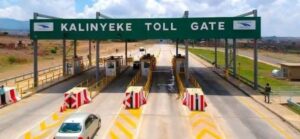
* Up from K1.13 billion during the same period in 2025, representing 56% rise in toll revenue to support Lilongwe-Blantyre M1 rehabilitation
* Increase attributed to the toll fee adjustment introduced in January, but traffic volumes declined by 22% over the same period
By Arthur Kaludzu & Barbara Mwandira, Malawi News Agency (MANA)
The Roads Fund Administration (RFA) has recorded K1.77 billion in toll fees collected between April and June this year, up from K1.13 billion during the same period in 2025, representing an increase of K638 million (56%).

Advertisement
Toll collections on Malawi’s major road network, the Lilongwe-Blantyre MI Road — collected at Chingeni Toll Plaza in Ntcheu and Kalinyeke Toll Gate in Dedza — rose sharply during the first quarter between January and March 2026 that saw the RFA collecting K1-8-billion, up from K920 million recorded during the same period last year, representing a 96% increase.
The revenue collection boost is providing a significant leverage on efforts to rehabilitate the country’s busiest highway, the M1.
Speaking during a media briefing at Chingeni Tollgate on Friday, RFA Finance Manager James Dzonzi attributed the increase to the toll fee adjustment introduced in January, although he noted that traffic volumes declined by 22% over the same period.
He assured road users that all revenue collected through toll gates is ring-fenced and can only be used for the maintenance and rehabilitation of the tolled road.
Despite the improved collections, Dzonzi said toll revenue alone cannot meet the enormous cost of restoring the M1, explaining that resurfacing a single kilometre now costs about K1.5 billion.
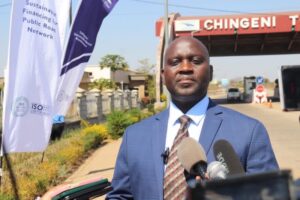
“Toll collections alone are, therefore, insufficient and must be supplemented by the fuel levy,” said Dzonzi, adding that the RFA has already allocated K50 billion to the Roads Authority for rehabilitation works on the M1, while contracts worth a further K17 billion have been awarded and construction has commenced.
Roads Authority acting chief maintenance engineer, Derrick Manda said contractors are already rehabilitating and carrying out periodic maintenance on several sections of the highway.
He said the projects include a K17 billion rehabilitation and resealing contract from Lizulu towards Ntcheu Boma, a K51.6 billion project between Lizulu and Lilongwe, and a K44.7 billion contract covering the Chingeni to Kameza section.
Manda said the investments form part of rehabilitation contracts valued at more than K113 billion, aimed at restoring the M1 after years of deterioration caused by ageing infrastructure, overloaded vehicles, heavy rains, inadequate drainage and limited maintenance.
“The M1 is the backbone of Malawi’s road network,” Manda said. “The Roads Authority is committed to overseeing the construction, maintenance and rehabilitation of this critical asset within the available funding framework to improve service delivery for all road users.”

As rehabilitation gathers pace, RFA also announced plans to construct four additional toll gates during the 2026/27 financial year to strengthen domestic revenue mobilisation for road maintenance.
On its official media platform, RFA indicates that the M1 rehabilitation will utilise the toll fees revenue and complimented by the current receipts of the fuel levy and will also use a bank financing facility to beef up.
The facility will be serviced using fuel levy, adding the the fuel levy is a very important revenue source for the RFA and should continue to flow into the Roads Fund.
While it costs K1.5 billion to maintain a one-kilometer road stretch, rehabilitation cost stand at K2.5 billion/km and continued neglect of road maintenance overtime, results in huge maintenance costs of road infrastructure.
Meanwhile, the RFA and the University of Malawi (UNIMA) signed a memorandum of understanding (MoU) on July 10 aimed at supporting the exploration and testing of more than 30 research ideas developed by UNIMA students to improve the country’s roads sector.

UNIMA Vice-Chancellor Prof. Sajidu and RFA CEO Malata sealing the MoU
The agreement aims to strengthen national infrastructure by combining academic research with industry expertise and through the partnership, selected UNIMA students will be attached to the RFA for practical training while collaborating with the institution to develop innovative, locally driven solutions to infrastructure challenges.
UNIMA Vice-Chancellor, Prof Samson Sajidu said the partnership reflects confidence in the university’s ability to contribute to national development through research and the effective use of locally available resources.
He expressed optimism that the collaboration would produce practical solutions capable of addressing the country’s infrastructure challenges while providing students with valuable hands-on experience.
RFA Chief Executive Officer Stewart Malata said the collaboration demonstrates the institution’s commitment to harnessing local knowledge and innovation to enhance road infrastructure across the country.—Editing by Duncan Mlanjira, Maravi Express

Advertisement