

Revered Chief Economist Chifipa Mhango
* A Grant by definition is a sum of money a Government or an Agency provides for a specific purpose — it can be for a road construction, hospital, school etc
* In short, when given grant money, the funds cannot be diverted for other use, otherwise that is stealing
* On the other hand, ECF is a credit facility or a form of overdraft or loan which IMF provides to various Governments
* That money can be used for a wide range of purposes like budget support for purchase of medicine, fuel, fertilizer, government salaries etc
By Duncan Mlanjira
Chief Economist for South Africa’s Don Consultancy Group (DCG), Chifipa Mhango, contends that there is “a clear demonstration of a widening trust deficit between the current Malawi Government administration and the general public that has led to no celebration of the US$350 million grant from the World Bank for the Mpatamanga hydro power project.

Advertisement
On Friday, the World Bank issued a press release of the disbursement of the grant that is expected to help in transforming the country’s energy landscape and its economic development trajectory.
But Chifipa says he has come across a circular in the public domain “which seems to once again be coming in as a voice of propaganda machinery aimed at suppression of debate around extended credit facility (ECF) suspension by the International Monetary Fund (IMF)”.
“This circular seems to indicate that there has been too much coverage and commentary on ECF suspension and nothing much being celebrated on the World Bank grant, or even commentary,” says Chifipa.
“First of all, this kind of misinformed position on issues demonstrates lack of understanding on purpose, and how the economic elements align.
“Let’s state it that a Grant by definition is a sum of money a Government or an Agency provides for a specific purpose — it can be for a road construction, hospital, school etc. In short, when given grant money, the funds cannot be diverted for other use, otherwise that is stealing.
“On the other hand, ECF is a credit facility or a form of overdraft or loan which IMF provides to various Governments. That money can be used for a wide range of purposes like budget support for purchase of medicine, fuel, fertilizer, government salaries etc.
“So the importance of ECF on the case of countries like Malawi weighs high, and carries a political posture on its impact to the economy.
“While a grant, like in the case of the one for Malawi by World Bank for the hydro power project is important for the economy on electricity supply. However, those funds cannot be diverted for buying medicines for our hospitals, or anything else.
“Therefore, the impact of the ECF suspension in the current set up of the Malawi economy is more disastrous. It is for such reasons that the ECF suspension would attract more attention on the economic climate of Malawi than Grant money.
“People get invited to a wedding but to a funeral, most go without invites. In this case, ECF suspension is our funeral and we will debate without invitation unlike the wedding party of the grant.”
Chifipa emphasises that the aim of debate around the suspension of the ECF “is not to celebrate failure, but to offer solutions and raise concerns because certain disasters leave a long-term negative effect — in this case economic mismanagement”.

“As Malawians, no propaganda should direct our conscious on how we feel or think, but rather our principles and how we stand by our country. We are happy with the World Bank grant — only if the funds are properly managed for the intention of the hydro power plant.
“However, in an environment where there is now a trust deficit between the people or public and its Government, such celebrations of good news surrounding grant money is curtailed because of the background of corruption.
“It is for such reasons that maybe a less celebration or less commentary is happening on World Bank grant because the public have lost trust in any money in this current Malawi Government hands — for the record of mismanagement is overwhelming.
“This is a clear demonstration of a widening trust deficit between this current Malawi Government and the general public — hence no celebration of the World Bank grant because, maybe, it is in the wrong hands once again,” says Chifipa Mhango.

Advertisement
The Mpatamanga hydropower project aims to expand electricity generation capacity and connect one million people to the power grid — increasing the country’s installed capacity to deliver 1,544 megawatts hours of clean and reliable energy annually while creating thousands of job opportunities.
In the press release, Minister of Energy, Ibrahim Matola is quoted as describing it as the least-cost option for meeting the growing energy demand while advancing toward national access targets.
“Once operational, this project will help drive long term energy security and support lasting, inclusive economic growth,” he said. “Energy access is fundamental to reducing poverty, fostering economic growth and attracting private investments.”
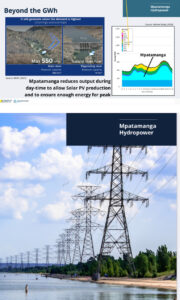
On his part, Nathan Beleke — World Bank Division Director to Malawi, Tanzania, Zambia and Zimbabwe — said the new hydropower project is a game changer for Malawi: “It is capable of catalysing transformative change in productive economic sectors such as mining, agribusiness and tourism.
“As the country works on driving its economy’s development agenda, this new source of clean and reliable energy will help drive business growth, create jobs, improve the lives of millions of Malawians,” he said.
The project is being developed by Mpatamanga Hydro Power Limited in coordination with Ministries of Energy, Finance and other relevant government departments — under a Public-Private Partnership (PPP) model with Malawi Government owning a 30% shareholding.


Advertisement
The project lies between the existing, Nkula, Tedzani and Kapichira hydropower schemes — with Nkula being the oldest, commissioned in the 1960s, whose Nkula A has capacity of 36MW of three 12MW units.
Nkula A was the first major hydroelectric power station built in Malawi in two phases, with the first phase completed in 1966 and the second involved major overhaul of the power plant and expansion of capacity from 24MW to 36MW.
Nkula B was also built in stages in the 1980s-1990s with the first three power generators of 20MW each installed in 1980 and another 20MW generator added in 1986 — with the fifth 20MW turbine installed in 1992.
Tedzani Power Station was also developed in stages, with the first phase Tedzani I, completed in 1973 and the most recent, Tedzani IV, which achieved commercial commissioning in May 2021 to make it Tedzani I-IV — with a generating capacity of 111.7MW).
Kapichira Hydro Power Station in Chikwawa is the most recent that was commissioned in 2000 with two generation units of 64.8MW and a further two units also of 64.8MW were added in 2013 as Kapichira Phase II — contributing 129.6 megawatts on the national grid.
* Weather update
