

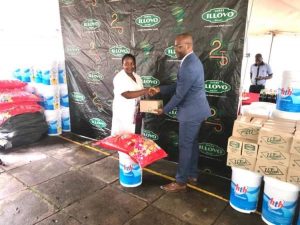
Nchalo Estate’s General Manager Geoff Trott handing over the supplies
* As a company, we understand the importance of supporting our local communities
* And we remain committed to delivering social responsibility projects that impact Malawi positively
* It is essential to note that cholera is a preventable disease that requires timely action from all stakeholders in health
By Duncan Mlanjira
In recognition that the effects of Cyclone Freddy has the risk of spiking the cholera outbreak the country is grappling to contain, Illovo Sugar Malawi Plc has donated medical supplies worth K10.4 million for Chikwawa District Hospital’s containment of the disease.

Advertisement
Soon after the Cyclone Freddy-induced disaster, The Ministry of Health alerted the public, especially the displaced survivors, that most affected areas’ pit latrines were destroyed — thereby can exacerbate the cholera outbreak.
At the presentation of the medical supplies on Friday at the hospital, Nchalo Estate General Manager, Geoff Trott said they decided to invest in containment of the outbreak after concerns that Chikwawa District is especially vulnerable at this time due to the floods which rendered many individuals homeless and thus increased the risk of the cholera outbreak.


“Hence, as Nchalo estate, we have taken bold steps in supporting the Chikwawa District Hospital which is aimed at providing cholera sensitisation and treatment requirements,” Trott said.
“As a company, we understand the importance of supporting our local communities and we remain committed to delivering social responsibility projects that impact Malawi positively.
“It is essential to note that cholera is a preventable disease that requires timely action from all stakeholders in health, including the government and private sectors. We all have a role to play in combating this disease.
“The donation we have just made to the Chikwawa District Hospital is symbolic of our commitment to this cause. We urge all of you to remain vigilant, especially in cholera-prone areas like Malawi.
“Our company’s efforts are to ensure that we contribute our quota to the national development agenda and emerging global health challenges.


Advertisement
“By supporting the Chikwawa District hospital in this practical way, we are demonstrating to the people of Chikwawa and beyond, that we are all in this fight together, against cholera.”
He pledged that Illovo Sugar will “continue supporting the Malawi government in its efforts to provide quality healthcare delivery to its people wherever possible”.
Last month — in response from health authorities’ appeal towards containment of the cholera outbreak before Cyclone Freddy — that has hit Blantyre City hard as well as the country since January — Illovo Sugar swiftly responded by donating various medical supplies worth K20 million to Limbe Health Centre.

The company also reached out with the cholera interventions at its estates at Nchalo in Chikwawa and Dwangwa to ensure that its staff, their dependants and the communities surrounding its operations are protected in its motto of ‘Creating a Thriving Malawian Community’.
Trott reminded Malawians that cholera was first confirmed soon after Cyclones Ana and Gombe and thus “we should all continue with the recommended preventive measures as prescribed by the Ministry of Health”.
Soon after the disaster, the Presidential Taskforce on CoVID-19 and Cholera also emphasized that Tropical Cyclone Freddy has ultimately threatening sustainable development in Malawi and also increased the risk of some communicable diseases, such as cholera, dysentery, typhoid, diarrhoea and others.


It said diarrhoea diseases are mainly spread through faecal-oral route, hence poor water sanitation conditions play an important role in transmission, adding that the displacement of people not only increases the risk of poor water and sanitation but also poor personal hygiene and an increase in vector breeding sites.
“Unfortunately, these increases the transmission of infectious diseases and occurrences of outbreaks yet access to healthcare services can be limited in these environments.
“It is therefore important that we follow the recommended preventive measures which include washing hands with soap frequently, use of safe water, proper use of toilets and eating food while it is hot among others — prevention is better than cure.”
As of Friday evening, the country recorded 109 new cases and two new deaths from Blantyre and Dedza — bringing fatalities at 1,717 and confirmed cases at 56,444. A total of 54,545 people have recovered and as of Friday, 182 were in treatment centres.
Since the onset of the outbreak in March last year, Lilongwe leads in most cases recorded at 12,257 with 548 deaths, followed by Mangochi (8,440/123); Blantyre (8,192/212); Balaka (4,286/102); Salima (3,3,570/99); Machinga (2,363/86); Dedza (2,055/80); Nkhata Bay (1,517/44); Nkhotakota (1,463/58); Chiradzulu (1,392/45); Dowa (1,340/40); Ntcheu (1,311/50); Thyolo (1,194/33); Rumphi (1,059/17); Karonga (964/25); and Mulanje (896/39).
In its situation report, the Taskforce also sensitised the displaced survivors that other health-related issues that can affect them is damage or loss of medication, saying if their medication needs to be stored in a fridge but has been unrefrigerated for a while due to disturbances, they should be handed over to a health care worker for safe disposal.
It also said any medicines that may have been contaminated by flood water should also be handed over to health personnel for safe disposal as the drugs may be polluted by sewage and other wastes or chemicals, which can make people sick.
“If you do not have your medicines or cannot take them because they have been compromised, visit your nearest health facility or attend outreach clinics that are being carried out in your vicinity or camp.”

Advertisement