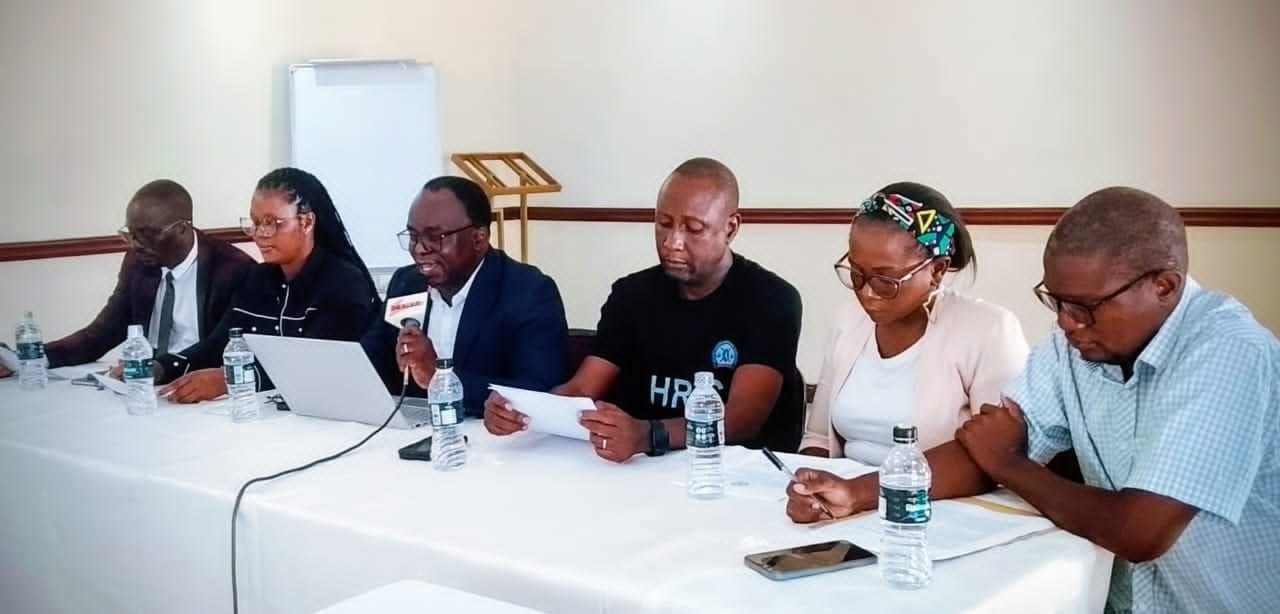
Kaiyatsa and his colleagues addressing the media two weeks ago condemning government on arrests of former Cabinet Ministers
* Failing to comply in calling for the AGM within the stipulated period, the HRDC national ddhoc committee will have no option but to seek court intervention to protect the integrity, legality, and credibility of the Coalition
By Duncan Mlanjira
At a press briefing held at Bridge View Hotel in Lilongwe today, February 16, the adhoc committee of the Human Rights Defenders Coalition (HRDC) raised concerns that the current provisional HRDC governing body continues to operate despite its petition demanding them to stop until an annual general meeting (AGM) is held.

Advertisement
The national adhoc committee discloses that it has been “reminding the current provisional governing body led by Michael Kaiyatsa to adhere to the 14-day ultimatum and convene a lawful general assembly that will allow members to elect new and legitimate leadership in all the regions of the country”.
“The ultimatum was issued in the interest of transparency, accountability, and the democratic principles upon which HRDC was founded,” says the committee in a press release it issued. “We also edge [Kaiyatsa] to stop issuing press statement without consultation until the AGM is done.”
Thus the adhoc committee, which reiterates its commitment to restoring accountability, legitimacy, and constitutional order within the HRDC, cautions Kaiyatsa’s provisional governing body “to immediately comply with the ultimatum and call for a general assembly without further delay”.
It also reminds the HRDC provisional governing body that “it is currently operating without endorsement from the general membership and, therefore, lacks legitimacy.
The Kaiyatsa-led administration is also being advised “to cease acting on behalf of HRDC until duly mandated by members through a lawful electoral process” — and that failing to comply in calling for the AGM within the stipulated period, the HRDC national ddhoc committee “will have no option but to seek court intervention to protect the integrity, legality, and credibility of the Coalition”.
Kaiyatsa under the spotlight
Two weeks ago, Kaiyatsa led the HRDC provisional governing body at a media briefing where they expressed concern over what they called “lack of rule of law, punitive taxes and high water, electricity and fuel tariffs,” saying these are making lives of Malawians unbearable.
ZodiakOnline quoted Kaiyatsa as saying since November last year, there had been some arrests of at least eight opposition politicians and former Cabinet Ministers and yet other high profile cases remain undisposed.
Kaiyatsa added that as a human rights body, they do not oppose lawful arrests, however, they feel that the recent developments have pointed to selective application of the law, describing it as unlawful.
Kaiyatsa also misinformed the public on the newly introduced Malawi Revenue Authority (MRA) Electronic Invoicing System (EIS), describing it as if it is a tax and calling in the government to halt its implementation until further discussions are held with business players to reach a compromise.

Kaiyatsa’s HRDC feared that if the economic measures are left unchecked, they will put citizens under economic strain, undermining the country’s reputation with the international community and key development partners in particular.
But the EIS is not tax but a system of accounting MRA that comes after the publication of the Value-Added-Tax (Electronic Invoicing System) Regulations, 2025 on January 9, 2026, that made MRA to migrate to the EIS to replace the electronic fiscal devices (EFDs) for issuing tax invoices.
The electronic invoicing is a system which generates, sends, receives and stores invoices, receipts or tax invoices in digital form, which is integrated with the point of sale (POS).
The reason for implementing the EIS is to improve tax compliance and revenue collection, prevent under-reporting of sales by businesses, reduce VAT evasion, errors and fraud but also ease burden on small businesses since they can use smartphones because there will be no need to buy or replace EFDs.
It is also to improve MRA’s efficiency, accuracy and transparency of operations by getting business sales data in real time which can facilitate quick MRA audits and checks.
Meanwhile, the adhoc committee also commented on the State of the Nation Address (SONA) delivered in Parliament by President Arthur Peter Mutharika on Friday, February 13, that it notes with interest the key issues highlighted particularly on government efforts toward reducing maize prices, approach to economic recovery and governance, including commitment to fight corruption.
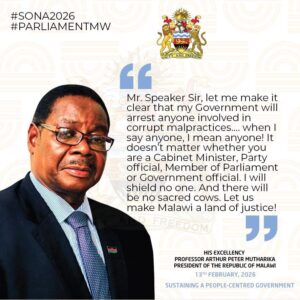
As well as on focus on economic industrialisation, the restructuring of the mega farms programme to improve productivity, and a renewed commitment to a people-centered development agenda.
“We commend the policy direction toward fiscal discipline, service delivery, and social protection,” says the statement. “However, we emphasise that these commitments must translate into tangible action.
“We, therefore, warn all public officers, controlling officers, and implementing agencies to faithfully execute the directives and development agenda outlined by the current leadership. Failure to implement these measures will amount to undermining national progress and public trust.
“The HRDC national adhoc committee remains committed to defending human rights, democratic governance, and institutional accountability both nationally and within the Coalition itself.
“We call upon all members, partners, and the public to support efforts aimed at restoring legitimate leadership and strengthening HRDC as a credible voice for human rights in Malawi.”
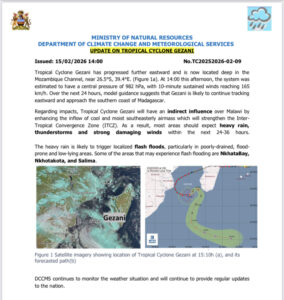
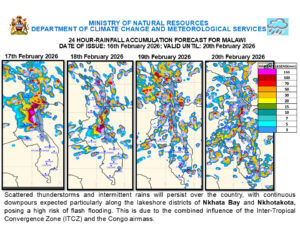
* Weather update