
* A blockchain-based innovation allows citizens to securely store and present a verified copy of their National ID on their mobile phones
* Making access to digital services more convenient, efficient and secure to reduce fraud
* It also lowers costs, accelerate onboarding and support financial inclusion and the digital economy
By Duncan Mlanjira
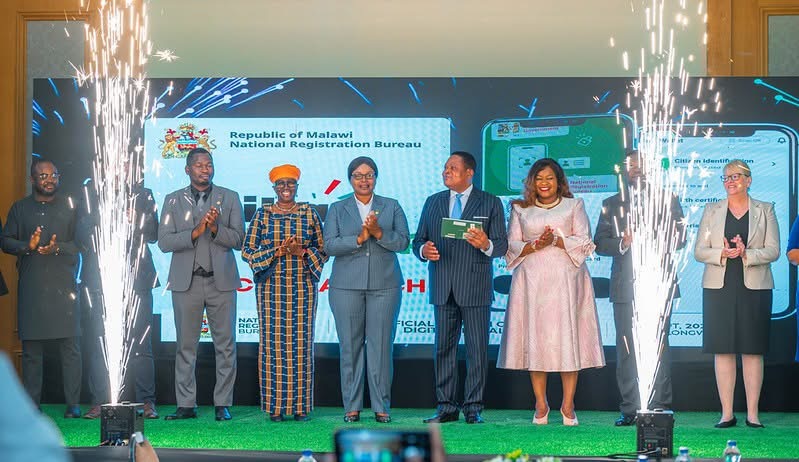
The Nzika Digital ID wallet has been officially launched today, September 16, seven months after President Arthur Peter Mutharika directed the National Registration Bureau (NRB) to establish it — with emphasis to modernise identity services and establish non-expiring ID cards.

Advertisement
The initiative was launched by Minister of Homeland Security, Peter Mukhito at Bingu International Convention Centre in Lilongwe, where he declared that National IDs issued from September 16, 2026, will no longer carry an expiry date.
“We are not simply launching another application — we are changing the way Malawians prove who they are,” he said. “We are taking national identity into the digital age.”
He emphasised that the initiative represents an important step in using technology to improve public service delivery.
President Arthur Peter Mutharika has thus earned praises after the successful introduction of the national ID without an expiry date.
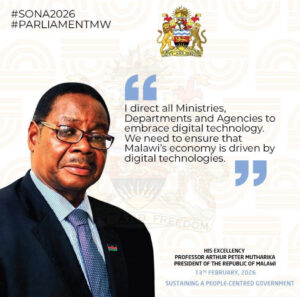
On his official Facebook account, President Mutharika highlighted that on February 13 this year — during his State of the Nation Address (SONA) in Parliament, he directed the NRB to implement a digital identity wallet as part of his administration’s “broader agenda to modernise identity services in Malawi”.
“Today, I am pleased to inform the nation that we have successfully rolled out the Nzika Digital National ID Wallet. This innovation marks a significant milestone in our digital transformation journey.
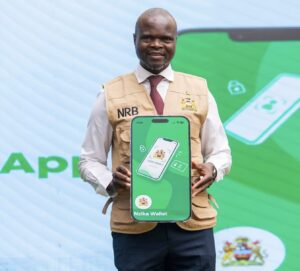
“Through this wallet, our National ID has become more secure, and Malawians are now relieved of the burden of physically carrying their ID for verification when accessing public services.
“Verification can now be seamlessly conducted using a smartphone. This achievement reflects our commitment to harnessing technology for efficiency, inclusivity, and convenience in service delivery.
“I extend my sincere gratitude to all our development partners, particularly the United Nations Development Programme (UNDP), for their steadfast support in enabling my Administration to deliver on this promise.
“Together, we are building a Malawi where innovation strengthens governance, empowers citizens, and enhances trust in public institutions.”
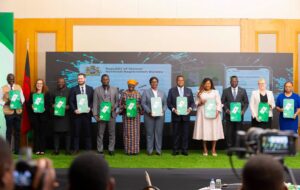
The event was also graced by Minister of Information & Communication Technology, Shadric Namalomba; Minister of Agriculture, Irrigation & Water Development, Roza Fatch Mbilizi; Minister of Health and Sanitation, Madalitso Baloyi; Deputy Minister of Homeland Security, Norman Chisale, MP; Chief Secretary to Government, Justin Saidi; United Nations Resident Coordinator in Malawi; Rebecca Adda-Dontoh; a whole host of embers of the Diplomatic Corps and top government officials.
In his speech, Minister Mukhito highlighted that emphasised that the government is “taking national identity into the digital age” with a clear commitment — that “no Malawian should be denied an essential service simply because a physical National ID card has not yet reached their hands”.
The event was celebrated under the theme; ‘My Identity. My Shadow. Never Apart”, which Mukhito highlighted that it “reminds us that identity is inseparable from the individual”.
“Just as a shadow follows us wherever we go, our identity should accompany us throughout life. Identity enables us to access services, participate in the economy, exercise our rights and affirm our citizenship.
“A National ID is, therefore, not merely a card — it is dignity; it is belonging; it is access; it is opportunity — because when identity is delayed, opportunity may also be denied.
He made it “absolutely clear that the Nzika Wallet does not replace the physical National ID card — it complements it.
“Those who prefer a physical card will continue to use it. Those willing and able to use a digital credential will now have that option.
“Modern Government must adapt services to the citizen — not force the citizen to adapt to Government.
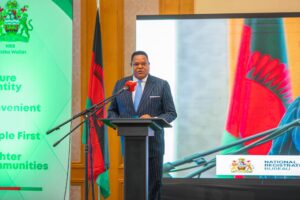
Minister Peter Mukhito delivering his key note address
“Digital transformation must remove barriers, not create new ones. Citizens without smartphones, people living in rural areas, older persons, persons with disabilities and other vulnerable groups must not be left behind.
“The Nzika Digital ID must, therefore, be guided by four principles: Accessibility, Efficiency, Inclusion and Security.
“Accessibility means reducing unnecessary delays; Efficiency means improving services while reducing costs; Inclusion means ensuring that digitalisation serves every Malawian.
“And security must remain non-negotiable. There must be no shortcuts with personal data, no compromise on cybersecurity and no tolerance for abuse of citizens’ information.
“Technology must empower citizens — not expose them,” said Mukhito, adding that secure digital identity will help banks verify customers more efficiently, strengthen social protection programmes, support business transactions and enable Government institutions to deliver services faster.
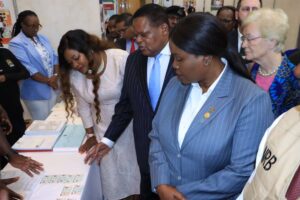
The launch coincided with the commemoration of International Identity Day and celebrates Malawi’s progress towards universal legal identity, ensuring more people can access services, opportunities and protections.
The innovation is a key step in modernising identity management by including the digital ID to the existing physical card.
Beyond improving service delivery, the digital ID Wallet is expected to significantly reduce NRB’s operational burden by minimising the need for physical ID printing which will result in substantial savings on printing consumables and a notable reduction in the overall turnaround for obtaining a national ID
Furthermore, this initiative represents a major milestone in Malawi’s efforts to achieve United Nations Sustainable Development Goal (SDG) Target 16.9, which aims at providing legal identity for all, including free birth certificates, by 2030.
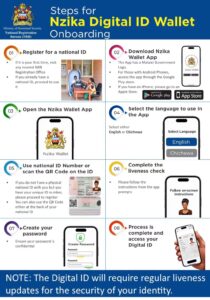
The eight steps required to get the digital ID includes:
* having the ID card, which can be obtained at nearest NRB registration office if one doesn’t have it;
* downloading the Nzika Wallet App using Android to download it from Google Play Store. Look for the App with the Malawi Government logo;
* open the Nzika Wallet App on the phone and choose preferred language (English or Chichewa);
* enter National ID number, or scan the QR code on your National ID;
* complete the Liveness Check by following instructions shown on the phone to confirm identity;
* create a password for your digital ID and keep the password private;
* once the process is complete, the Digital ID will be available in the Nzika Wallet App.
For further information or assistance, the public is encouraged to contact the NRB through Call Centre: 488 or 0111 700 700; SMS/WhatsApp: 0987 074 071 or 0987 074 073; and email: callcentre@nrb.gov.mw.

Mukhito further highlighted that the true measure of success will not be the launch but what happens after: “If a young person accesses an essential service without unnecessary delay, we will have succeeded.
“If a farmer verifies his or her identity more easily when seeking financial services, we will have succeeded. If Government serves citizens faster, more securely and at lower cost, we will have succeeded.
“Our ambition must, therefore, go beyond digitising an ID card. We must digitise convenience; we must digitise efficiency and we must digitise trust.”

Every child must count
He also stressed that civil registration begins with recognising every child, while disclosing that “since 2015, more than four million births have been registered through the national civil registration system”.
“Malawi also inherited a substantial historical backlog of unregistered children, estimated at approximately eight million by 2022.
“Government responded by launching the National Birth Registration campaign. Four of its seven planned phases have been completed, registering approximately four million previously unregistered children.
“Three phases remain, covering 10 districts. I, therefore, appeal to our development partners to help us complete this important national undertaking.
“Because every registered child is more than a statistic; that child is recognised, protected and becomes visible to the State.
“That is the essence of Sustainable Development Goal 16.9: legal identity for all by 2030.”

He also highlighted that the NRB has registered approximately 13.5 million eligible citizens in the national identity system and 6.6 million children in the civil registration system.
“Government aims to register an additional 3.4 million children by the end of this year, taking Malawi closer to universal legal identity coverage.
“Citizens can now begin the registration process online before visiting an NRB office, reducing queues and saving time.
“Birth registration is increasingly taking place at the point of birth in major health facilities, while death registration has been decentralised to health facilities across the country.”
He also announced that the NRB is ready to commence marriage registration — bringing Malawi closer to a complete civil registration system — from birth, to marriage, to death.
He expressed Government’s “sincere gratitude” to the European Union, Norway, Ireland, the United Kingdom Foreign, Commonwealth and Development Office, UNICEF, UNDP and all partners supporting Malawi’s civil registration and identity agenda.
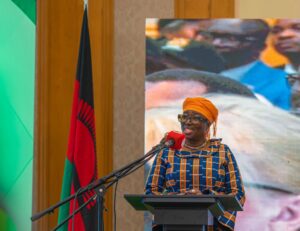
United Nations Resident Coordinator in Malawi, Rebecca Adda-Dontoh
He called upon Government institutions to support the implementation of this initiative; the private sector to embrace digital identity verification responsibly; and all Malawians to protect their personal information.
“To the National Registration Bureau, I say: be ambitious, but be careful; be innovative, but remain inclusive; move quickly, but never compromise security.
“Behind every identity record is a human being whose dignity, privacy and rights must be protected.
On the official Facebook account of the UNDP, United Nations Resident Coordinator in Malawi, Rebecca Adda-Dontoh is quoted as saying: “Legal identity is essential infrastructure for rights, inclusion and opportunity.”
She welcomed the wallet as a new way for citizens to securely verify their identity.
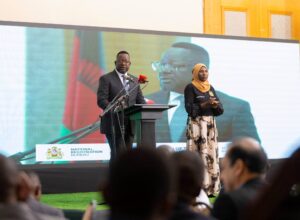
Minister of Information & Communication Technology Namalomba
Minister of Information & Communication Technology Namalomba encouraged government institutions to expand digital services, saying only 12% of Malawians have internet access and 30% own smartphones.
In essence, the initiative is expected to simplify access to identification services; promote better use of digital public services across the country; expected to reduce fraud; lower costs; accelerate onboarding; and support financial inclusion and the digital economy.

Advertisement