

* Through the Pan-African MultiChoice Talent Factory (MTF) academies that are training and inspiring women filmmakers to share their unique views of the world
* Mentorship goes beyond technical skills — it’s about helping people find their voice, seeing their genius and owning it
By Duncan Mlanjira
As the African continent asserts its leadership position in the world, a core aspect of its identity is the storytelling that informs Africa’s evolving culture — and the academies producing Africa’s next generation of storytellers, therefore, have a critical role to play.

Advertisement
This assertion is maintained by MultiChoice, a CANAL+ company, whose MultiChoice Talent Factory (MTF) — a training programme for youths in TV production that aspires to nurture talented Africans to tell the continent’s rich cultural and entertainment stories.
As Africa’s leading film and television academies, the MTF’s responsibility rests on the shoulders of three powerful women — Akaoma Onyeonoru, Mpimpa Moyo Mwenya and Victoria Goro, who are imparting critical creative skills leading the three MTF academies in Nairobi, Lagos and Lusaka, while also modelling executive excellence and championing sector transformation.
Talent evolution
All three share the commitment of MultiChoice, the CANAL+ company, to developing a pipeline of world-class African storytellers, and Akaoma Onyeonoru — who is acting Academy Director for MTF West Africa Academy, one of the most rewarding parts of her work “is seeing the evolution of young filmmakers”.
“Mentorship goes beyond technical skills,” Akaoma is quoted as saying in a statement. “It’s about helping people find their voice, seeing their genius and owning it.
“When students become directors, producers, or mentors themselves, especially women who once doubted their place, that’s when I know the work is making a real difference.”
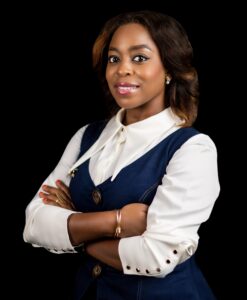
Akaoma Onyeonoru
Akaoma emphasises that she tries to teach the young women at MTF that beyond becoming technically proficient, they also have a responsibility to lead: “When women lead, creative spaces become more collaborative and more humane.
“Women bring depth, honesty, and new perspectives that expand the range of African stories,” says Akaoma, which MTF Southern Africa Academy Programme Manager, Mpimpa Moyo Mwenya agrees, noting that female leadership can nurture collaboration and create spaces where every voice is heard and valued.

Mpimpa Moyo Mwenya
“Through teamwork, transformation naturally unfolds, creating the opportunity to shift perspectives,” says Mwenya. “Female leaders foster a culture where equity, empathy, and excellence coexist, leading to storytelling that is not only compelling, but truly transformative.”
For MTF East Africa director, Victoria Goro, training young women filmmakers means convincing them that they belong in the industry, for who they are: “Young women, you don’t have to shrink or change who you are to succeed,” she says.
Culture of mentorship
The proof of this approach can be seen in the many successes achieved by MTF graduates — and Goro describes with pride the achievements of two women graduates in the East Africa Academy class of 2021/2022; Doreen Kilimbe and Rita Saxon from Tanzania.

Victoria Goro
These two Tanzanians joined the Academy “as shy and soft-spoken young women” and Goro identified their specific skill gaps, and developed personalised training and work experience.
Upon graduating from MTF, the two women went on to win filmmaking grants, and are now producing international award-winning work on the Maisha Magic Bongo channel.
“Both Doreen and Rita have gone on to become mentors themselves of young girls seeking career guidance in film and TV,” says Goro. “This creates a lasting, sustainable and scalable culture of mentorship.”
Leading with confidence
For young women keen to enter the film sector, the women have sage advice, and Mwenya says “whatever a young woman sets her mind to is possible — through a combination of technical training and confidence. Leadership is about stepping forward with confidence, being fully equipped, and creating opportunities to lift others as they rise.”
For Akaoma, the key to filmmaking success lies in learning the tools of trade: “Take yourself seriously. Learn your craft, understand the industry, and don’t be afraid to ask questions.
“Support other women, collaborate intentionally, and don’t wait for permission to lead. Start now, with what you have,” says Akaoma, with Victoria Goro agreeing, saying women filmmakers can succeed together – not just as individuals – by embracing their own womanhood and building networks of mutual support and inspiration.

Advertisement
“Build a network of supporters by connecting with established female mentors who can guide your career,” she says. “Learn from the successes and challenges of those who came before you.
The screen is a powerful tool for transformation, says Mwenya. “Women’s voices are essential. This is the moment to accelerate action through bold storytelling that reshapes our narratives.”
All three MTF women leaders are unanimous that the future of African storytelling depends on a strong vision, and long-term investment in skills development for the entire creative ecosystem.
“Mentorship goes beyond technical skills,” says Akaoma. “It’s about helping people find their voice, see their genius and own it.”
To learn more about the MultiChoice Talent Factory and how young African talent can be part of the programme, they are encouraged to visit multichoicetalentfactory.com.