
* You and your team were the best I have seen in many decades I have lived in England
* Your office was welcoming, accessible, friendly, respectful, professional and very very helpful
* You supported all Malawians living in United Kingdom equally without bias—Itali Felie B
By Duncan Mlanjira
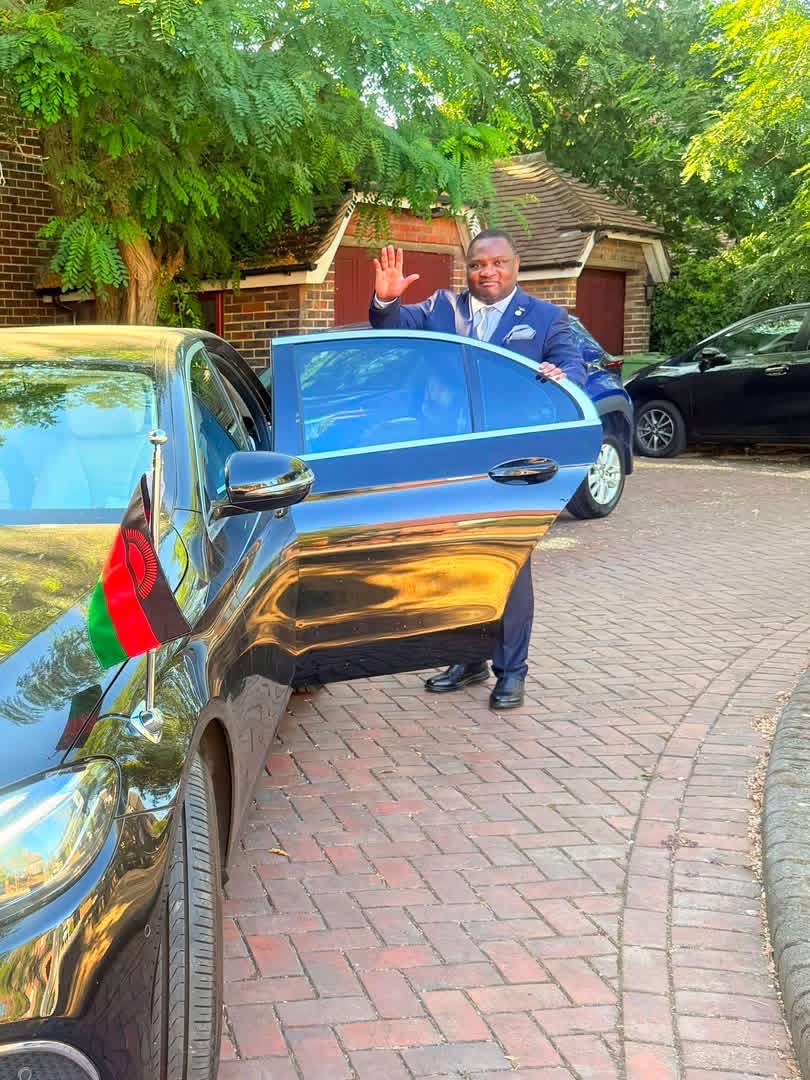
Dr. Thomas John Bisika has returned to Malawi after finishing his tour of duty as Malawi High Commissioner to the United Kingdom (UK) having served from 2022, who was replaced by the country’s most-famous poet, Ben Wokomaatani Malunga in May 2026.
Bisika took office in 2022 after presenting his letters of credence to Queen Elizabeth II and alongside his primary assignment in London, he held several concurrent international appointments, that included Permanent Representative to the International Maritime Organisation; Malawi Ambassador to Ireland, Spain, and Portugal; Malawi Ambassador to Nordic countries of Denmark, Finland, Iceland, Norway, and Sweden; and Malawi Ambassador to Malta.
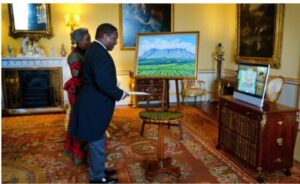
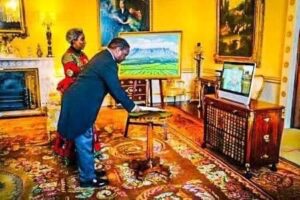
Dr. Bisika presented his letters of credence to Queen Elizabeth II virtually during the CoVID-19 pandemic
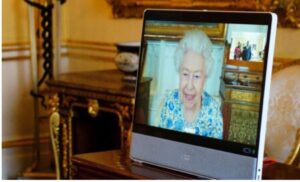
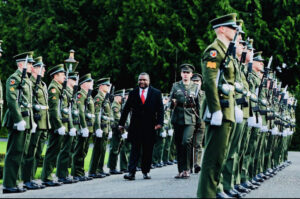
“On 31 July 2026, I concluded my tour of duty in London where I served as Malawi High Commissioner to the Court of St. James’s,” writes Bisika on his official Facebook account where he kept Malawians updated of his official duties and UK commitment towards the two countries’ bilateral relations.
“I have since returned to Malawi. I am very grateful to the host government, all Ambassadors and High Commissioners accredited to the Court of St. James’s, the Malawi diaspora, the Scotland-Malawi Partnerships (SMP) — for the support and the great work we did together.
“I shall forever cherish this honour,” he writes and immediately there wan an avalanche responses of Malawians in diaspora expressing their profound sentiments of appreciation for “a tour of duty well served”.
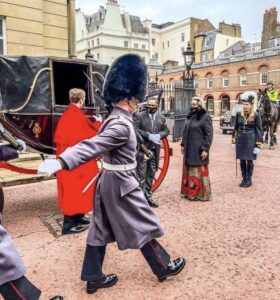
UK-based Kenneth Bowazi said: “Thank you for your excellent service — we will miss you. Thank you for all the time you availed yourself”, while Ital Felie B wrote: “They say some people bring happiness whenever they go and others bring happiness wherever they go — you are the latter, Your Excellence.
“You brought happiness to us when you came here. Your open door policy was awesome. You and your team were the best I have seen in many decades I have lived in England.

Advertisement
“Your office was welcoming, accessible, friendly, respectful, professional and very very helpful. Your members of staff, including bwana McDonald Sembereka were simply amazing — we did not lack support.
“You supported all Malawians living in United Kingdom equally without bias. You attended our community events [and] we are very sad to see you go — but that is life and we wish you all the best in your future endeavours.
“You were simply superb, Your Excellency Dr Thomas Bisika! Thank you for your dedication, service and everything. May God continue to bless you and your family.”
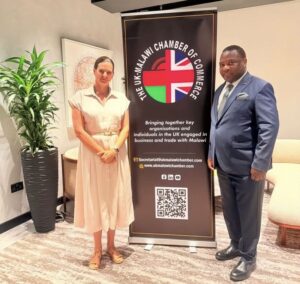
Dr Bisika with his counterpart the British High Commissioner to Malawi, Leigh Stubblefield yesterday during the UK-Malawi Business Chamber Roundtable at Fasken Boardroom in London last month
Alan Mandindi Banda said: “It has been an absolute honour to work with you here in the United Kingdom, Your Excellency. Your dedicated service to our nation has been truly remarkable.
“May God guide and bless you in your next assignment, and I look forward to our future collaboration,” he said while Nic Thindwa added that “no words can explain how great [Bisika] was to the people in the UK and beyond”.
“You were always there when needed, big or small issues, you were dedicated as a servant and to some of us, we’re just proud of you, Sir, may God continue blessing you abundantly, together with your family.
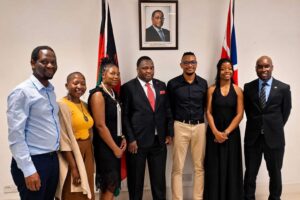
With UK Chevening Scholars on their arrival in London
In welcoming him back home, Amakhosi Jere said: “You demonstrated leadership at the highest level, Sir. You represented Malawi well.
“In my opinion, you were one of the few diplomats that kept updating us on the work you were doing on behalf of Malawians in the UK. That is correct leadership, Sir, and well done.”
Elijah Katantha joined in to say he had followed Bisika’s “entire tenure of office [and] it was all about Malawi, Malawi, Malawi. Welcome back, Sir, to your mother nation”.
Kondwani Mulenga said: “You have been an amazing High Commissioner to the UK. You raised the bar so high in getting in touch with all Malawians in the UK.
“Your constant updates on social media made most of us, back home, have the ‘UK’ feel. Welcome back home, Sir.”
Bisika is an ardent golfer and in welcoming him back home, Patrick Henry Debwe invites the diplomat to an 18-hole session at Zomba Gymkhana Club where Bisika kept his membership.

Bisika in solidarity with William Kamkwamba at the premier of musical ‘The Boy Who Harnessed the Wind’ held at The Swan Theatre in London
Before transitioning into international diplomacy, Bisika established a robust career in global health systems, academic research, and policy development.
He served as an academia at the University of Malawi (UNIMA) as a Research Fellow for Centre for Social Research and taught demography and sociology at UNIMA’s Chancellor College.
Academic experience for Bisika — an alumnus of both the UNIMA and Georgetown University — also includes serving as a senior lecturer in health policy and management at the University of Pretoria, South Africa.
He also served in the health sector as executive director for Malawi’s National Aids Commission (NAC) and chaired the National Health Sciences Research Committee for the Malawi Government from 1994 to 2001 — overseeing ethics approvals for key health studies and early clinical trials.
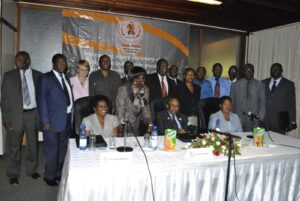
Bisika (2nd left) as NAC Executive Director when former Botswana’s president, late Mogae visited Malawi

With Ghanaian football legend Asamoah Gyan when he visited Malawi on NAC assignment
On global consulting, Dr. Bisika worked as a health systems specialist and consultant for major international institutions including the World Health Organisation (WHO), the World Food Programme (WFP), the United Nations Population Fund (UNFPA), and various global non-governmental organisations.

Advertisement