
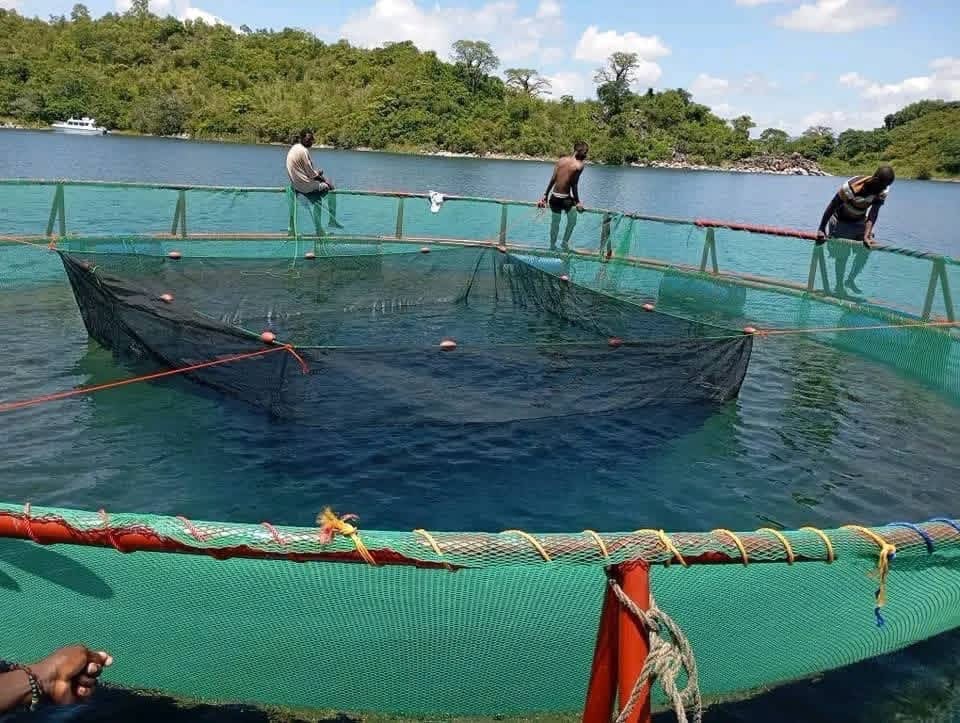
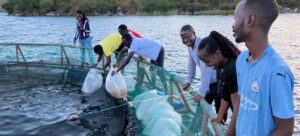
* Likoma Agri-enterprise Youth Group is implementing the cage fish farming project with financial support of K25 million from Likoma Conservation Foundation (LCF)
* A local non-governmental organisation under the Green Safaris Conservation Foundation, which is headquartered in the Netherlands
By Ireen Mseteka Malawi News Agency (MANA)
Cage fish farming is progressing well in Likoma District and is expected to create employment opportunities and improve the economic status of youths.

Advertisement
In an interview on Monday in Likoma Island, secretary for Likoma Agri-enterprise Youth Group, Iyan Mtawali, said the association is implementing the cage fish farming project with financial support of K25 million from Likoma Conservation Foundation (LCF) — a local non-governmental organisation under the Green Safaris Conservation Foundation, which is headquartered in the Netherlands.
Mtawali indicated that cage fish farming project is progressing well compared to their previous efforts, during which many fish died.
“This time, we stocked 28,000 fish, and only a few have died,” he said. “This is a good sign because most of the fish are healthy and growing well, showing that they are receiving the right amount of feed.”
The project is targeted to benefit youths from Chinyanya and Madimba by creating employment opportunities, and Mtawali indicated that three young people have already secured jobs at the fish cage.
However, Mtawali said the group is facing several challenges, including a lack of an engine boat to enable workers to feed the fish during rough weather, as well as the need to renovate the cage by replacing bag nets and rearing nets.
He encouraged fellow youths to join organised youth groups to become self-reliant, saying the government alone cannot employ everyone.
Mtawali also thanked the Likoma Conservation Foundation for its financial support, saying it has significantly contributed to the success of the project.
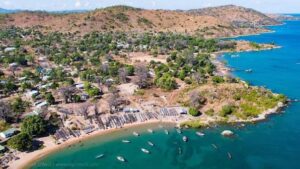
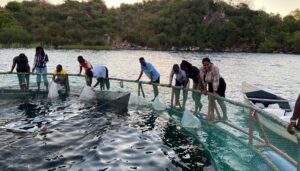
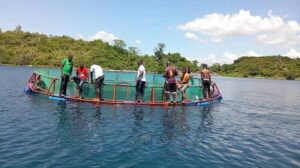
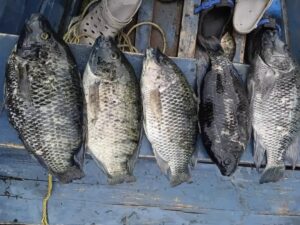
The foundation’s programme manager, Nyuma Manda said fish farming has been prioritised as part of environmental conservation efforts while increasing the production of fresh Chambo (tilapia) for supply to local lodges and visitors.
“The cage fish project will create jobs for youths and fishermen, economically empower young people in Likoma, attract tourists, and create business opportunities in the supply of fish feed, fingerlings and maintenance services,” said Manda.
She indicated that the project is currently in its pilot phase and that once it proves profitable, the group will be provided with a loan to establish additional cages.
The pilot project is expected to produce about 10 metric tonnes of fish, each weighing between 350 and 500 grams, from 33,000 fingerlings.
A week ago, Minister of Natural Resources, Patricia Wiskes indicated that Malawi will focus on aquaculture to bridge the declining fish stocks on Lake Malawi.
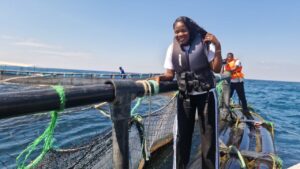
Minister Wiskes at a cage fish farming in Salima
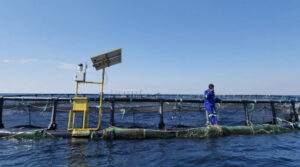
She emphasised that as pressure on Malawi’s natural fish resources continues to grow aquaculture is a key solution to increase fish production, improve food security and reduce dependence on declining catches from natural water bodies.
The Minister asserted this during a tour of Lake Malawi Aquaculture, a chambo production farm, and Chikombe Fish Landing Site in Salima, where she highlighted the need to expand fish farming while strengthening conservation efforts in lakes and rivers.
Wiskes said the Ministry is considering tax and duty waivers for investors in fish cage farming as part of efforts to reduce the high cost of production and encourage more investment in the aquaculture sector.
She said many investors are struggling with expensive inputs, particularly equipment required for fish farming, and that the Ministry of Finance will be engaged to explore possible incentives that can make the sector more affordable and attractive.—Editing by Duncan Mlanjira, Maravi Express

Advertisement