
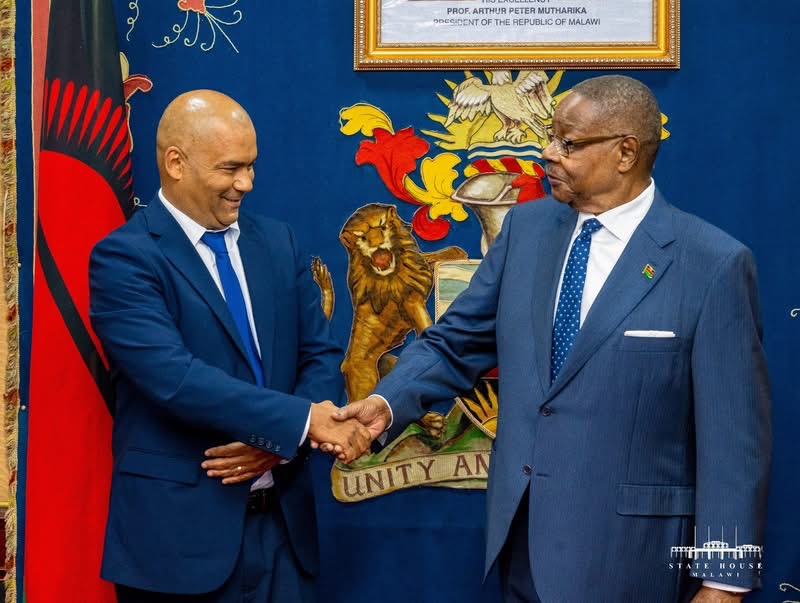
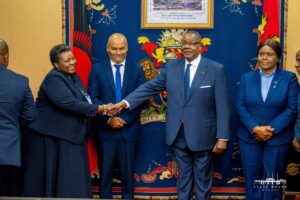
President Mutharika welcoming MCCCI president, Ronald Ngwira and his entourage
* As MCCCI pledges its support in responding to the impact of El Niño and boosting trade
By Duncan Mlanjira
At an engagement on Friday with the with the Malawi Confederation of Chambers of Commerce & Industry (MCCCI), President Mutharika called for continued government-private sector partnership in the economic development of the country.
The meeting was held at Kamuzu Palace in Lilongwe, joined by Ministers Simon Itaye (Industrialisation, Business, Trade & Tourism), Roza Mbilizi (Agriculture, Irrigation & Water Development) and Chief Secretary to the Government, Justin Saidi.
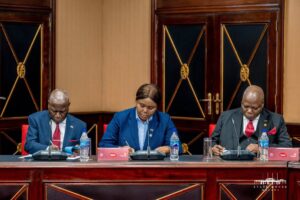
The State House reports that the President took cognizance that the Government has maintained a close relationship with the MCCCI and called for continued collaboration.
He highlighted the need for the private sector to continue supporting in key initiatives, including the El Niño response, trade, and other economic priorities.
On September 4, 2026, the government announced that it established a comprehensive national preparedness measures to address potential El Niño impacts while calling on the private sector to assist in the shortfall for its budget.
Chief Secretary Saidi, who is the chairperson of the adhoc Cabinet committee on El Niño, indicated that the preliminary financial requirement for implementation is estimated at MK488.5 billion, of which MK163.7 billion has already been mobilised through ongoing programmes and projects — leaving a financing gap of MK324.8 billion.
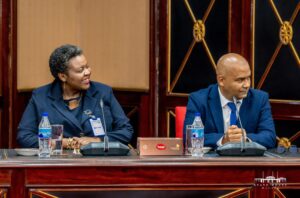
Ngwira and MCCCI Chief Executive, Daisy Kambalame
On his part, MCCCI president, Ronald Ngwira — who expressed gratitude for the opportunity to meet with the President — pledged the business community’s support in responding to the impact of El Niño.
He also guaranteed that the private sector, through the MCCCI, will continue to boost trade and the economy at large.
When opening the 22nd National Agriculture Fair two weeks ago, Ngwira urged the private sector to lead the transformation of agriculture, saying the government should focus on creating an enabling business environment and implementing business reforms.
Ngwira, who is Illovo Sugar Malawi Managing Director, thus called for increased adoption of improved agricultural technologies, mechanisation, and modern processing systems.
“Malawi must move away from viewing agriculture merely as a source of food and livelihoods and instead transform it into a productive, commercial and technology-driven sector capable of creating jobs, supplying industries and generating foreign exchange,” he had said.
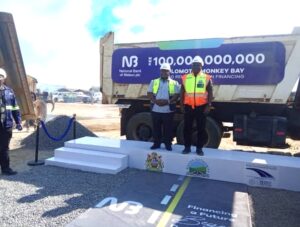
Recent government-private sector partnership include the rehabilitation of Golomoti-Monkey Bay road corridor, whose Lot 1 is being financed by FDH Bank while Lot 2’s is by National Bank of Malawi — both at K100 million credit facility.

This also follows the role played by Standard Bank Malawi as a role as lead arranger in mobilising funding for the Dr Saulos Klaus Chilima Highway in Lilongwe along with Old Mutual while NBS Bank financed the Capital’s modern Interchange.
When the government supported the voluntary repatriation of Malawi citizens stranded in South Africa due to xenophobic violence, various corporate companies invested into the initiative — enhancing the government-private sector partnership.
Illovo Sugar Malawi Plc constantly amplifies the government-private sector partnership through various development projects in education, health and responses to various disasters — under its purposeful programme, ‘Creating a Thriving Community’.
Just on August 25, 2026, Illovo Sugar Malawi launched its MK2 billion investment towards construction of state-of-the-art Nchalo Police Station to enhance response to security concerns, strengthen investigations and increase police visibility.
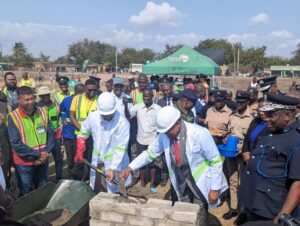
Minister of Homeland Security Peter Mukhito and Illovo MD Ngwira laying the foundation stone
When Trade Minister Itaye attended the 3rd Malawi-Tanzania Trade and Investment Forum in Dar es Salaam last week, he called for the two countries to deepen trade ties — highlighting that the private sector must be at the centre of this transformation.
He emphasised that while governments can negotiate agreements, improve border infrastructure, harmonise regulations and create an enabling environment — it is businesses that invest, produce, trade, innovate and create employment.
Thus Itaye underscored that the two countries private sector must convert geographical proximity into market proximity; political goodwill into commercial partnerships; and regional agreements into actual movement of goods, services, investment and people.

Advertisement