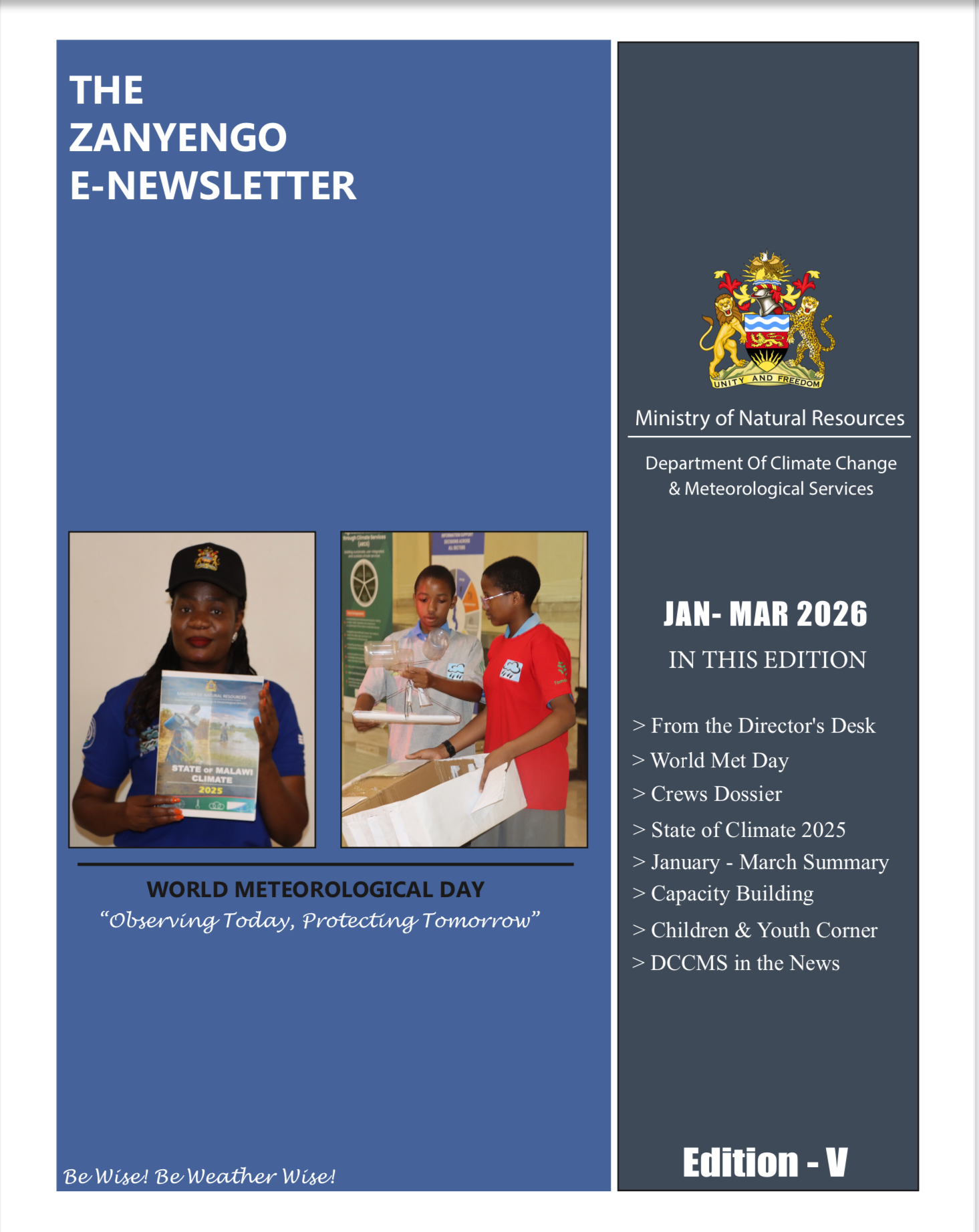

5th edition of DCCMS Zanyengo e-Newsletter highlights how Malawi’s early warning agenda is advancing through stronger science
* Along with stronger partnerships, and a clear commitment to turning observations into action
* The publication can be accessed through https://www.metmalawi.gov.mw/publications/the-zanyengo-e-newsletter-5th-edition/
By Duncan Mlanjira
Malawi’s early warning agenda is advancing through stronger science, stronger partnerships, and a clear commitment to turning observations into action, reports the Department of Climate Change and Meteorological Services (DCCMS) in its 5th-edition-of-the-Zanyengo-e-Newsletter.

Advertisement
Launched last year, the quarterly Zanyengo-e-Newsletter/ is DCCMS’ commitment to keeping the public, stakeholders and partners informed about its ongoing efforts in climate and weather services across Malawi.
In its preface, DCCMS Director, Dr. Lucy Mtilatila highlights that the March edition provides a comprehensive recap of the recent World Meteorological Day commemoration held in Lilongwe, which was “far more than a mere celebration of DCCMS’ scientific milestones [but] served as a powerful platform to reaffirm our dedication to addressing the complex climate challenges that impact our nation”.
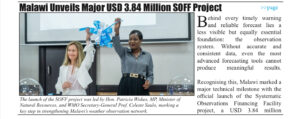
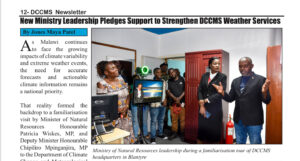
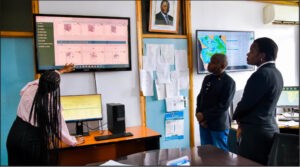
She also highlights Minister of Natural Resources, Patricia Wiskes’ familiarisation tour of DCCMS offices in Blantyre along with Deputy Minister, Chipiliro Mpinganjira, saying the visit provided a unique and invaluable opportunity to engage directly with the Ministry, offering a firsthand look at their operational priorities, technical capabilities, and the strategic roadmaps that guide their service delivery.
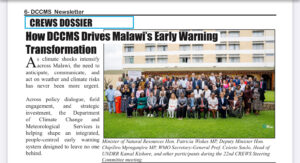
She also reports of a high-level mission undertaken by the World Meteorological Organization (WMO) Secretary-General and the Climate Risk and Early Warning Systems (CREWS) Steering Committee in February 2026, which marked “a pivotal moment in DCCMS’ international cooperation — focusing on strengthening our infrastructure”.
She reports that the meeting secured technical and financial partnerships necessary to fortify DCCMS’ climate resilience frameworks.
The highlight report of Edition V of the Zanyengo e-Newsletter is on ‘Early Warning Systems’, which marked as the central focus of the 76th World Meteorological Day commemoration held on March 31 in Lilongwe — under the theme; ‘Observing Today, Protecting Tomorrow’.
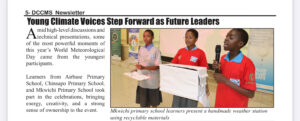
The event, reports the DCCMS Media, brought together government leaders, scientists, development partners, and communities “around a shared priority: turning climate observations into early action”.
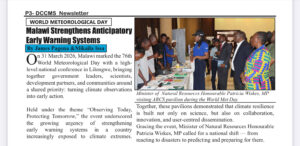
The event at Crossroads Hotel is reported to have combined policy dialogue, scientific communication, public engagement, cultural performances, and technical demonstrations — that underscored the growing urgency of strengthening early warning systems in a country increasingly exposed to climate extremes.
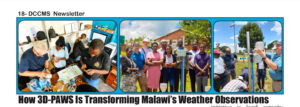
It also reflected the many dimensions of modern weather and climate services, demonstrated through pavilions that were mounted, showcasing practical entry points into the world of weather and climate services.
“DCCMS pavilions showcased a range of weather instruments, systems, tools, and publications, providing a clear view of the operational backbone behind forecasting and early warning
“They also highlighted the available weather and climate services provided by the department,” says the e-newsletter, adding that partner and sponsor pavilions further enriched the experience.
Agricultural Resilience through Climate Services (ARCS) Consortium and the Development Fund also highlighted collaborative efforts to strengthen climate services, including forecast voice messaging for farmers and an AI agro-advisory model.
The DCAS and Eagles Relief pavilions also created space for public interaction with a range of products on display, including seed varieties — and together, “these pavilions demonstrated that climate resilience is built not only on science, but also on collaboration, innovation, and user-centred dissemination”.

Minister Wiskes attended the event, who called for a national shift — from reacting to disasters to predicting and preparing for them — with a clear message: “weather and climate information must move beyond forecasts and serve as a practical tool for decision-making across sectors, from agriculture and infrastructure to disaster preparedness and local planning”.
All this and many more events are highlighted in the Edition V of the Zanyengo e-Newsletter, which can be accessed through https://www.metmalawi.gov.mw/publications/the-zanyengo-e-newsletter-5th-edition/.