

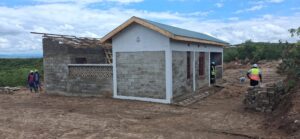
* Contractors of the whole project are expected to be selected by May or June 2026 and expected to be completed by July 2026
* Construction of the hydropower project is expected to employ about 2,500 workers, with priority given to local communities for unskilled labour
By Duncan Mlanjira
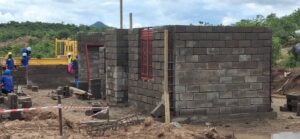
The 45 families that are to be relocated to pave way for the construction of Mpatamanga hydropower plant in Neno District, will be soundly compensated by the Government by being built with a house each on the land that has been secured for resettlement sites in Chaswanthaka and Mpindo villages.

Advertisement
In announcing the development through its official Facebook account, the government indicates that construction of the 45 houses for the affected families is currently underway and is expected to be completed by July 2026.
All construction contractors for the whole project are expected to be selected by May or June 2026 and that during the construction, the project is also expected to employ about 2,500 workers, with priority given to local communities for unskilled labour.
The government, through the Ministry of Energy, is implementing the Mpatamanga Hydropower Storage Project, which is a major initiative aimed at significantly increasing the country’s electricity generation capacity.
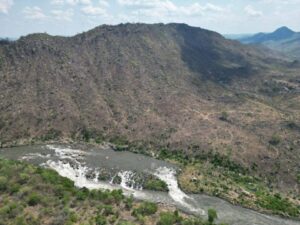
Site of the project along the Shire River
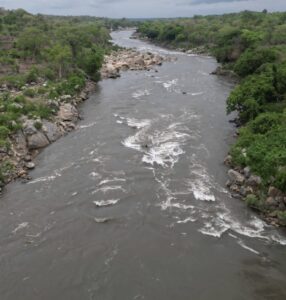
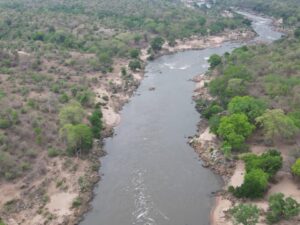
The report on the Facebook page indicates that Environmental & Social Impact Assessment (ESIA) studies for the project were completed in July 2024, which was approved by both Malawi Environmental Protection Authority (MEPA) and the project’s financiers, the World Bank.
MEPA issued an Environmental Certificate and in addition, the National Water Resources Authority (NWRA) and the Malawi Energy Regulatory Authority (MERA) have granted provisional licenses, allowing the project to proceed.
“At the same time, key project agreements including the Implementation Agreement, Power Purchase Agreement, Connection Agreement, and Shareholders Agreement are at an advanced stage of negotiation.
“The project is supported by a US$350 million grant from the World Bank’s International Development Association (IDA) to help the Government of Malawi meet its financial obligations,” says the government, which will hold a 30% stake in the project.
It also reports that “seven lenders have been identified and are expected to hold credit committee meetings between March and May 2026, with financial closure anticipated in August 2026”.
“Construction is projected to begin in January 2027 and will run for about 54 months, with full commissioning of the power plant expected in the third quarter of 2031. Once completed, the project will add 358.5 megawatts (MW) to Malawi’s national grid, including 301MW of peaking power from the main dam and 57.5MW of base load power from the regulating dam.
“The main dam will function like a storage battery, releasing water to generate electricity during periods of high demand, thereby improving the reliability of power supply.
“The increased electricity generation is expected to support energy-intensive sectors such as mining, agriculture, and tourism. It will also benefit households, businesses, hospitals, and schools through more reliable access to electricity.”

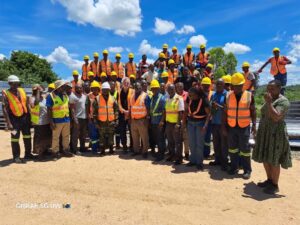
MDF Engineers Battalion re-installing the Mpatamanga bailey bridge
Meanwhile, it was also announced that, as part of environmental mitigation, the Mpatamanga project includes construction of a 15km solar powered electric fence around Neno Wildlife Ranch to support biodiversity conservation as well as strengthening community involvement and local capacity.
The Malawi Defence Force (MDF) engineers-battalion-also-commenced-reinstallation-of-mpatamanga-bailey-bridge-over-the-shire-river-in-mwanza/ that connects the people of Mwanza and Neno Districts to Blantyre via Chileka.
The project is being done under the Roads Authority after the bridge was swept away in 2019 by Cyclone Idai and its destruction led to limited access to essential social services for local communities and the reinstallation aims to enhance mobility between three districts.
The Chileka–Mpatamanga Road serves as the primary access route to the site of hydropower project and restoration of the bridge is vital both for local communities and for ensuring the timely commencement and smooth execution of this critical energy infrastructure project.

Advertisement