
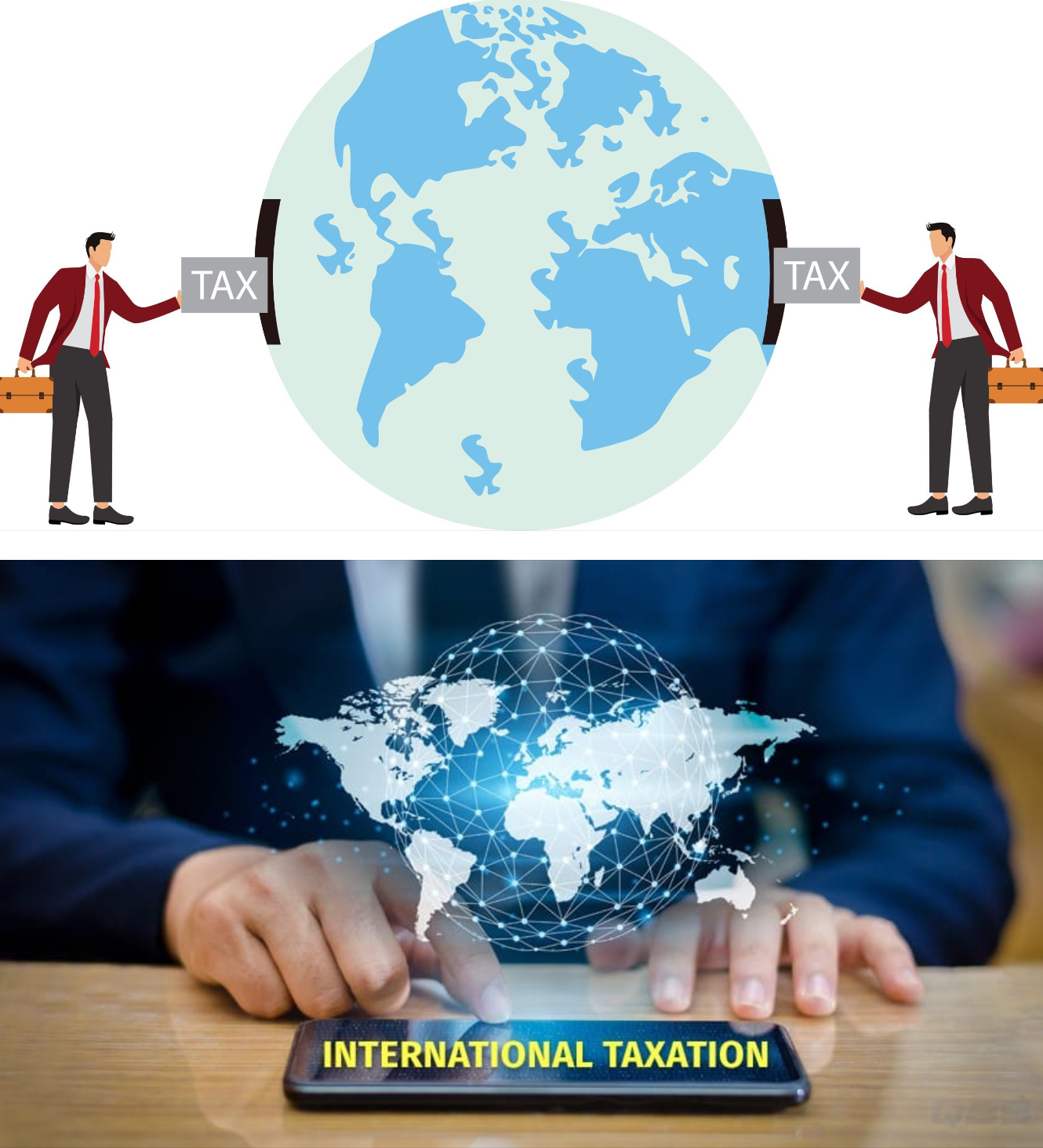
* As Malawians in the diaspora will be required to pay tax back home on income earned anywhere in the world
* Nothing in the current evidence suggests it would raise meaningful revenue, and everything suggests it would damage remittances, investment flows, and trust — at a time when Malawi desperately needs all three
* Malawi’s fiscal problem is not a lack of taxes — it is inefficiency, leakage, and expensive domestic borrowing
By Duncan Mlanjira
Minister of Finance, Economic Planning & Decentralisation, Joseph Mwanamvekha announced this week that Malawi Government plans to introduce worldwide taxation in which Malawians in the diaspora will be required to pay tax back home on income earned anywhere in the world.

Advertisement
Sources indicate that this taxation will be based on citizenship or residency, not where the money is earned, a major change from the current system. It is also expected to shift Malawi away from its current source-based tax system, where only income earned within Malawi is taxed, and aligns with systems used by countries like the United States.
But UK-based economic expert, Thomas Ngoma maintains that the suggested worldwide income tax on Malawians abroad “is certainly not a good move for the country’s economy, its fiscal credibility, or its relationship with the diaspora”.
“Nothing in the current evidence suggests it would raise meaningful revenue, and everything suggests it would damage remittances, investment flows, and trust — at a time when Malawi desperately needs all three,” says the economist, who is an executive management consultant with over 35 years’ experience advising clients on strategic business transformation, both in public and private sector regulated environments.

Thomas Ngoma
He thus suggests some structured, rigorous breakdown tailored to the fiscal realities of the Malawi economy as follows:
1. It contradicts Malawi’s own economic priorities
Malawi’s fiscal problem is not a lack of taxes — it is inefficiency, leakage, and expensive domestic borrowing. Search results show that Malawi loses ~12% of GDP to tax evasion. This needs to be tackled as a matter of urgency. This is around US$1.6 billion lost every year.
Fiscal deficit is MK2.4 trillion. The misconception that deficit spending leads to development must be corrected. Public spending is inefficient and corruption remains a major constraint.
Introducing a new tax on the diaspora does nothing to fix these structural issues. It simply adds another layer of complexity and resentment.
2. It risks damaging one of Malawi’s most valuable economic assets: the diaspora
The diaspora currently sends US$260-280 million annually in remittances — one of Malawi’s largest sources of foreign exchange.
But the diaspora is not just sending money back home; it is a potential engine for investment in agriculture, energy, housing, and SMEs; diaspora bonds can be mobilised; it is a foreign direct investment (FDI) pipeline and a skills and knowledge transfer across all economic sectors.
The diaspora can be used as contact cells for export market access worldwide at no additional expense to spearhead market penetration of Malawian made products during industrialisation expansion.
A worldwide tax would reduce goodwill, discourage remittances, and undermine investment appetite. Most people would renounce their citizenship.
Countries that successfully leverage their diaspora, such as Kenya, Ghana, Nigeria among others, do not tax worldwide income — they court their diaspora.
3. Worldwide taxation is nearly impossible to administer
Even wealthy countries with advanced tax systems struggle to enforce worldwide taxation — e.g. the U.S. Foreign Account Tax Compliance Act (FATCA) regime.
Malawi lacks tax treaties with other nations; information-sharing agreements are non-existent; and with prevailing forex shortages, how will the Malawi Government administer forex-based expenses worldwide as enforcement capacity?
Trying to tax global income without administrative systems burden and digital identity infrastructure tools is not feasible and would cost more to administer than it would raise.
4. It sends the wrong signal to donors, investors and markets
Malawi is already battling with high domestic interest rates — these should be reduce first. Rising debt service costs should also be decisively tackled, especially on high domestic borrow rates.
Malawi attracts low investor confidence, has fragile macro environment, while high inflation discourages investors. A worldwide tax signals desperation, not reform; policy unpredictability; weak fiscal discipline and a government willing to tax anything rather than fix expenditure.
This undermines the credibility Malawi needs to lower borrowing costs and attract investment.
5. It contradicts Malawi’s own diaspora engagement strategy
The Reserve Bank of Malawi (RBM) explicitly states that the diaspora is critical to foreign exchange stability; investment inflows; financial sector development; and capital account liberalisation.
The RBM has been building non-resident Foreign Currency Denominated Account (FCDA) accounts; diaspora investment channels; exchange control flexibility — therefore, a worldwide tax directly undermines these efforts.

Finance Minister Joseph Mwanamveka
Ngoma goes on to suggest what Malawi should do instead, saying credible fiscal strategy would focus on:
1. Expenditure discipline and efficiency
* Zero-based budgeting — no more excessive deficits; procurement reform (learn from EU/UK public procurement practices and systems); digital public financial management systems; performance-based spending.
* He emphasises that some government Ministries, Departments and Agencies (MDAs) perform much better than others, “which just sink money into waste”.
2. Lowering domestic borrowing costs
* Create credible fiscal anchors; rule-based monetary regime; debt reprofiling; and reducing short-term domestic instruments.
3. Expanding the tax base through compliance, not new taxes
* Digital invoicing (EIS) rollout; excise traceability (kalondola); VAT compliance; and customs modernisation with enhanced processes and procedures as well as better use of technology.
4. Mobilising the diaspora through investment, not taxation
* Introduce diaspora bonds; create and enhance diaspora investment funds; create diaspora housing schemes; preferential investment windows for diaspora; and digital onboarding for FCDA accounts. This aligns with global best practice and Malawi’s own stated goals.
In his overall assessment, Ngoma says: “A worldwide tax on Malawians abroad is economically counterproductive, administratively unworkable, and strategically damaging. It risks shrinking remittances, undermining investment, and eroding trust — while raising negligible revenue.
“Malawi’s fiscal crisis is not caused by insufficient taxation — it is caused by inefficiency, leakage, and expensive borrowing. The solution is credibility, discipline, and reform, not taxing the diaspora.”
In his analysis on social media, another economic analyst, Assa Maganga observed that some Malawians who earn income outside the country are already worried that the worldwide tax system means they will be taxed twice on the same earnings.
However, he explains that “while the concern is understandable, a worldwide tax approach does not automatically lead to double taxation. In simple terms, it means that a country taxes its residents on all income, whether it is earned locally or abroad.
“Under a worldwide tax system, Malawian residents are required to declare income earned both within Malawi and in other countries. At the same time, the country where the income is earned may also impose its own taxes.
“This creates the possibility of double taxation, but in practice countries rely on legal mechanisms to prevent this from happening. These mechanisms include foreign tax credits, income exemptions, and double taxation agreements with other countries.
“Foreign tax credits allow taxpayers to deduct the tax they have already paid abroad from their Malawian tax liability. Tax treaties help clarify which country has the right to tax certain types of income, reducing the risk of the same income being taxed twice.
For example, a Malawian professional working in UK who earns the equivalent of MK1 million. If UK taxes that income at 25%, the worker pays MK250,000 in tax there. If Malawi applies a 30% tax rate on the same income, the total tax due would be MK300,000.
So, because the taxpayer receives credit for the MK250,000 already paid in UK, they only pay an additional MK50,000 to the Malawi Revenue Authority. In the end, the total tax paid is MK300,000, not MK550,000.
But as per other economic experts, including Ngoma, worldwide taxation “is nearly impossible to administer” for a financial system like Malawi’s unless robust income tax treaties are successfully signed with countries where Malawians are in diaspora.


Advertisement