

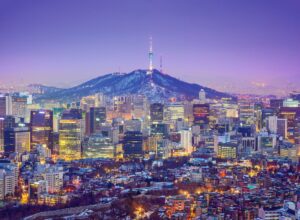
* In the early 1960s, South Korea was a wartorn, aid-dependent country with very limited natural resources
* Estimates place South Korea’s GDP per capita in 1961 at roughly US$82-100 — a level below that of Malawi, Ghana, or Kenya at the time
* The economy was predominantly agrarian, unemployment was widespread, and foreign aid financed a significant share of public expenditure
* Six decades later, South Korea is a high income economy with GDP per capita exceeding US$33,000, a leading exporter of manufactured goods, and home to globally competitive firms in electronics, automobiles, shipbuilding, and advanced technologies
By Donasius Pathera, PhD
South Korea’s rise from poverty to prosperity remains one of the most instructive economic transformations of the modern era. In the early 1960s, South Korea was a wartorn, aid-dependent country with very limited natural resources.

Advertisement
Its income levels were comparable to, and in some cases lower than, those of many African countries today. Estimates place South Korea’s GDP per capita in 1961 at roughly US$82-100 — a level below that of Malawi, Ghana, or Kenya at the time.
The economy was predominantly agrarian, unemployment was widespread, and foreign aid financed a significant share of public expenditure. Six decades later, South Korea is a high income economy with GDP per capita exceeding US$33,000, a leading exporter of manufactured goods, and home to globally competitive firms in electronics, automobiles, shipbuilding, and advanced technologies.
This transformation did not occur because South Korea was endowed with exceptional resources or enjoyed an unusually favorable starting point. Rather, it was the outcome of deliberate leadership choices, coherent economic strategy, and a disciplined partnership between the state and domestic capital.
For countries such as Malawi, which continue to grapple with low productivity, narrow export bases, and persistent fiscal and balanceofpayments pressures, South Korea’s experience offers valuable lessons about how development can be organised and sustained over time.
At the outset of its development journey, South Korea faced constraints that closely resemble those confronting Malawi today. Agriculture accounted for more than 40% of South Korea’s GDP in the early 1960s, while manufacturing was small, technologically weak, and inward looking.
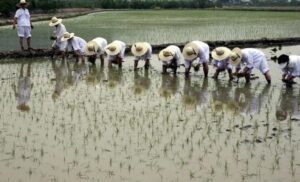
Malawi’s economy today is similarly structured, with agriculture employing over 70% of the population and contributing roughly a quarter of GDP, largely through low-value primary production. In both cases, economic vulnerability was high and exposure to external shocks was severe. The critical difference lay not in initial conditions, but in how national leadership responded to those conditions.
South Korea’s political leadership treated economic under-development as an existential challenge. Growth was framed not merely as a technocratic objective, but as a matter of national survival, sovereignty, and dignity.
This framing helped mobilise the state, the private sector, and society around a shared longterm project of industrialisation. Beginning in the early 1960s, the government adopted what later became known as a developmental state approach.
Markets were not abandoned, but they were actively guided. Through successive five-year economic development plans, the state identified priority sectors, coordinated investment, mobilised finance, and aligned public institutions behind clear production and export targets.
The results of this approach were striking — between 1962 and 1980, South Korea recorded average annual economic growth of over 8%, one of the fastest sustained growth rates in modern history. Manufacturing expanded rapidly, rising from less than 15% of GDP in the early 1960s to more than 30% by the 1980s.

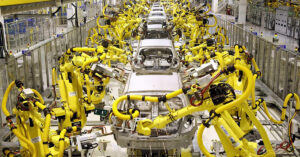
Exports grew even more dramatically, increasing from just US$55 million in 1962 to over US$17 billion by 1980. Export growth was not incidental; it was deliberately engineered as a mechanism for earning foreign exchange, disciplining firms, and accelerating learning through global competition.
Central to this transformation was the relationship between the state and domestic business elites. One of the most under-appreciated aspects of South Korea’s success is how wealthy individuals and emerging industrialists were integrated into the national development agenda.
The government provided selected firms with access to subsidised credit, preferential access to foreign exchange, tax incentives, and protection from imports. In return, firms were required to invest in targeted industries such as steel, shipbuilding, automobiles, and electronics, and to meet strict performance benchmarks, particularly in export markets.


Support was conditional and reversible. Firms that failed to deliver lost access to state backing. This arrangement fundamentally shaped the behaviour of South Korea’s wealthy business class. Rather than accumulating wealth through short-term trading, speculative activities, or capital flight, leading entrepreneurs reinvested domestically and built productive industrial capacity.
The emergence of large conglomerates, later known as chaebols, was closely tied to this system of reciprocal obligation. By the late 1970s, South Korea had established POSCO as one of the world’s most efficient steel producers, entered global shipbuilding markets through firms such as Hyundai, and laid the foundation for its electronics industry through companies like Samsung and LG.
Wealth creation and national development became mutually reinforcing. Export discipline played a critical role in sustaining this dynamic. By forcing firms to compete internationally, South Korea ensured that protection did not breed complacency.
In the mid-1960s, exports accounted for less than 5% of GDP. By the mid-1980s, exports exceeded 35% of GDP. This exposure to global markets compelled firms to improve quality, reduce costs, adopt new technologies, and meet international standards.
The state closely monitored export performance and used it as a key criterion for allocating credit and policy support. Protection existed, but it was conditional on results.
Equally important was sustained investment in human capital. South Korea’s leaders recognised early that industrialisation without skills would be unsustainable. Even when fiscal resources were limited, the government prioritised universal primary education, rapid expansion of secondary schooling, and the development of technical and vocational institutions.
By the 1980s, South Korea had achieved near-universal literacy and was producing a growing number of engineers and technicians. Over time, public and private investment in research and development increased steadily.
Today, South Korea spends more than 4% of its GDP on research and development, among the highest ratios in the world, reflecting the long-term payoffs of these early investments.

For Malawi, the relevance of South Korea’s experience lies not in copying specific policies, but in understanding the underlying principles that guided leadership choices. Malawi’s development strategy must be actively led rather than left to chance or fragmented reforms.
Markets alone will not deliver structural transformation without coordination, infrastructure, skills, and finance aligned behind clear priorities. Leadership must, therefore, play a central role in identifying sectors with the greatest potential for productivity growth, employment creation, and export expansion, particularly in agriculturebased value chains, agroprocessing, and light manufacturing.
Another critical lesson concerns the role of domestic wealth. Malawi has an emerging business class, yet much private wealth remains concentrated in trading, imports, real estate, or external assets.
South Korea’s experience shows the importance of policies that encourage wealthy individuals to invest in productive industry rather than rent-seeking activities. This requires access to long term finance, predictable industrial policies, and clear performance expectations. Public support must be linked to tangible outcomes in production, employment, and exports.

Advertisement
South Korea’s insistence on discipline and accountability also offers a valuable lesson. Subsidies, incentives, and protection were not permanent entitlements, but tools to accelerate learning and competitiveness.
For Malawi, this implies that public support programs should be transparent, timebound, and tied to measurable results. The objective should be to build competitive firms, not to sustain dependence on state assistance.
Investment in education and skills remains equally fundamental. Without a skilled workforce, industrial policy cannot succeed. Malawi’s long-term growth prospects depend on sustained investment in basic education, technical training, and applied research, even during periods of fiscal stress.
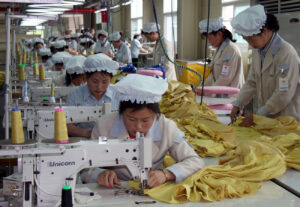
Human capital must be treated as core economic infrastructure, not discretionary social spending.
It is also important to acknowledge the limits of comparison. South Korea benefited from geopolitical conditions, external support, and a level of state capacity that Malawi does not fully share.
Its development path involved social sacrifices and authoritarian governance that would not be acceptable today. The lesson, therefore, is not imitation, but adaptation. What matters is the clarity of vision, the consistency of policy, and the alignment of incentives across state and society.
South Korea’s story ultimately demonstrates that development is not accidental. It is the product of sustained leadership, disciplined institutions, and a deliberate effort to align private incentives with public goals.
For Malawi, the challenge is not a lack of ideas or plans, but the difficulty of translating vision into execution over time. South Korea’s experience serves as a reminder that even under severe constraints, countries can transform their economies when leadership treats development as a longterm national project rather than a series of shortterm policy responses.
* About the author: Donasius Pathera, PhD does consultancy in research, policies, strategic planning & developing and public finance management as well as resource mobilisation


Advertisement