* Those who have brought up the news on social media are just doing their job to point at what seems not to be right
* When travelling I get a proposed list of names from which I choose according to the needs of that particular trip
* I approved names strictly, at least 10 and the other five are from administration. On Friday, people can go and check who is coming out of the plane
By Vincent Khonje, MANA in Turkmenistan
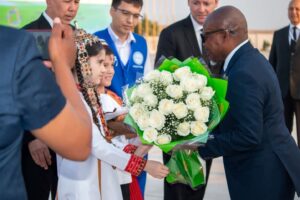
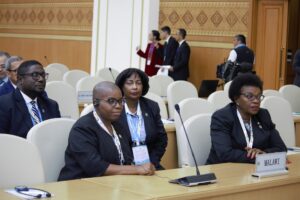
Vice-President Michael Usi, who is representing President Lazarus Chakwera at the 3rd UN Conference on landlocked developing countries (LLDC3) in Awaza, Turkmenistan, has clarified that he did not pick a bloated delegation.

Advertisement
The social media was awash with news that the Vice-President has gone to the conference with 43 officials and Usi said those who have brought up the news on social media are just doing their job to point at what seems not to be right.
“As a leader, my responsibility is not to fight the test but to pass the test by explaining how things are,” he said in an interview with Malawi News Agency (MANA) in Awaza.
“When travelling I get a proposed list of names from which I choose according to the needs of that particular trip.
“I approved names strictly, at least 10 and the other five are from administration,” Usi said, adding that as he arrives home on Friday, people can go and check who is coming out of the plane.
On the trip to the conference, there is a delegation from the Ministry of Foreign Affairs, and another delegation from the UN.
Taking advantage of the conference, Malawi has signed a memorandum of understanding (MoU) with the hosts, Turkmenistan, which is going to deepen the two countries’ bilateral relations.
It will also explore funding for Malawi’s developmental projects, especially in areas that Turkmenistan has expertise such as energy, infrastructure and education.
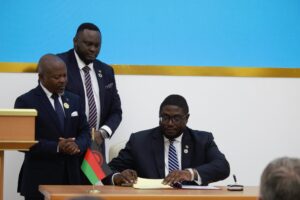
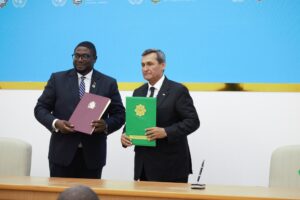
Vice-President Usi witnessed the signing ceremony, saying the MoU is very important as Turkmenistan has a number of areas where Malawi can learn from.
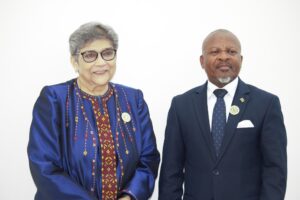
The Malawi team also had bilateral talks with Rabab Fatima, Under Secretary of UN Office of the High Representative for least developed countries (LDC, where the two parties discussed Malawi as chair of UNFCCC and the Doha Plan of Action (the DPoA) midterm review. Another bilateral relationship was yoked with the UN Capital Development Fund (UNCDF).
Yesterday, Usi contributed to the general debate at the conference, highlighting Malawi’s infrastructure development, including road and rail rehabilitation, border post modernisation and customs systems.
Usi also tackled the importance of digital connectivity, saying Malawi’s initiatives to expand rural network coverage and introduce digital skills training for youth and entrepreneurs.
He said every step towards efficient transport and transit systems is a step towards global prosperity yet LLDC path is often slowed by inadequate infrastructure, high transport costs, and limited access to global markets.
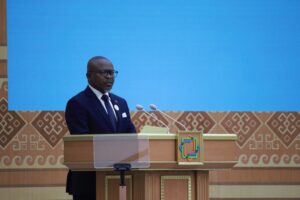
He said these barriers not only undermine the countries competitiveness but also entrench poverty and inequality: “Over the past decade, the Vienna Programme of Action provided a useful framework.
“We, therefore, acknowledge progress made, particularly in regional cooperation, trade facilitation, and infrastructure development. In Malawi, we have prioritised road and rail rehabilitation, border post modernisation, and customs systems. However, progress remains insufficient.”
The Vice-President said the Awaza Programme of Action running from 2024 to 2034 is, therefore, both timely and necessary, emphasising that it “reflects lessons learnt from the Vienna Programme and offers a renewed global commitment to the aspirations of the 32 landlocked developing countries in the world.


Advertisement
He called on development partners to honour their commitments and partner with Malawi in unlocking full potential.
UN Secretary General, Antonio Guterres said landlocked countries are victims of double injustice because they are both developing and landlocked and, therefore, called for reforms.
“It is time to reform international financial architecture, it is time for effective debt relief, and it is time for adequate concessional funding for landlocked countries to enjoy,” Guterres said.—Edited by Maravi Express