
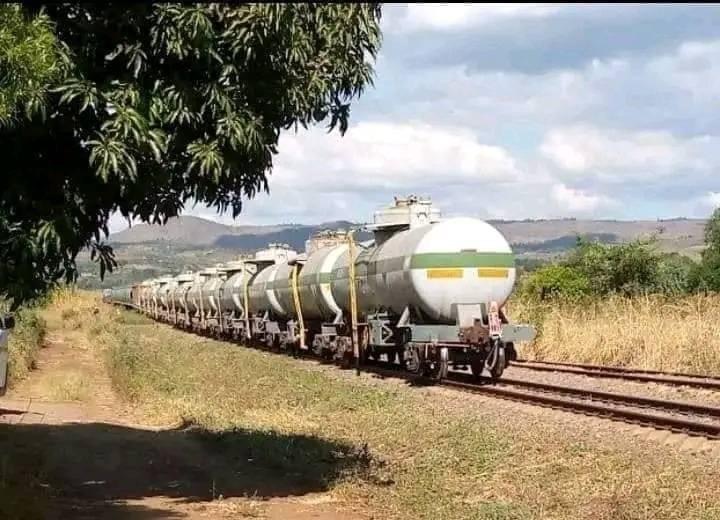
PIL will now be transporting its fuel products using cargo trains from the Mozambican port of Nacala
* The supplier in Tanzania, Camel Oil is offering the rates that are lower than MERA’s prescribed Fuel Haulage Rates
* Which have just been revised upwards on the 10th of April, 2022
* Thus NOCMA committing to top up the difference between the two rates to be within the country’s Regulated Rates
* NOCMA offering the Association a Credit Facility for the purchase of diesel to transport the purchased fuel
Analysis by Duncan Mlanjira
Malawians had anticipated that the pump fuel prices would not have been significantly adjusted upwards as has been done this week following the announcement mid this month, that Petroleum Importers Limited (PIL) will now be transporting its fuel products using cargo trains from the Mozambican port of Nacala.


Advertisement
The announcement, made on social media on ‘Chakwera Delivers’ Facebook page, indicated that “for over 20 years, Malawi has been losing billions from the inland haulage of fuel through road tankers [and] today, we as a nation, are celebrating the resumption of fuel transportation by rail via the Nacala Corridor”.
Accompanied by pictures of a offloading exercises from rail tankers managed by Central East African Railways (CEAR), the announcement said about 500,000 litres of fuel were hauled into the country from Nacala Port.
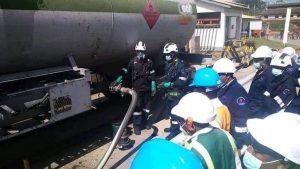
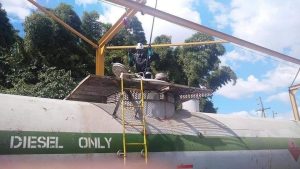
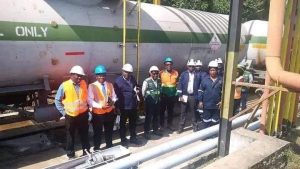
The announcement lauded President Lazarus Chakwera “and his government for championing and revamping this important and cost-effective mode of transportation. Pa ground pakusintha ndipo pakuwala daily!”
But just a week later, Malawi Energy Regulatory Authority (MERA) increased fuel pump prices effective June 23 — petrol up by 44.92% from K1,380 to K1,999 a liter; diesel by 30.61% at K1,920 from K1,470 and 29.29% for paraffin — at K1,236 from K956.
An impeccable inside source at MERA indicated that the benefits of the cost-effective rail fuel transportation would not be instant following the current economic pressures Malawi is facing and taken into account the 25% devaluation of the Malawi Kwacha and other strong global market forces.
But reports reaching us are that National Oil Company of Malawi (NOCMA) could have contributed to the recent astronomic fuel hike as it committed to be paying extra costs for fuel importation assigned to private transporter association — namely Women in Logistics and Large-Scale Suppliers.

Helen Buluma
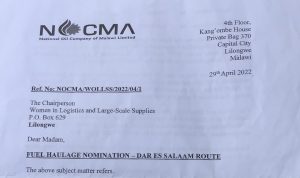
A letter dated April 29, 2022 from NOCMA deputy chief executive officer (CEO), Helen Buluma indicates that the government entity “nominated” the Women in Logistics and Large-Scale Suppliers to haul fuel from its supplier in Dar es Salaam, Camel Oil.
The letter said: “We refer to several discussions in meetings between October 2021 and April 22 with yourselves along with other Transporters Associations in the country.
“It was agreed, among other matters, that you will work with our Suppliers to transport Petroleum Products belonging to NOCMA on an interim basis whilst we jointly work towards finalizing the Tripartite Fuel Haulage Agreements with our suppliers in which NOCMA will be the facilitator and not a contracting party.”

Advertisement
The letter further asked Women in Logistics and Large-Scale Suppliers to nominate and provide 100 trucks for the month of May, 2022 to be “lifting petroleum products for Camel Oil as determined by the supplier’s loading instructions”.
The routes assigned were Dar es Salaam to Mzuzu at US$125/m3 and and Dar es Salaam to Lilongwe at US$135/m3.
Buluma informed the transport association that the supplier in Tanzania, Camel Oil, was offering the rates she quoted and made it known that “NOCMA is aware that these rates are lower than MERA’s prescribed Fuel Haulage Rates, which have just been revised upwards on the 10th of April, 2022”.
She thus made a declaration that NOCMA “commits to top up the difference between the two rates to be within the country’s Regulated Rates”.
“Kindly note that as part of our support towards efficient fuel haulage operations, NOCMA will offer your Association a Credit Facility for the purchase of diesel for the sole purpose of transporting NOCMA’s Petroleum Products during this Interim Haulage Arrangement.


“The Terms and Conditions governing the Credit Facility will be detailed in the Credit Sales Agreement to be signed between your association and NOCMA once all due diligence processes are finalised.”
The letter was copied the Principal Secretary of Ministry of Energy; MERA CEO and the Tanzanian supplier, Camel Oil’s managing director.
When reached out for further clarification, Buluma referred this reporter to NOCMA spokesperson, Chisomo Mwamadi who responded that they would not comment on the issue.
Maravi Express wanted to find out whether the arrangement was legal or not after noting that NOCMA was committing itself to top up the rates which the supplier had indicated for transportation of fuel from Dar es Salaam.
We also wanted to know why NOCMA chose to single supply chain alone through the Women in Logistics and Large-Scale Supplies when the Tripartite Fuel Haulage Agreements with suppliers had not been finalised.
The question of why was the process not done through public tendering was also not addressed through Mwamadi’s response that they would not comment on the issue.

Chisomo Mwamadi
NOCMA also could not respond to our observation that it indicated that it will be a facilitator and not a contracting party. The question asked was if NOCMA is not a contracting party, then who is?
NOCMA also refused to respond to our query of: Is NOCMA legally mandated to undertake offering the association a credit facility for the purchase of diesel to and from Dar es Salaam under the interim haulage agreement?
According to our sources, NOCMA bypasses MERA as a Regulator in some fuel arrangements of this sort, acting like it is bigger than MERA itself.
When Leonnard Chikadya tendered his resignation as MERA Board chairperson in February, he cited two examples that caused strain in the relationship between the MERA Board and Secretary to the President & Cabinet (SPC) — that include that there were some NOCMA premiums fuel contracts that had not been approved by the MERA Board to date, “and yet NOCMA is receiving fuel supplies with premiums that remain unapproved”.
He had indicated that the “MERA Board refused to grant such approval on account of the uncompetitive premiums, which would unduly burden Malawians with frequent fuel pump price rises”.

Leonnard Chikadya
Chikadya also disclosed that during a MERA Board enquiry, the Parliamentary Public Appointments Committee (PAC) established that having the SPC as chairperson of various Boards of Public Enterprises including NOCMA, EGENCO, and Power Marketing Limited, was “a serious governance anomaly”.
He had indicated that “it would be extremely difficult for the MERA Board to provide oversight of regulation on any institution where the Chairperson is the SPC, who also heads Civil Service”.
Our impeccable source in MERA indicates that this is why NOCMA is able to operate with disregard of MERA as a regulator since it is governed by the high echelons of government, yet MERA — through the Ministry of Energy — is a signatory and member of Regional Regulatory bodies including Regional Energy Regulating Association (RERA); Regional Association of Energy Regulators for Eastern & Southern Africa (RAERESA) and African Forum for Utility Regulators (AFUR).

Advertisement
In his resignation letter, Chikadya had stressed that: “All these bodies advocate for independence of local Energy Regulatory bodies from political influence or any other sources. It is unfortunate that the events affecting MERA Board have the potential to downgrade the credibility of MERA amongst its peer’s regional bodies.”
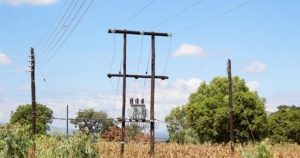
Following the fuel price increase, from which the public is still reeling in shock, Louis Uko questioned the decisions on the pricing of the fuel by adding some levies such as the Malawi Rural Electrification Levy (MAREP), describing it as “nothing but theft”.
“We are struggling in town with blackouts and when will magetsi be found kumudzi when we don’t have enough here in town? And what does this levy do anyway?”
Rural electrification
Uko’s observation was already made public by the Consumer Association of Malawi (CAMA) in January, through a statement advising the Clerk of Parliament to consider reviewing the many levies that are added on the fuel prices — that if removed could lead to reduction of pump price — then at K950.00 per litre and diesel at K931.00 per litre.
CAMA had contended that when fuel prices go up, there is an immediate increase on prices of most goods and services and it is therefore important to review the many levies which are hurting consumers.
Executive Secretary John Kapito argued that as international fuel prices keep on rising most of the levies have become “unsustainable and no longer serving the purpose they were created for”.
Thus CAMA proposed the removal of the levies that includes the Road Levy, which was introduced some years back to assist in the construction and rehabilitation of roads and at a time when systems and mechanisms were not established within relevant institutions.

The Tollgates on M1 Road

Kapito argued that now that the country has a full Road Regulatory Authority — “specific for road construction and rehabilitation — it is important to transfer such a tax to this appropriate authority bearing in mind that the Road Authority has just introduced the Toll Gate Tax whose purpose is similar to that of the Road Levy and it is unfair to punish Consumers with double taxation for the same type of service or product”.
He also said MAREP was intended to develop rural electricity connection infrastructure with hope to improve rural electricity access and argued that “this is a tax or levy whose accountability has been subjected to corruption and there is no significant impact on access to electricity for the rural masses”.
CAMA also targets the Malawi Bureau of Standards CESS, which is “another levy loaded on fuel prices and intended to provide quality assurance of our fuel” but CAMA contended that “it is common sense that the quality of Petroleum Products can only be inspected and assured before shipment and, therefore, the role of the Malawi Bureau of Standards to inspect and assure quality of fuel into the country is [redundant]”.
“For years, Consumers have been paying a tax to an institution that contributes nothing or plays no role in fuel quality assurance. It is unfair to punish Consumers to a levy that cannot be justified. The only thing this levy does is to distort market prices,” Kapito had said in January.

CAMA Executive Director, John Kapito