

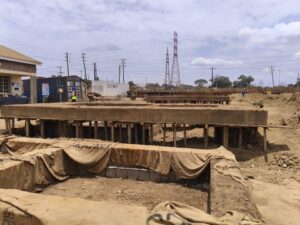
* Expected to be completed by February 2026 to help mitigate blackouts by injecting stored energy into the national grid
* As first phase of EGENCO’s solar power plant construction at Nanjoka in Salima is expected to be completed by December this year to generate 10 megawatts
By Sheminah Nkhoma & Fostina Mkandawire, MANA
Electricity Supply Corporation of Malawi (ESCOM) has begun constructing a 20 megawatts (MW) battery energy storage system (BESS), which is expected to be completed by February 2026 to enhance electricity supply and reduce load shedding.

Advertisement
During an inspection tour of the project site in Lilongwe yesterday by Minister of Natural Resources, Energy & Mining, Jean Mathanga, ESCOM’s acting Chief Executive Officer, Eng. Sinos Mallano, said the BESS will help mitigate blackouts by injecting stored energy into the grid, providing stable and adequate power to the nation.
“This project will transform our power generation system, enabling every Malawian to access electricity efficiently,” Mallano said.
The BESS project involves engineering, procurement, and construction of the 20MW facility, marking Malawi’s first utility-scale battery storage initiative.
The project, valued at US$20.245 million, is financed by the Global Energy Alliance for People and Planet (GEAPP) and implemented by ESCOM.
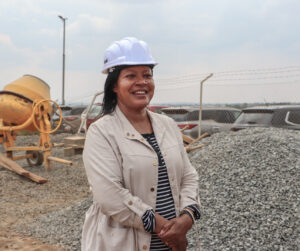
Minister Jean Mathanga
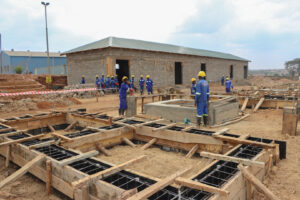
In her remarks, the Minister observed that the project marks a significant step in the government’s efforts to achieve a reliable, efficient, and sustainable power system for the nation.
“As a country, we have been facing electricity shortages for years,” she said. “This project will stabilise power and increase its provision.
“The BESS is not merely infrastructure; it is a game-changer for electricity supply in Malawi as it will enhance grid stability and reduce load shedding.”
Mathanga added that the nation has been generating power from hydro, solar, and biomass sources, and the new battery system will add additional capacity to the grid.
The Minister also visited construction of Electricity Generation Company Limited (EGENCO) solar power plant at Nanjoka in Salima, whose first phase will generate 10MW and is expected to be completed by December this year.
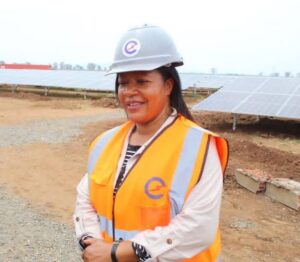
Mathanga in Salima
Mathanga assured Malawian’s that the government is taking strong measures to end persistent load shedding by expanding the country’s energy sources through solar power generation.
Once connected to the national grid, the facility is expected to boost power supply to ensure that the energy sector remains stable and reliable and Mathanga said her Ministry is working closely with the Finance Ministry to secure the required foreign exchange so that the project is completed on time.
“Once fully operational, the project will play a key role in reducing power blackouts and improving productivity in the industrial and commercial sectors,” she said, while EGENCO Chief Executive Officer, Maxon Chitawo disclosed that they require about K4.4 billion to bring in commissioning engineers and an additional K2.7 billion for power storage batteries.
He said the entire Salima solar power project has a total budget of about K22.5 billion, and once fully implemented, it will generate up to 50MW for the first phase, a further 10MW for 2nd phase and 30MW for the 3rd — making a total of 50MW.
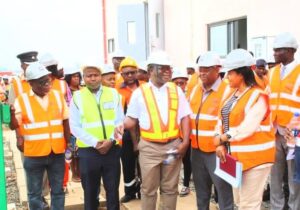
Chitawo explaining to Mathanga
Last month, Chitawo told the media that the three hydro power generation — Nkula, Kapichira and Tedzani in the Lower Shire — come along with some risks that require intensive maintenance, which lead to load shedding since the plants need to be shutdown for repairs.
Thus EGENCO ame up with the robust plans to move away from the Lower Shire and established the Salima solar power plant, which has a robust battery power storage in the event of intense cloud cover.
Present at the inspection tour was Salima District Commissioner, James Mwenda, who commended the project, saying it has not only brought hope for improved power supply but also created jobs for locals during its construction phase.
“The project has benefited the people of Nanjoka area through employment opportunities, and we look forward to more development once power generation begins,” he said Mwenda.—Edited by Duncan Mlanjira, Maravi Express


Advertisement