
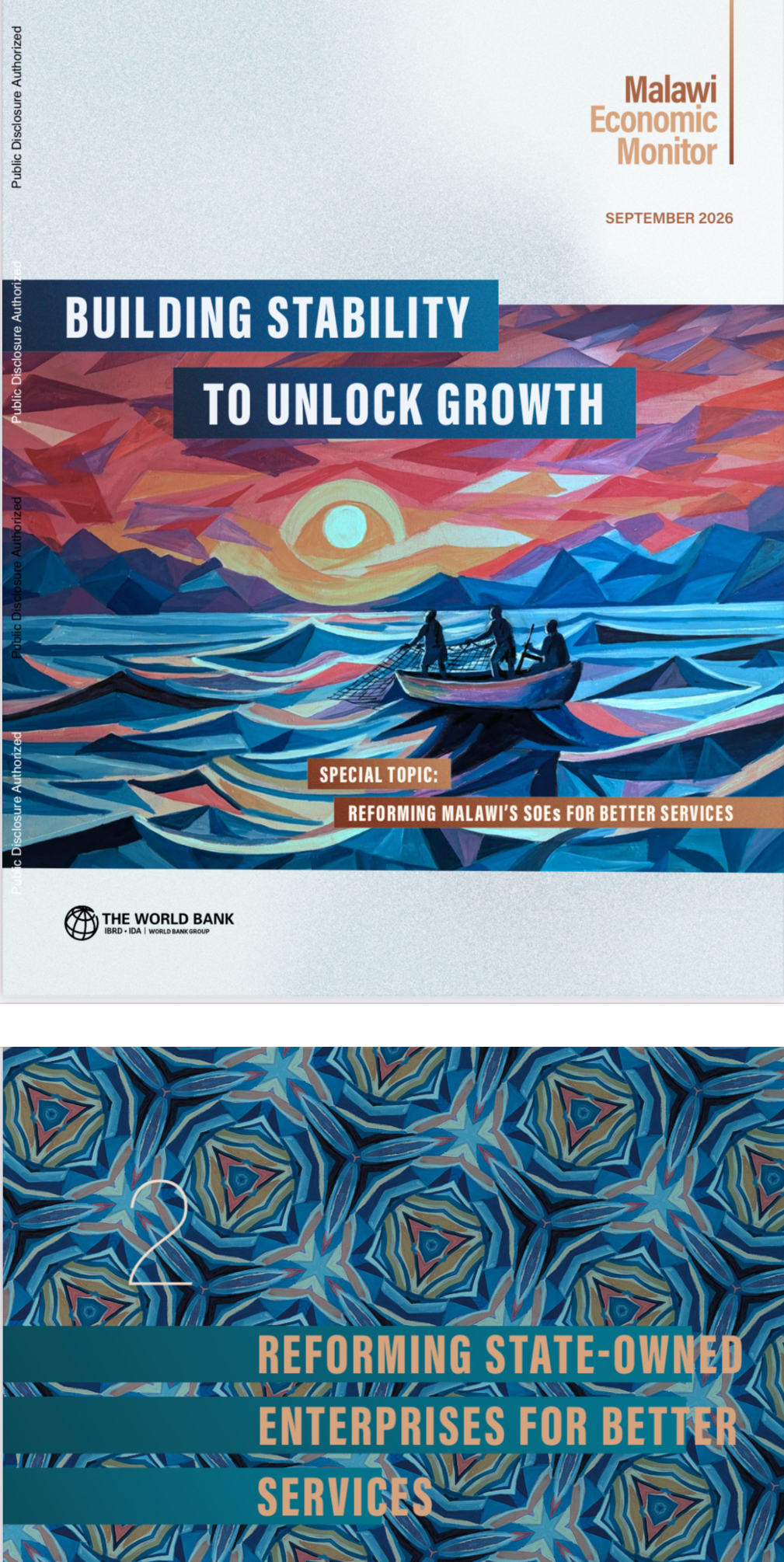
* As its Malawi Economic Monitor highlights that state-owned enterprises (SOEs) pose major fiscal risks amid poor performance and lax governance
* The financial distress of the SOE that acts as the single buyer and distributor of electricity has created systemic risks
By Duncan Mlanjira
The World Bank — in its September edition of the Malawi Economic Monitor — seems to agree with Speaker of Parliament Sameer Suleman on the concerns of the creation of Power Market Ltd as single buyer of electricity following the unbundling of Electricity Supply Corporation of Malawi (ESCOM).
In the edition’s Special Topic; ‘Reforming SOEs for Better Services’, the report highlights that state-owned enterprises (SOEs) pose major fiscal risks amid poor performance and lax governance.
And in the energy sector, the report observes that “the financial distress of the SOE, [the Power Market Ltd] that acts as the single buyer and distributor of electricity has created systemic risks — with payment arrears and below-cost tariffs undermining the entire value chain”.
On September 2, Speaker of Parliament, Sameer Suleman announced a decision to investigate public institutions — and to also scrutinise the performance and unbundling of ESCOM into Electricity Generation Company (EGENCO) and Power Market Limited (PIL).
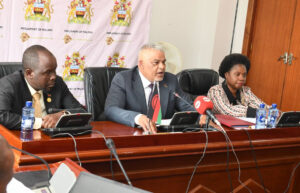
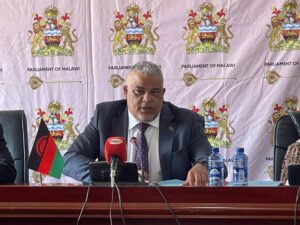
Suleman at the press conference accompanied by some MPs
However, Speaker has put on hold the decision to institute the 12 Parliamentary joint committees in respect of a High Court Order that stopping him from going ahead pending judicial review.
The World Bank’s Malawi Economic Monitor, takes note that SOEs are crucial to service delivery and economic growth, but they “pose major fiscal risks amid poor performance and lax governance”.
The report emphasises that SOEs “play a central role in Malawi’s economy, delivering essential services in energy, water, and agriculture — that underpin household welfare and private sector activity”.
“In sectors characterised by natural monopolies and market failures, SOEs have historically filled critical gaps in service provision.
“However, their suboptimal performance has imposed increasingly significant fiscal and economic costs on the state, and their challenges are deeply intertwined with the country’s broader macroeconomic and structural constraints.
“With Malawi facing one of its most acute macro-fiscal crises in recent years, the SOE sector has emerged as a key source of fiscal fragility.
“Many SOEs rely on government transfers, subsidies, and loan guarantees, while operating under weak governance frameworks characterised by limited transparency, fragmented oversight, and insufficient accountability.”

Advertisement
The report further observes that “below-cost tariffs, operational inefficiencies, and persistently high losses have undermined the ability of SOEs to deliver adequate services, while contributing to a growing burden on public finances”.
“In a context of elevated public debt, high inflation, and limited fiscal space, addressing SOE performance is a critical priority for macroeconomic stabilisation and sustainable growth.
“The scale and economic weight of the SOE sector underscore both its importance and the magnitude of the risks involved.”
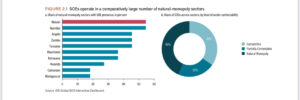
The report takes note that the country’s SOE portfolio includes 28 commercial entities, “alongside a wider network of subvented institutions that receive direct fiscal support”.
“SOEs active in energy, water, and agriculture account for the majority of the sector’s assets, liabilities, and revenues. In recent years, the aggregate assets of SOEs have grown significantly, driven by capital investment and currency-depreciation effects.
“At the same time, asset expansion has not translated into improved financial performance or service delivery — highlighting a widening disconnect between the sector’s scale and its effectiveness.
“Many SOEs remain financially weak or dependent on state support. Aggregate financial performance has been volatile, with large losses driven by key entities in the energy and water sectors.
“Recent financial progress remains fragile, and often reflects one-off gains rather than sustained operational improvement.
“Underlying financial stress persists, as evidenced by weak cash flows, low debt-servicing capacity, and sharply declining dividend contributions to the government.
“This fragility limits the sector’s ability to invest, maintain the existing infrastructure, and deliver reliable services.”
Sameer Suleman
Among the concerns that the Speaker said his office received from the public is further amplified in the Malawi Economic Monitor, saying “multitude of issues in the energy, water, and agricultural sectors further illustrate the structural nature of the weaknesses common to many SOEs”.
“In the water sector, large financial losses, a high rate of non-revenue water, and technical inefficiencies coexist with isolated examples of successful reform — demonstrating that improved governance and management can yield results.
“In agriculture, SOEs with overlapping mandates contend with persistent inefficiencies and severe losses — particularly from maize-focused operations, which have undermined their capabilities, exacerbated their fiscal dependence, and distorted market incentives for farmers.

ADMARC, agriculture SOE
“Beyond their reliance on direct fiscal transfers, SOEs are a source of severe indirect fiscal risks. Quasi-fiscal activities, such as the provision of goods and services at prices below cost-recovery levels, represent hidden subsidies that are not transparently budgeted for, but place real pressure on public resources.
“Contingent liabilities from on-lending, loan guarantees, and arrears further increase fiscal exposure, particularly in a context of exchange-rate depreciation and high public debt.
“A web of payment arrears across SOEs amplifies the risks, in a system where financial distress in one public entity propagates to others and, ultimately, to the central government.”
“Weak governance” has also been amplified in the report, indicating that it is the “major common thread to the challenges of Malawi’s SOEs”.
“Political meddling in operational decision-making, a lack of skills-based criteria for board appointments, weak oversight structures, and incomplete financial reporting undermine accountability and performance.
“Fragmented ownership arrangements and overlapping reporting requirements dilute responsibility, while limited transparency constrains effective monitoring of fiscal risks.
“Such institutional shortcomings prevent the early detection of financial stress, and contribute to a cycle of financial losses, bailouts, and declining service quality.

Advertisement
“Recent reforms have begun to address certain issues, with improvements in reporting and the introduction of risk-assessment tools.
“However, implementation gaps remain substantial, and institutional capacity constraints continue to limit progress. The challenge is not the absence of reform frameworks, but rather ensuring their consistent and sustained execution.
“Looking ahead, the World Bank states that “a sequenced and risk-based reform approach is essential” and that “early efforts should focus on the highest-risk entities, where fiscal exposure is most acute and the potential gains from reform are greatest.
“Progress on financial sustainability — through cost-reflective tariffs, improved revenue collection, and appropriate debt management — must be complemented by governance reforms, including on the appointment of independent and skilled boards, the introduction of clear accountability for performance, and the consistent enforcement of transparency requirements.
“Finally, clarifying the rationale for state ownership of each SOE, and ensuring competitive neutrality in sectors where private participation is viable, will be critical to enhancing efficiency and encouraging investment.
“The benefits of reform extend beyond fiscal consolidation. Improving the performance of SOEs — particularly in the energy and water sectors — can enhance service reliability, reduce costs for firms, and unlock private sector growth.
“At the same time, mitigating fiscal risks and enhancing transparency can foster macroeconomic stability and burnish Malawi’s credibility with development partners.”
The World Bank attests to that Malawi “has the analytical tools, legal frameworks, and early momentum for reform necessary to improve SOE performance.
“The central challenge is translating these foundations into sustained institutional change. A reform programme anchored in transparency, accountability, and targeted interventions on high-risk entities offers a credible pathway toward stronger service delivery and more effective mitigation of fiscal vulnerabilities — thus contributing to a more stable and growth-oriented economy,” concludes the Special Topic.

Advertisement