* The project’s beneficiaries led by Chiza Mughogho raised concerns regarding its functionality and utilisation — including alleged corrupt activities
* After MP for the area, Paul Kapangama Chiumia engaged Mughogho, he reached out to concerned parties and relevant authorities
* MP Chiumia has since commended government for promptly addressing concerns raised by the beneficiary farmers
By Duncan Mlanjira
After whistleblowers, led by Chiza Mughogho, highlighted operational irregularities that was experienced over Mzenga Irrigation Scheme in Nkhata Bay District, the government has swiftly moved in to address the concerns raised.

Advertisement
The project’s beneficiaries led by Chiza Mughogho raised concerns regarding its functionality and utilisation — including alleged corrupt activities.
When the concerns reached the attention of the area’s Member of Parliament (MP), Paul Kapangama Chiumia, he engaged Mughogho and proceeded to reached out to concerned parties and relevant authorities.
MP Chiumia has since commended government for promptly addressing concerns raised by the beneficiary farmers when he visited the project on September 17.
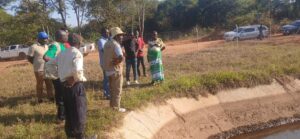
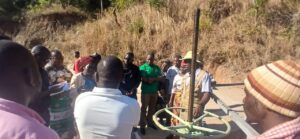

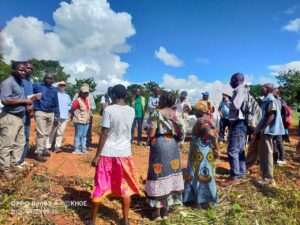
Nkhata Bay District Council reported on its official Facebook account that MP Chiumia toured the project’s main site at Mzenga in the area of Traditional Authority Kabunduli accompanied by Ministry of Agriculture officials.
The Council reports that the beneficiary farmers and other stakeholders were engaged to verify the concerns and clarify issues surrounding the scheme.
The MP is quoted as saying the engagement demonstrated government’s commitment to addressing community concerns, noting that similar interventions had previously been made in the district to resolve labour and land disputes.
“Farmers benefiting from this scheme had a number of concerns, including why the contractor had started removing some machinery before completion of the works and whether the scheme had been handed over without the knowledge of community members,” Chiumia is quoted as saying.
He thus attested to that the explanations provided by ministry officials had clarified the concerns, particularly that the scheme had not yet been officially handed over to the community and was still undergoing testing.
Chiumia reportedly said he was pleased to learn that any defects identified during the contractual period would be addressed and also pledged to report the project’s status to the Parliamentary Committee on Agriculture.
“He attributed most of the concerns to a communication gap and urged farmers and other stakeholders to share information and work together,” said the Council.
“He also encouraged farmers to take ownership of the scheme, saying its full utilisation could improve their livelihoods.”
Also present was Group Village Head Mchingalombo, who reported that more than 1,000 farmers were already benefiting from the scheme — one of country’s major irrigation project designed to transform agriculture commercialisation.
The project is under the Programme for Rural Irrigation Development (PRIDE), with funding from International Fund for Agricultural Development (IFAD) at US$12 million.
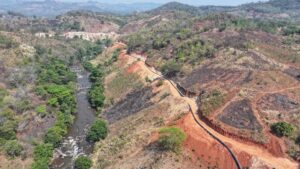
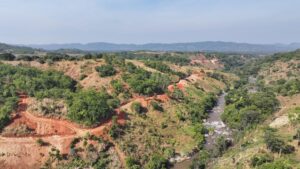
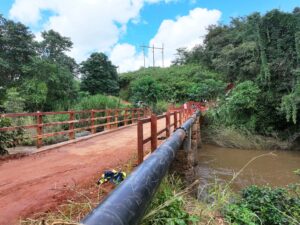
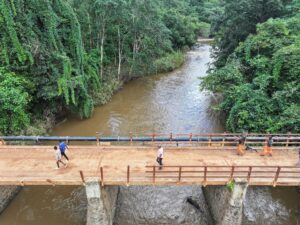
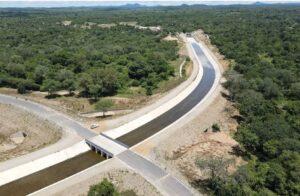
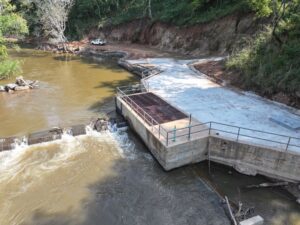
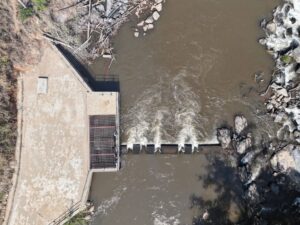
One of the project’s engineering supervisors, L. Gravam Consulting Services, reported on its official Facebook account yesterday, September 24, that the project began with the construction of a concrete weir across the Lweya River, forming part of the headworks together with the intake chamber.
The scheme thus includes:
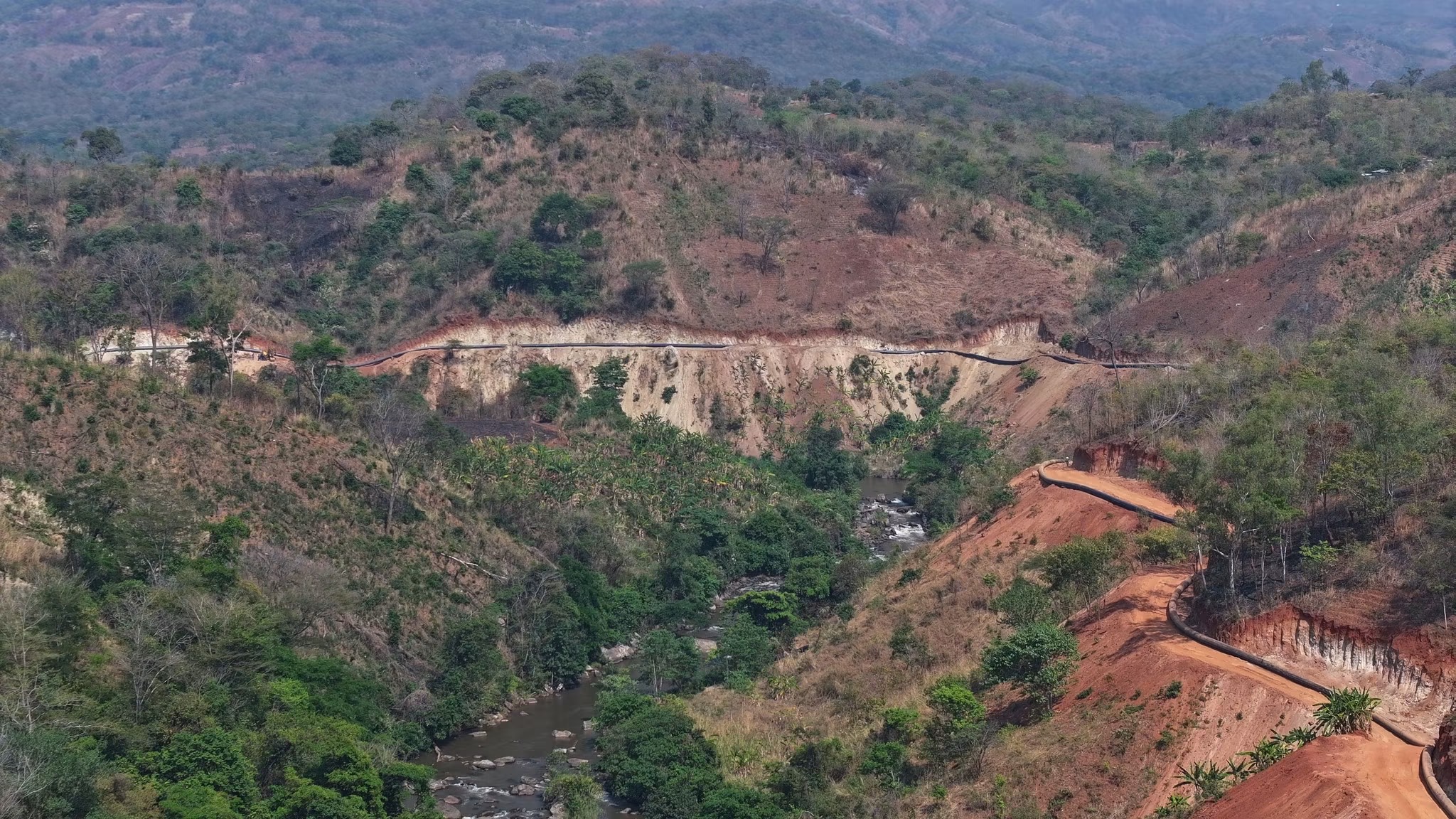
* 19km conveyance pipeline — comprising 7.2km of 900mm and 800mm steel and HDPE pipes, followed by PVC pipelines ranging from 400mm down to 250mm;
* Irrigation system network — comprises 24km of main pipelines ranging from 315mm to 110mm and 61km of secondary pipelines ranging from 200mm to 110mm;
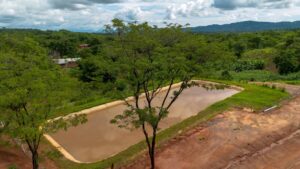
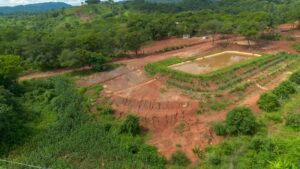
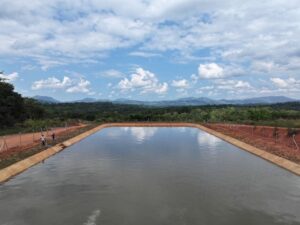
* 6 concrete-lined night storage reservoirs (NSRs) – the largest with a capacity of 5,858m³;
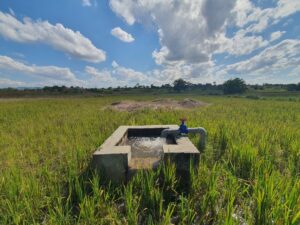
* Hydraulic structures – supporting efficient water control and distribution throughout the scheme;
* Scheme buildings – providing essential facilities for the management and operation of the scheme.
The construction works were executed by Inyatsi Construction Ltd and H.E. Jackson Engineering Ltd JV, which designed and supervised by KRC & Dasan Consultants JV, in association with L. Gravam Consulting Services Ltd.
“This is more than a construction project — it is an investment in water security, agricultural productivity, and the livelihoods of communities in Nkhata Bay,” reported L. Gravam Consulting Services.
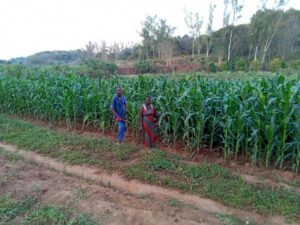
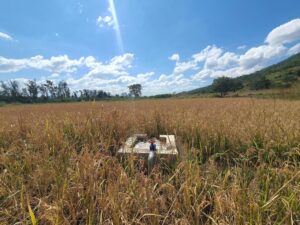
Some of the beneficiaries of the project
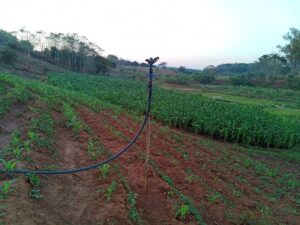
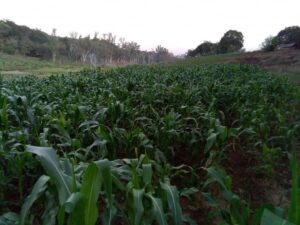
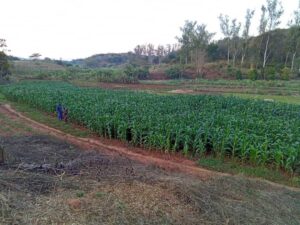
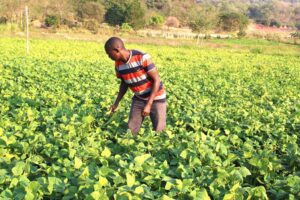
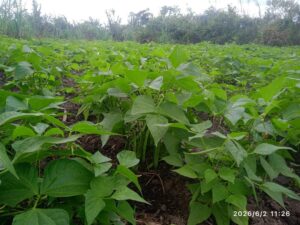
The concerns raised by the beneficiary farmers thus spurs the authorities to officially handover the scheme.
Ida Mwato, deputy director in Ministry of Agriculture’s department of crop development responsible for crop protection, is quoted as saying the engagement had enabled ministry officials and farmers to establish the situation on the ground.
Mwato further urged extension workers, the contractor and farmers to play their respective roles as the scheme undergoes testing ahead of its official handover.
“As the construction works are coming to an end, let us make use of the opportunity we have been given to utilise the land that has been fully developed,” she said.
“As a country, we are also depending on irrigation to boost food security, especially as some areas are expected to be affected by El Niño.”
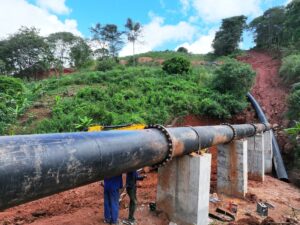
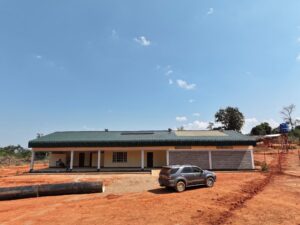
Nkhata Bay director of agriculture, environment & natural resources, Yaz Nyirenda is quoted as saying the council would continue engaging farmers and exploring markets and off-takers for their produce.
One of the farmers, Grace Nkhoma attested to that the scheme had helped her feed her family, pay school fees and buy goats, adding that two of her maize plots were expected to mature soon.
Mughogho, however, had fiercely complained of the irregularities, which were being reported to traditional leaders, the contractor itself, the that District Council but to no avail until he brought up the issue on social media.
“Reporting to Ministry Agriculture was the right thing. To us that was the right protocol and we will do it again,” he wrote on his Facebook page before the intervention.
He had even challenged that if nothing would change on the ground, they would report to civil society organisations, Parliament or even to the Head of State — describing the irrigation scheme as a jewel of their communities.

Advertisement
On April 23, when an entourage of an IFAD Mission toured Mzenga Irrigation Scheme, Director of Agriculture & Extension Services in the Ministry of Agriculture, Irrigation & Water Development, Pearson Soko, urged communities members to fully utilise all irrigable land to attain maximised agricultural productivity.
He was quoted by the Council Media that the scheme has about 1,100 hectares of irrigable land with the potential to benefit over 4,000 farmers but as of April, only about 500 hectares were being utilised.
“Initially, this scheme was about 900 hectares, but we have extended to a total of 1,100 hectares that can benefit thousands of farmers, but utilisation has been around 60%, and this is a concern for us,” said Soko.
“As a corrective intervention, we are working with local leadership, water users associations and cooperatives to ensure that the scheme is fully utilised in the coming farming season.”
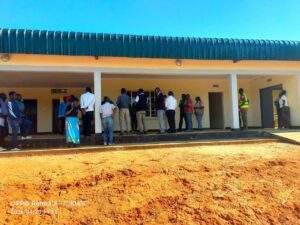
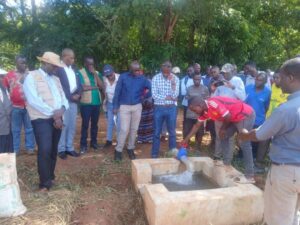
The IFAD Mission was conducting performance audit of irrigation schemes which have been developed through PRIDE, and Soko commended the financier for its continued support towards development of irrigation farming.
He highlighted that PRIDE has gone beyond irrigation infrastructure development to catchment management, soil conservation, integrated homestead farming and capacity building for farmers.
Leader for Mzenga Water Users Association, Tobiti Banda, indicated that the irrigation scheme is a novel approach to farming in the area — thus the low offtake.
But, he also observed that more farmers are beginning to appreciate its benefits: “We noted that some farmers were initially unsure about irrigation farming,” he was quoted as saying.
“However, as they observed the successes of those who are already participating, more are gaining confidence and it is our hope that the rest of the land will soon be utilised,” Banda said.
During the IFAD Mission’s visit, farmers showcased a number of activities which included integrated homestead farming, agri-lab initiatives, plant clinics, nutrition displays, soil and water conservation, catchment management and livelihood diversification.
Agriculture commercialisation is high on the agenda of the MW2063 national visionsince Malawi is an agrarian-based economy.

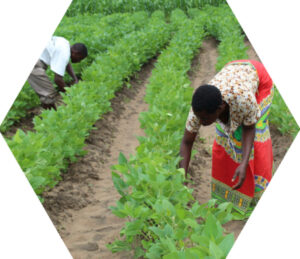
The griculture sector contributes nearly 22.6% of GDP and over 60% of the country’s export earnings and is the main contributor to food and nutrition security in country
It accounts for 76.4% of total employment and the sector is composed of two main sub-sectors — smallholder subsector and estate subsector, which contribute 70% and 30% to national agriculture GDP, respectively.
One of the projects to transform agriculture commercialisation is the Shire Valley Transformation Programme, being developed with financial support from the World Bank, African Development Bank (AfDB), OPEC Fund and the Malawi Government.
The biggest irrigation projects in Sub-Saharan Africa is touted to become Malawi’s food basket upon completion as it will cover 10,500 hectares which are the total hectares for 13 mega farms owned by cooperatives in the Shire Valley.