
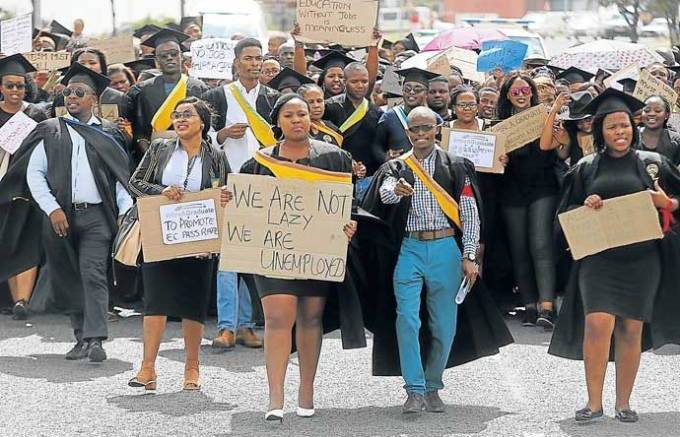
* The country’s latest labour-market figures highlight a persistent structural weakness in the economy
* With employment declining despite a growing labour force and unemployment rising to 33.6%
By Duncan Mlanjira
Chifipa Mhango Chief Economist and Executive Director of Economic Research & Strategy for Don Consultancy Group (DCG), who analyses Malawi’s economic landscape, also observes other market developments across Africa.
Based in South Africa, Mhango thus observes that his host country’s latest labour-market figures “highlight a persistent structural weakness in the economy, with employment declining despite a growing labour force and unemployment rising to 33.6%”.
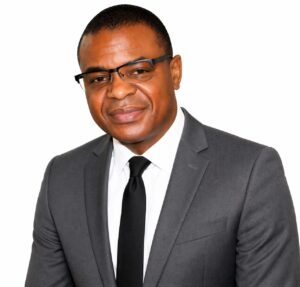
Chifipa Mhango
The Chief Economist quotes data from Statistics South Africa report released today, August 11 — the latest Quarterly Labour Force Survey for the second quarter of 2026 — which shows that total employment declined by 16,000 to 16.739 million, while unemployment increased by 345,000 to 8.5 million.
At the same time, the labour force expanded by 329,000 people during the quarter and Mhango noted that “the figures demonstrate that the fundamental challenge facing South Africa is not simply unemployment, but the economy’s inadequate capacity to generate employment at a pace that matches the growth in the labour force”.
“The latest employment figures tell us that South Africa continues to have a significant mismatch between labour-force growth and the economy’s capacity to create jobs.
“The labour force increased by 329,000 people in the second quarter, yet employment declined by 16,000.
This means that economic activity is simply not generating sufficient employment opportunities to absorb new entrants into the labour market.”

Advertisement
Mhango further said the year-on-year trend makes the situation even more concerning: “Between the second quarters of 2025 and 2026,
South Africa’s working-age population increased by 488,000, while employment declined by 68,000 and unemployment increased by 114,000.
“The absorption rate also declined to 39.6%, while the broader labour-underutilisation rate remained at 46.3%.
“These figures tell us that the employment challenge is much broader than the headline unemployment rate suggests. Almost half of the labour force is either unemployed or experiencing some form of labour under-utilisation.
“This should remain one of the central economic policy concerns for South Africa,” says Mhango adding that “the most important feature of the latest data is the significant divergence in employment performance across sectors.
“Only three of the 10 major industries recorded quarterly employment gains. Trade added 70,000 jobs, construction added 39,000 and finance added 11,000.
“These gains were offset by losses in community & social services (-57,000), mining (-26,000), agriculture (-15,000), manufacturing (-15,000) and utilities (-10,000).

“The sectoral picture is extremely important because it tells us where employment is being created and where the productive economy is losing capacity.
“We are seeing encouraging job creation in trade and construction, but these gains are being undermined by significant employment losses in manufacturing, mining, utilities and community & social Services.”
Mhango observes further that the year-on-year data are particularly revealing as construction added 94,000 jobs, trade 74,000, agriculture 39,000 and Mining 16,000.
“However, community & social services lost 101,000 jobs, manufacturing lost 100,000, utilities 36,000 and finance 33,000.
“The 100,000 year-on-year decline in manufacturing employment deserves particular attention, which stood at approximately 1.571 million in Q2 2026 — down 15,000 from the previous quarter and 100,000 from a year earlier.
“The loss of 100,000 manufacturing jobs over 12 months should be treated as more than a labour-market statistic as manufacturing sits at the centre of South Africa’s industrial value chains.
“When manufacturing employment declines, the implications extend into suppliers, logistics, engineering, services and exports.”
“South Africa urgently needs to strengthen its industrial base through productive investment, localisation, export competitiveness, industrial technology and stronger domestic value chains.
“We need to move from an approach that primarily seeks to protect existing industrial capacity towards one that actively attracts new investment and expands productive capacity.
“Employment will follow investment and production,” says Mhango, while unwrapping further that construction was one of the strongest-performing sectors, adding 39,000 jobs quarter-on-quarter and 94,000 jobs year-on-year.
Mhango said this provides an important lesson for economic policy: “The construction figures demonstrate that infrastructure investment can have a direct employment impact.
“South Africa should, therefore, view infrastructure not simply as government expenditure, but as an economic growth and employment strategy.”
Mhango emphasises that infrastructure priorities should include energy, water, rail, ports, roads, housing, municipal infrastructure and digital infrastructure.

“Mining employment declined by 26,000 during the quarter, although it remained above its level of a year earlier. The employment contribution of mining should increasingly be assessed through its broader value chain.
“South Africa needs to extract much greater employment and economic value from its mineral resources. Mining should be increasingly connected to beneficiation, metals processing, engineering, manufacturing and export industries.
“The objective should be to turn mineral resources into a much broader industrial employment platform.”
Another important trend that Mhango observes “is the movement between formal and informal employment”, explaining: “Formal-sector employment declined by 41,000 during the quarter, while informal employment increased by 34,000.
“Household employment declined by 9,000,” says Mhango as he cautioned that “the increase in informal employment should not automatically be interpreted as a sustainable solution to unemployment”.
“The informal economy is playing an important cushioning role by providing livelihoods, but we should distinguish between economic survival and sustainable employment creation.
“Government needs to create pathways for viable informal businesses to access finance, infrastructure, markets and technology and ultimately expand into sustainable enterprises.”
South Africa’s skills challenge is also a demand-side challenge as the latest occupational figures Mhango quotes “show that employment declined across several skilled occupational categories”.
“Plant and machine operators recorded the largest quarterly decline of 78,000, followed by managers at 40,000, professionals at 34,000 and technicians at 25,000.
“Over the year, technician employment declined by 105,000, professional employment by 67,000 and managerial employment by 49,000.”
For Mhango, this highlights “a critical weakness in South Africa’s approach to skills development, whose skills challenge is not only about whether people have the right qualifications — it is also about whether the economy is generating sufficient demand for those skills”.
“We cannot continue training people for an economy that is not creating enough productive opportunities for them. Skills policy, therefore, needs to be integrated much more closely with investment policy, industrial policy and infrastructure development.”

Advertisement
Mhango believes that the near-term employment outlook “will remain challenging unless South Africa succeeds in generating stronger investment and expanding productive economic activity”.
“The positive performance of trade, construction and agriculture provides some encouragement, but the continued weakness in manufacturing, utilities, community & social services suggests that the economy’s employment-generating capacity remains uneven.
“The outlook for employment will ultimately depend on whether South Africa can translate economic reforms, infrastructure investment and improved business conditions into actual private-sector investment and productive capacity.
“GDP growth on its own will not solve the unemployment problem,” says the Chief Economist, adding that the country should increasingly measure the success of its economic recovery by its ability to generate sustainable and productive employment.
Mhango believes South Africa now requires a more deliberate sector-based employment strategy rather than a predominantly economy-wide approach.
“Manufacturing needs a renewed industrialisation drive; mining needs stronger beneficiation and downstream linkages; agriculture needs greater integration with agro-processing, logistics and export markets; and construction needs a sustained infrastructure pipeline.

“Trade needs stronger linkages with domestic production and value chains; finance needs to play a greater role in financing productive investment; and utilities require investment that strengthens the reliability and affordability of the infrastructure on which businesses depend.
“There is a need to recognise that different sectors face different employment constraints. The policy response must, therefore, be sector-specific.
“What manufacturing needs is different from what agriculture, mining, construction or informal businesses need. Government’s immediate priority should be productive employment creation.”
He advises the South Africa government “to place productive employment creation at the centre of economic policy — this means accelerating infrastructure investment, strengthening industrial competitiveness, improving logistics and energy reliability, reducing the cost of doing business, attracting private investment and developing stronger domestic production and export value chains.
“Government cannot be the primary employer of last resort for an economy of South Africa’s size. The sustainable solution is to create the conditions under which the private sector invests, expands production and creates jobs.”

Advertisement
In conclusion, the DCG Chief Economist notes that: “Much as South Africa has an employment problem, but fundamentally it is also an investment, productivity, industrialisation and economic-growth problem.
“The country needs to build an economy that creates demand for labour at scale. The Q2 2026 employment figures should serve as an important policy signal.
“South Africa has demonstrated that it can generate employment in specific areas of the economy, particularly trade and construction.
“However, the continued deterioration in manufacturing and several other sectors demonstrates that employment growth is not yet sufficiently broad-based.
“The ultimate objective must be to move South Africa from an economy that largely absorbs unemployment to one that actively creates productive employment through investment, industrialization, infrastructure development and private-sector expansion.
“That is the pathway towards a more inclusive and sustainable economic recovery.”
* As Don Consultancy Group Executive Director of Economic Research & Strategy, Chief Economist Chifipa Mhango specialises in macroeconomic analysis, public policy, and governance across emerging markets, particularly in Africa. He is known for providing data-driven insights on economic trends, fiscal policy, and institutional accountability, with a strong focus on strengthening economic and governance frameworks.

Advertisement