
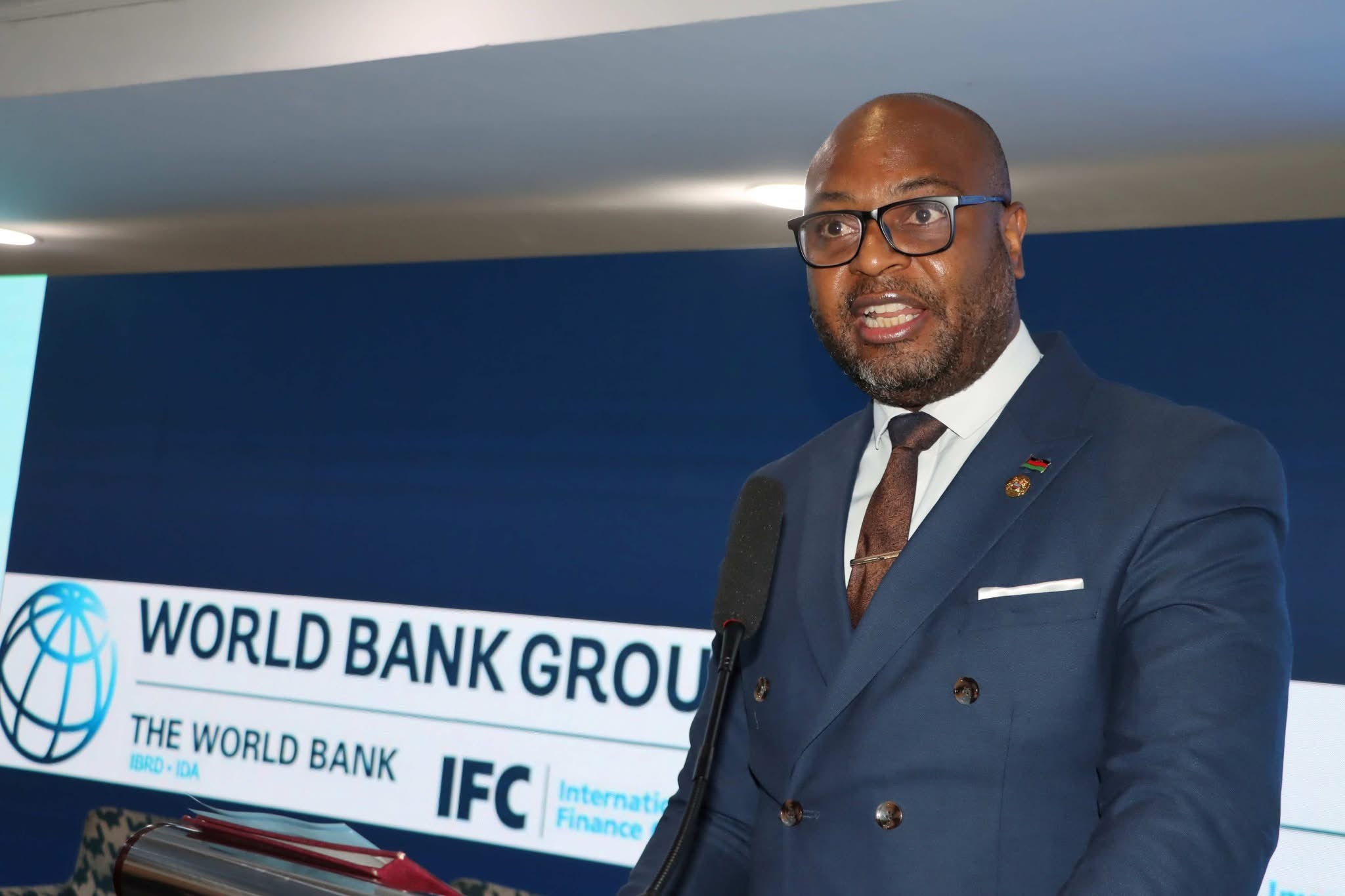
Mining Minister Thoko Tembo delivering his keynote address at the launch on Tuesday
* Sets out priorities for responsible mining sector growth, environmental and social governance, skills development, infrastructure and effective management of mineral revenues
* Successful implementation would require coordinated action and sustained financing across government and other stakeholders
By Jeremiah Mphande, Malawi News Agency (MANA)
Malawi has launched an Energy Transition Minerals Roadmap aimed at turning the country’s growing mineral potential into investment, jobs, industrial development and wider economic benefits for Malawians.

Advertisement
Launched by Minister of Mining Thoko Tembo in Lilongwe on Tuesday, the roadmap sets out priorities for responsible mining sector growth, environmental and social governance, skills development, infrastructure and effective management of mineral revenues.
Tembo said successful implementation would require coordinated action and sustained financing across government and other stakeholders.
“The task now is to translate these priorities into coordinated, financed, and sustained action,” Tembo said, adding that the country’s mineral potential alone could not deliver prosperity without responsible investment, stronger institutions, adequate infrastructure and skills to support the sector.
He highlighted that the roadmap has come at a time when global demand for energy transition minerals was increasing, presenting opportunities for Malawi to attract investment and develop value chains around minerals including uranium, graphite, rutile, rare earths, niobium, tantalum and mineral sands.
The roadmap projects that the sector could create about 1,800 direct mine jobs by 2033 under a business as usual, rising to almost 2,500 by the mid-2030s under a more ambitious scenario, highlighting its potential to expand employment opportunities.
Present was Firas Raad — World Bank Group Division Director for Malawi, Tanzania, Zambia and Zimbabwe — who said the rapid growth of the mining sector should be matched with responsible management.
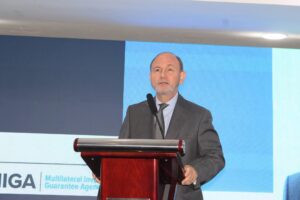
“Environmental and social risks needed to be properly managed while fiscal revenues generated from mining should be utilised responsibly for the benefit of the wider population,” Raad said.
He called for comprehensive operationalisation of the roadmap, saying human skills, policy and regulation, foundational infrastructure and private capital were all critical to responsible sector growth.
Raad also stressed the need for a whole government approach, saying development of the mining sector should involve government institutions beyond the Ministry of Mining.
He said the World Bank Group was considering direct support to the mining sector and pointed to the Mpatamanga energy project as a major infrastructure that could help meet the sector’s growing energy needs.
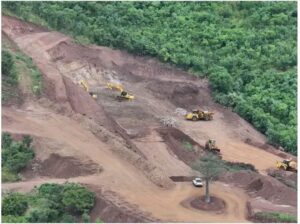
The roadmap identifies mining sector growth, environmental and social governance, and benefits realisation and management as three key priorities.
It estimates that mine development alone could require between US$1.3 billion and US$2.1 billion in private investment by 2040, alongside public investment in mining governance, energy and transport infrastructure.
Also present at the launch was British High Commissioner to Malawi, Leigh Stubblefield, who welcomed the roadmap as a practical guide for developing the mining sector.
She highlighted the need for reforms, investment and private capital, while stressing the importance of skills development, responsible investment, local participation and strong institutions.

British High Commissioner to Malawi, Leigh Stubblefield
She noted that the roadmap provides an opportunity to increase exports, government revenue and jobs, while ensuring that mining benefits communities and local businesses.
She thus emphasised that long-term success will depend on investor confidence, community trust and effective government institutions.
National Coordinator for Natural Resources Justice Network, Kennedy Rashid observed that Malawi needs to strengthen its policy, legal and regulatory environment to create greater certainty and confidence in the mining sector.
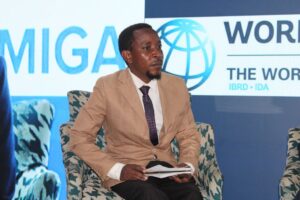
Kennedy Rashid
He stressed on the need for stronger coordination among government institutions, greater transparency and disclosure, and closer linkages between mining and other sectors to ensure Malawi captures more value from its energy transition minerals.
He welcomed the roadmap as an important step forward, noting that its success will depend on implementation, skills development, stronger local businesses and regional economic opportunities.
Maxwell Kazako, country manager for Sovereign Metals, the investor that is exploring rare earth mineral at Kasiya in Lilongwe, stated that the roadmap is a clear guide for the future of the mining sector, but stressed that its success will depend on implementation.
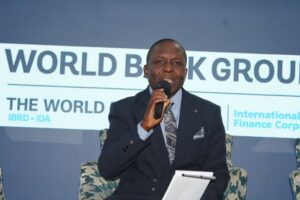
Maxwell Kazako
He called for stronger coordination across government, particularly with institutions responsible for energy, transport, revenue collection, auditing and regulation — as well as regular progress updates, clear timelines and broad consultation in the review of the Mines and Minerals Act.
Kazako also highlighted the need for closer government-investor cooperation on critical infrastructure, including power supply, and faster negotiation of Mining Development Agreements to avoid delays in investment projects.
He further urged government and mining companies to work together to address misinformation about mining and strengthen public understanding of the sector and its benefits to Malawians.—Editing and additional reporting by Duncan Mlanjira, Maravi Express; pictures by Abel Ikiloni, MANA

Advertisement