
* The pandemic’s assault against people’s livelihoods, incomes, businesses is continuing and entering its fourth wave
* The recovery plan’s success depends on citizenry, saying if they do not embrace it, the economy will not recover
* The government, CSOs, demonstrators — all want nothing more than to see the economy recover
By Duncan Mlanjira
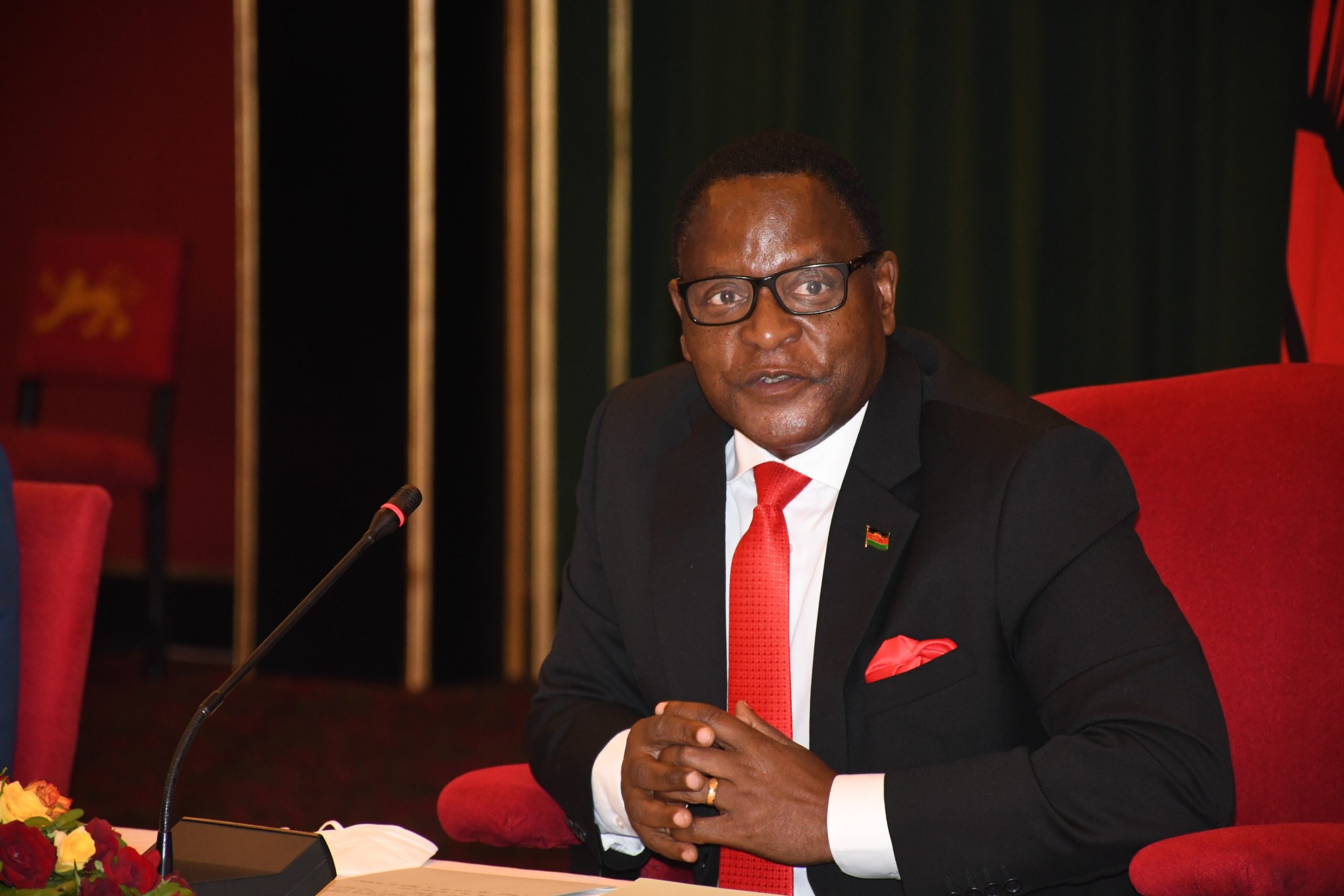
In his national address on Tuesday, President Lazarus Chakwera unveiled a CoVID-19 Socio-Economic Recovery Plan (SERP) for the period between 2021 and 2023 and implored on Malawians that its success will depend on the participation of all citizenry.

Advertisement
He disclosed that he convened a Cabinet meeting some three weeks ago at Kamuzu Palace where one key focus of deliberations was how to foster recovery for the country’s CoVID-ravaged economy at a time when the pandemic’s assault against people’s livelihoods, their incomes, and their businesses is continuing and entering its fourth wave.
Thus he said for the SERP to succeed it will first depend on state actors aligning their activities, programs, policies, budgets, and spending with this plan”.

Advertisement
He said it will also depend on non-state actors, corporations, development partners, foreign investors, and private sector players responding to the interventions of this plan in ways that complement it.
And thirdly, it will depend on the country’s cooperating partner nations around the region and around the world, “to work with us in ensuring that the global supply chain that acts as a lifeline for our economy’s exports and imports is not needlessly and unjustly disrupted as we execute this plan”.

Advertisement
He implored on the citizenry that it also depends on them, saying if they do not embrace the SERP, the economy will not recover.
“It will depend on you, the citizen, not only working hard in the economic sectors we are planning to stimulate with these interventions, but also complying with the regulations against the spread of CoVID-19 so that the pandemic’s continuing destruction of our economy comes to an end.

“But I am confident that each of us will do our part, because I know that there is no one in this country who does not want the economy to recover.
“I know that there is no one in this country who is satisfied to see our economy stuck on the ropes and bleeding from the merciless blows of this pandemic.”
He assured the nation that his Cabinet — including leaders of civil society organizations and demonstrators — “want nothing more than to see the economy recover”.
“When I listen to members of opposition parties, I see that they too want the economy to recover. When I talk to many of you around the country, I see that all of you want the economy to recover.
“So since we all want the same thing, since we all want the economy to recover, I see no reason why this Socio-Economic Recovery Plan should not receive support from everyone, especially since its success depends on it.

Advertisement
“Now, since we all have a role to play in making this Socio-Economic Recovery Plan a success, it is absolutely imperative for all of us to understand why this recovery plan is necessary. If we are going to solve this economic puzzle together, we need to have a common understanding of what’s wrong with it and how we fix it.”
In summary, Chakwera said the economy is bleeding from four wounds at once, saying the first long-term wound is its structural limitations as it is an agro-based economy “that has a narrow production base and a large informal sector”.
“As such, any plan to recover the economy must not only expand, increase, and diversify agricultural production for export and formalize informal economic activities, but must also help restructure the economy by stimulating other sectors like mining, infrastructure development, and manufacturing.”
The Socio-Economic Recovery Plan will seek to expand agricultural production through a stimulus interventions to support agro-processing, “especially where there is a state of readiness to scale up production, deliver to existing foreign markets, and achieve import substitution”.
“To formalize the informal sector, the recovery plan includes stimulus interventions to support Malawians register and grow their own small to medium companies, especially companies to operate in the mining sector that is finally opening up; companies to manufacture and supply goods made from locally produced raw materials; and construction companies that will take advantage of emerging opportunities to build roads, waterworks, buildings, and civil works.”

He gave examples of emerging opportunities in the construction industry that will benefit from this stimulus plan that include:
1. 1,900 health posts and 1,800 community health worker housing units under the National Acceleration Community Health Roadmap;
2. The 15 flagship infrastructural projects already underway countrywide under the K1 trillion local currency bond;
3. Various energy power plants and the regional-interconnector power lines for increasing electricity access to Malawians;
4. The 34 secondary schools whose construction must start immediately;
5. Irrigation schemes that must either start or continue being constructed across the country, including the Shire Valley Transformation programme worth US$250 million and the Agriculture Commercialization Project worth US$95 million;
6. Works to strengthen the capacity of water boards across the country’s regions, including progress on the Salima-Lilongwe water project and efforts to eventually stabilize water tariffs and improve water access over the next two years.

The power interconnection deal with Mozambique
“The second long-term wound our economy is bleeding from is the gross imbalance between imports and exports, as Malawi has been a net-importer of goods and services for far too long.
“And as economies around the world have imposed lockdowns within their jurisdictions and travel restrictions against ours, the disruptions to our access to the global supply chain have made this imbalance worse.
“Similarly, while the lifting of these restrictions following the rollout of vaccines in the global north should have been good news, it resulted in excess demand of goods and services.

The Shire Valley Transformation Project
“This, in turn, triggered a sharp rise in the price of imports like petroleum and fertilizer beyond Malawi’s control, further worsening the imbalance between exports and imports and destabilizing prices of such commodities.”
In the face of this bleeding, Chabwera said the “economy has been volatile, with many in our country suffering job losses, business closures, financial instability, and debt distress.
“Even at Government level, we have seen unprecedented pressure placed on the national budget due to unplanned expenditures incurred to fight off the pandemic and mitigate its assault on the economy.
“Although those mitigation efforts by my Administration have not completely ended the financial suffering in our midst, the situation now would have been far worse if we had not intervened.
“It is because we intervened that our economy has shown more resilience than the economies of our neighbors. Because we intervened, Malawi is one of only two countries in the entire SADC region that did not go into a recession in 2020.
“Because we intervened, Malawi’s incomes only suffered stagnation, while per capita GDP in neighboring countries suffered regression. Because we intervened, Malawi registered one of the lowest numbers of food insecure households in the region, which declined by 37 percent.
“Still, I recognize that none of these necessary pain relievers address the long-term bleeding inflicted on our economy by the continuing and rising trade deficit between exports and imports, which in turn has led to inadequate supply of foreign exchange and adversely affected the exchange rate, which has in turn had a pass- through effect on inflation.

Advertisement
“So, to address this problem of the trade deficit and its knock-on effect on inflation, the Socio-Economic Recovery Plan I am unveiling today includes interventions to maintain the policy rate at 12%, with upcoming reviews to consider further reductions as macroeconomic fundamentals allow, all in the interest of making resources available to businesses.
“It also includes interventions to support private sector players plying their trade in productive sectors with great export potential, including commercial farming, manufacturing, mining, and tourism.”

Advertisement
He thus appealed to Malawians in business to take advantage of these opportunities for support by venturing more into cross border trade with countries like South Africa, Zambia, Zimbabwe, Angola, South Sudan, Côte d’Ivoire and Botswana.
“These are countries where we are actively securing new markets for your maize, sugar, soya, ground nuts, beans, and rice, and as I speak, the trade enquiries for these products from these countries exceeds US$300 million.
“The market is bountiful, but the traders are few. We therefore need more Malawians entering the arena of cross-border trade to benefit from the stimulus interventions we will channel towards export promotion.”
The Socio-Economic Recovery Plan’s aim is to stimulate strategic parts of the economy with various interventions estimated at over half a trillion kwacha over the next two years, thereby ensuring that we stay the course with the Malawi 2063 first 10-year implementation plan.

Malaria alert