
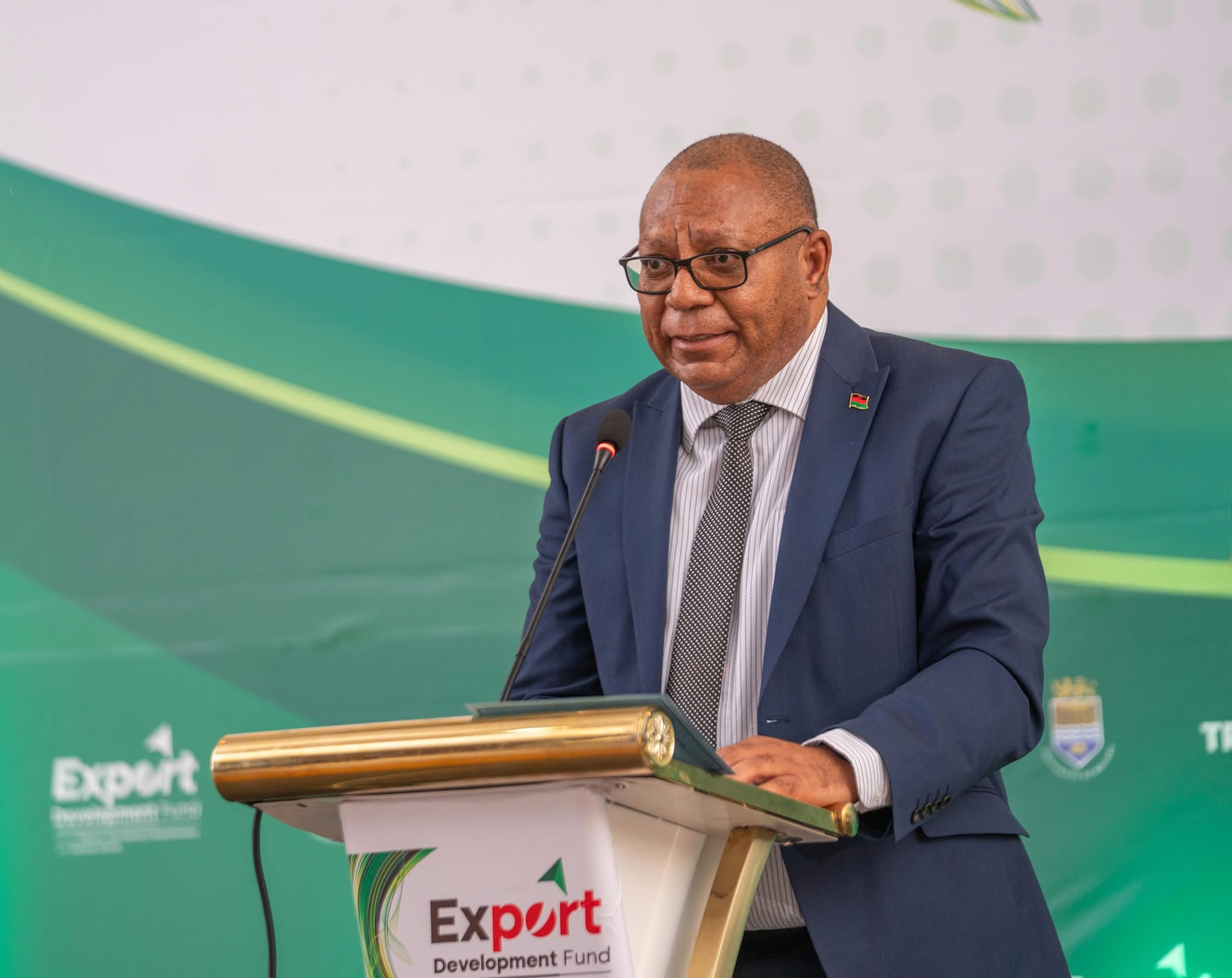
* We look forward to reuniting with the new Governor who brings a wealth of experience in banking and regulation—Standard Bank’s Chief Executive & BAM president Phillip Madinga
* His extensive knowledge and experience of banking and private sector operations will be critical to his new role as he brings a deep understanding that balances the private-public interest
* However, economic expert Thomas Ngoma believes that changing leadership in Reserve Bank without reforming the system is futile
By Duncan Mlanjira
Bankers Association of Malawi president, Phillip Madinga, who is Standard Bank’s Chief Executive, welcomes the appointment of seasoned banker George Partridge as the new Reserve Bank of Malawi (RBM) Governor.

Advertisement
Partridge, who was first appointed in President Arthur Peter Mutharika’s Cabinet as Minister of Industrialisation, Business, Trade & Tourism, was moved to the RBM on Friday, replacing Dr. Mafuta Mwale.
Madinga singled out Partridge’s vast experience in banking, economic policy and financial regulation, as a proper fit in his new role at the central bank, adding Mutharika’s choice as “the appointing authority clearly signals a desire by the government to move swiftly in restoring macro-economic growth and stability”.
“We look forward to reuniting with the new Governor who brings a wealth of experience in banking and regulation,” he said when contacted. “His extensive knowledge and experience of banking and private sector operations will be critical to his new role as he brings a deep understanding that balances the private-public interest.
“This appointment is a step in the right direction, and intentional of stimulating long-term economic growth,” said Madinga.

BAM president Phillip Madinga
Partridge’s first key assignment is to chair Tuesday’s Monetary Policy Committee (MPC) which will decide if the country is ready to absorb an interest rate cut. The RBM Deputy Governor Kissu Simwaka said last week following a slowdown in inflation for the second consecutive month that it paves way for a downward rate decision.
Partridge comes at a critical time when Malawi is negotiating for a new loan package with International Monetary Fund (IMF) and also undertaking debt restructuring.
After his decade-long stint at helm of Malawi Stock Exchange-listed National Bank of Malawi (NBM) list, Partridge moved to Malawi’s largest conglomerate, Press Corporation Ltd — with investments in banking, telecommunications, energy, manufacturing, and tourism — where he became group chief executive officer (CEO).
He also served at the RBM where he rose to the position of Director. He has served as group chief executive officer of Press Corporation Limited. In addition, he has chaired several major boards, including Malawi Airlines and Sunbird Tourism Plc.

Advertisement
His appointment as RBM Governor places him among a small group of Malawians who have served at the highest levels of both the central banking system and the private financial sector — a background analysts believe will be critical in navigating inflationary pressures, foreign exchange challenges, and broader macroeconomic instability.
However, economic expert, Thomas Ngoma believes that — much as Partridge’s appointment is expected to strengthen monetary policy management and restore confidence in the country’s financial system at a time of economic strain — changing leadership in RBM “without reforming the system is futile”.
Ngoma opined on HardTalk WhatsApp forum (Banking, Finance & Insurance) that “replacing one person with another is akin to playing musical chairs” and explains that “it creates the illusion of progress while leaving the underlying issues untouched”.
“When we reflect on the recent change, what tangible benefit did Malawi gain by replacing Wilson Banda with McDonald Mwale? The answer is clear: none. We are simply wasting time shifting chairs when what is truly required is structural reform.”

Dr. Wilson Mwale (top) was replaced by Dr. Mafuta Mwale (below)

Ngoma analyses that under Partridge, the RBM cannot swiftly reduce inflation to 2% “under its current system” and that lending rates cannot be immediately brought down to single digits to stimulate economic growth.
“Can the economy realistically grow by 10% without systemic change? The answer is No. Can Malawi’s persistent foreign exchange shortage be resolved mechanically given the massive trade deficit? No.
“So, what is the purpose of this change if not political? It is nothing more than a superficial juxtaposition. Real transformation demands surgical intervention on the system itself — not cosmetic adjustments at the top,” stresses Ngoma.
He indicates that RBM’s primary mandate is price stability — “meaning low, stable, and predictable inflation; no other institution in Malawi has such a distinct and critical responsibility”.
“However, the current monetary system cannot sustainably deliver this goal. Any governor who truly intends to achieve price stability must first reform the system rather than simply maintain the status quo.
“Malawians are suffering under the current double-digit inflation. With the right systemic changes, inflation could be brought down to as low as 2% – a level that ensures economic stability and protects livelihoods.“

The Reserve Bank of Malawi
Ngoma thus suggests that RBM “must reform its headline inflation calculation to distinguish core inflation from food inflation”, adding: “Food inflation measures price changes in food items, which are often highly volatile due to supply shocks, weather, or seasonal factors.
“Globally, central banks commonly exclude food inflation from their calculations to provide a clearer picture of underlying economic trends.
“In contrast, core inflation excludes food and energy prices, enabling the tracking of underlying, long-term price trends. This measure is preferred by central banks for policy decisions due to its stability and persistence.”
Key differences and interactions
Volatility: Food prices, which are often part of headline inflation, tend to be highly volatile. On the other hand, core inflation provides a more stable, persistent, long-term trend.
Components: Food inflation includes items such as groceries and meals out, while core inflation focuses on items like housing, healthcare, and services by excluding these volatile elements.
Policy Focus: Central banks, such as the Bank of England or the Federal Reserve, prioritise core inflation to identify underlying economic pressures.
Interdependence: Sustained high food inflation can influence core inflation, as increased input costs, such as fuel for transport, can affect the prices of other goods.

Economic expert, Thomas Ngoma
Ngoma stresses that “separating core inflation from food inflation in headline inflation calculation is crucial for accurate economic assessment and informed policy decisions”.
“Indeed, the new RBM Governor, being both a seasoned commercial banker and now a central banker, will already understand the inner workings of the modern monetary systems including Currency Board Arrangement (CBA).
“This puts him in a strong position to objectively assess their benefits, limitations, and suitability for Malawi’s monetary and financial-stability context and advise government accordingly.”
He further observes that there have been several changes to the RBM Governors but “to no avail” and that while Partridge has been hailed as being an ex-banker, “it is not inherently the ‘best’ profile”.
“What matters is the mix of skills, incentives, and institutional safeguards. Central banks and commercial banks differ in their roles, objectives, and authority within a country’s financial system.

Partridge was appointed et as Minister of Industrialisation, Business, Trade & Tourism in October last year
“A central bank is the apex monetary authority responsible for regulating the money supply, supervising financial institutions, issuing currency, managing foreign reserves, and ensuring overall economic stability; it does not operate for profit and does not deal directly with the public.
“A high‑performing central bank leader, whether or not they come from commercial banking, must have:
* Strong macroeconomic appreciation – inflation dynamics, monetary transmission, labour markets);
* Credibility and independence from political and private‑sector pressures – it is not good enough complaining that you fail in monetary policy because of political pressure — manage it;
* Crisis‑management capability – to respond to business cycles and global economic shocks;
* A public‑interest mindset – not a profit‑maximising one. RBM is not for profit;
* Institutional discipline and respect for rule‑based frameworks — unless RBM has strict rules, the next 100 years will be a waste; and
* Communication skill – to anchor expectations and build trust as in forward guidance.
Another HardTalker agreed that replacing leadership in the government departments and agencies needs to reform the systems first, saying: “Unless the systems we use are overhauled and changed, nothing will change. Our political arena is a good example — we’ve been changing Presidents since 1994, but the country has not significantly changed.”
Another observed that changing leadership in the government departments and agencies “is akin to employing a chartered accountant believing the organisation will start making profit [but] if the production department is not churning anything, and the sales team is asleep, you will certainly, make no profit! — the chartered accountant will have nothing to oversee”.


Advertisement