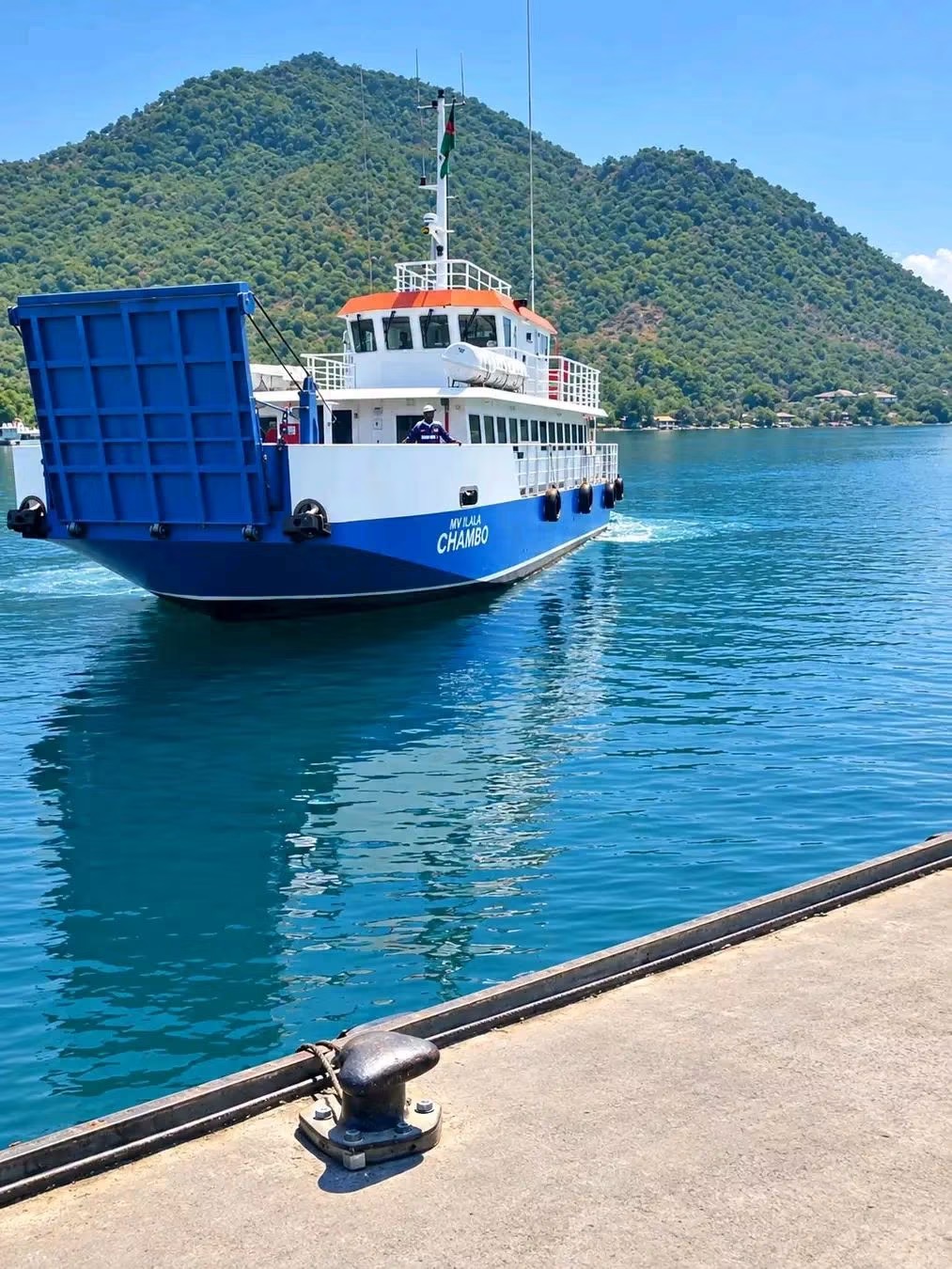
* It connected residents of Likoma and Chizumulu islands to mainland Malawi and for cross-border business people
* Its design supported operations in shallow waters, with a shallow draft and drop-down ramp allowing for beach berthing where port facilities are limited
* Designed to transport up to 100 passengers, and 10 tonnes of cargo including vehicles via a front ramp
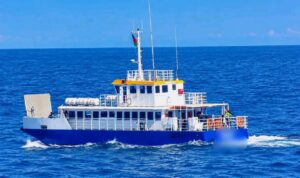
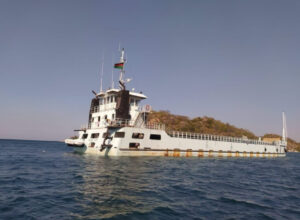
* MV Illala moors away from the lake coast where there are no port facilities and passengers are ferried to shore by privately-owned boats
Analysis by Duncan Mlanjira
The sinking of MV Chambo, that exploded into flames and burnt completely down till it sank in the early hours of Sunday, October 11, 2026, has left many — especially residents of Likoma and Chizumulu islands — ruing the benefits of the multi-purpose vessel.

Advertisement
The Mozambican-owned MV Chambo was quite an important vessel sailing on Lake Malawi, which facilitated residents of Likoma and Chizumulu islands access to mainland Malawi as well as for cross-border business people to Mozambique and Tanzania.
These Likoma and Chizumulu residents now just have to rely on the aged MV Illala just to get to mainland Nkhata Bay in Mzimba, Senga Bay in Salima and Monkey Bay in Mangochi.
But for MV Chambo, what they will rue most is its multipurpose benefits as the vessel was designed to transport up to 100 passengers, and 10 tonnes of cargo — including vehicles via a front ramp.
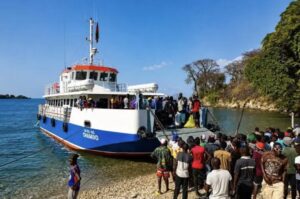
According to a report by The Tanzania Times after the incident that claimed lives of three passengers — including a Malawian woman — MV Chambo was built in 2013 by Damien Shipyards in the Netherlands to a South African design.
It was assembled at Monkey Bay shipyard in Malawi in 2013 for the Mozambican government, “reflecting close collaboration in maritime infrastructure for Lake Malawi”.
“It featured a lightweight hull design suited for the freshwater environment of Lake Malawi, with adaptations facilitating access to shallow coastal areas and island ports along the route.”
The Tanzania Times further reports that MV Chambo “was powered by two Caterpillar C32 TTA diesel engines, which drive screw propellers for propulsion.
“These engines enabled the vessel to achieve a maximum speed of 22 knots (41km/hr; 25mph), suitable for efficient cross-lake travel on Lake Malawi.
“The design supported operations in shallow waters, with a shallow draft and drop-down ramp allowing for beach berthing where port facilities are limited.”
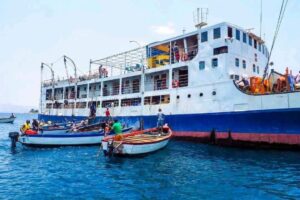
MV Illala off Senga Bay
This is unlike MV Illala, which moors away from the lake coast, especially at Senga Bat, where there are no port facilities and passengers are ferried to shore by privately-owned boats.
Despite sailing under the Mozambican flag, MV Chambo’s operational base was in Nkhata Bay which The Tanzania Times described as “underscoring its cross-border service despite the Mozambican ownership”.
In Malawian waters, it flew the Malawian flag, whose registration was LK-321-AC, operating under Malawi Shipping Company — as according to The Tanzania Times.
An explosion is suspected to be cause of fire that destroyed MV Chambo as The Tanzania Times reports that it carried 44 passengers and unnamed 10 tons of cargo.
Unverified reports claim that the vessel might have been carrying petrol due to the commodity’s scarcity on the Malawian market over the past few weeks across the country.
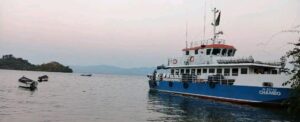
The Rio Times reports that the fire broke out in Tanzanian waters off Nyasa District, in Ruvuma Region heading for Nkhata Bay via Mozambique, quoting the district’s top official.
The Malawian who died in the accident was identified as a Likoma resident, Joyce Chimaliro, whose remains were repatriated back to the island on Monday night.
According to The Tanzania Times, Tanzania and Mozambican official manifest indicated that from the 44 passengers, 23 were Mozambican nationals, 15 Tanzanians, four Malawians and two from Lesotho.
The Rio Times raises red flags by quoting Nyasa District Commissioner Peresi Magiri urging people using water transport on Lake Malawi “to follow safety rules and make sure vessels carry life buoys and life jackets”.
The district commissioner is also quoted as stressing on the importance of regular inspections of vessels before sailing and also urged foreigners entering Tanzania to carry valid documents, so their details can be found quickly in an emergency.
“For US travellers, the fire is a practical safety lesson,” reports Rio Times. “Lake Malawi draws foreign visitors for its beaches, diving and lakeside lodges, and some itineraries combine Malawi, Tanzania and Mozambique by boat.
“Visitors who board lake vessels should check that life jackets are available and that the boat is not overloaded.
“They should also carry passports, since officials stressed valid documents for cross-border trips. For investors and aid groups, the accident draws attention to safety on regional lake transport.
“Lake vessels carry goods as well as people, so safety standards matter for local trade.”
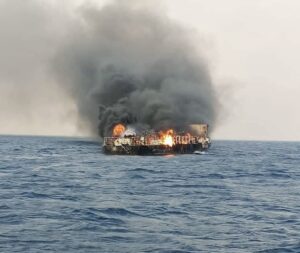
Images posted on social media of the incident soon after it happened
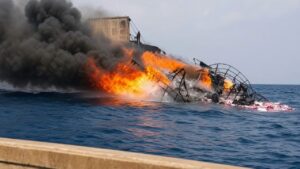
Till now the cause of the fire is not known, and according to Rio Times “officials have not said whether an investigation has opened”.
“No statement from the Tanzania Shipping Agencies Corporation, the maritime regulator, or from the police had appeared by Sunday evening.
“It is also unclear who owns or operates the MV Chambo, where it is registered and how many crew were aboard. The number and condition of any injured survivors have not been released.”
On Malawi waters, there had been constant concerns by the public on the tendency by vessel operators to flout maritime regulations.


The aged Illala that undergoes annual refits
The MV Illala has been flagged many times when pictures go viral on social media showing overloaded passengers and cargo.
Even private-owned passenger vessels and speedboats have been captured on camera sailing with overloaded passengers.
Flouting of maritime regulations came to the fore in July when a Tanzanian-registered cargo vessel, carrying coal destined for Portland Cement in Balaka, was detained in Mangochi when its crew attempted to dock at Monkey Bay having sailed all the way from the Tanzania’s Mbamba Bay Port without being cleared by the Malawian marine authorities.
It was later allowed to dock and was released after thorough security inspections by the Malawi Navy, Police, Immigration and other security agencies.

Two weeks later a Tanzanian-registered speed boat, Makutuwima Cruise, belonging to businessman Andrew Makutuwima Nyirenda, was reported missing on Lake Malawi and the Malawian marine law enforcement were only notified after the incident.
It departed Mbamba Bay heading for Nkhata Bay in Malawi carrying four Dutch tourists and three crew members, two Malawians and a Tanzanian.
The passengers and crew were later traced of their whereabouts when Tanzanian officials noticed the Malawian counterparts that the boat was located at Luwiru and were later rescued.
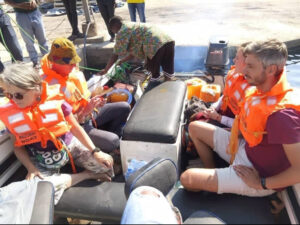
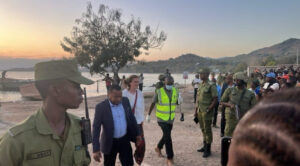

It was also reported that the passenger speedboat further flouted serious marine procedures, as it was discovered that the incident resulted from poor seamanship because the boat operator commenced the journey despite weather warnings issued by meteorological authorities.
These incidents of flouting maritime regulations are raising concerns amongst Malawians, especially the on the aged MV Illala, the loss of MV Mtendere and now the sinking MV Chambo.
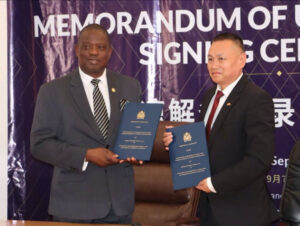
But there seems to be light at the end of the tunnel as the government have signed memoranda of understanding (MoUs) with Chinese-investors to improve Lake Malawi transport system by modernising facilities and introducing new vessels — for both passengers and cargo.