
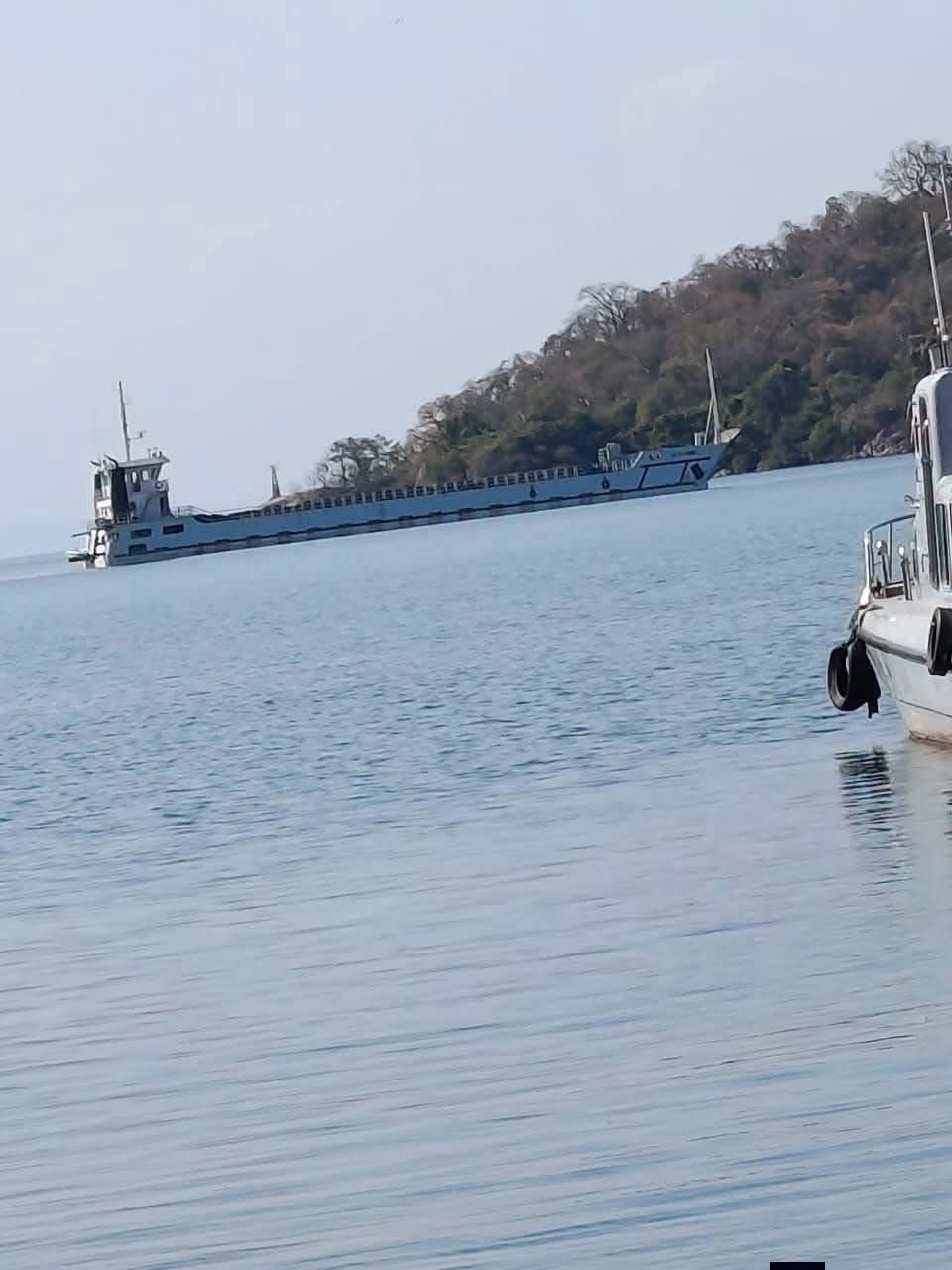
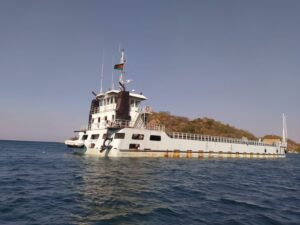
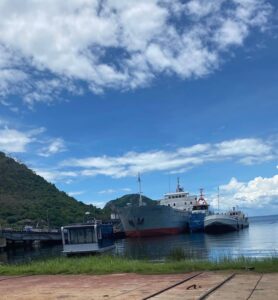
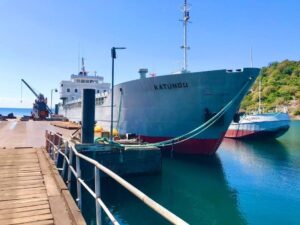
* The vessel was detained after reaching and docking at Monkey Bay for a week but was finally granted permission to berth following inspections by law enforcement authorities
* It was carrying 1,100 metric tonnes of coal destined for Portland Cement in Balaka — a contract to supply 6,400 metric tonnes of coal every month for a year
* Questions have been asked on how it sailed all the way from North to Mangochi without being spotted and how the authorities were not aware of the coal supply contract
Analysis by Duncan Mlanjira
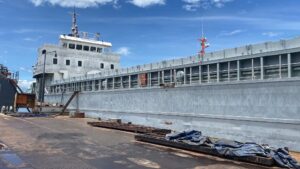
The detaining of a Tanzanian cargo vessel that arrived and docked without prior clearance at Monkey Bay — carrying 1,100 metric tonnes of coal — has raised some unanswered questions on social media, with the public incredulous that it sailed all the way from North to Mangochi without being spotted.

Advertisement
It is reported that when the vessel arrived at the port, marine law enforcement officer on duty denied it permission to dock at the jetty and instructed the captain to remain at anchorage within the harbour waters.
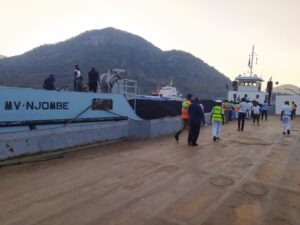
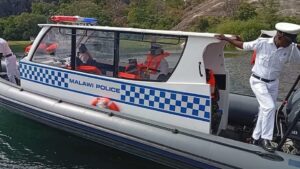
After undergoing thorough security inspections by the Malawi Navy, Police, Immigration and other security agencies, the vessel was allowed to dock at Monkey Bay Jetty.
ZBSNews reported on Saturday that the vessel was detained for six days from July 12 for docking at the jetty without notifying the Malawi Lake Services or security authorities.
It was then allowed to dock in under heavy presence of law enforcement Malawi Navy soldiers, police officers from headquarters explosives unit, marine officers, immigration officials, and port officials deployed at the jetty.
The security detail inspected the vessel using explosive detectors and sniffer dogs and was later cleared.
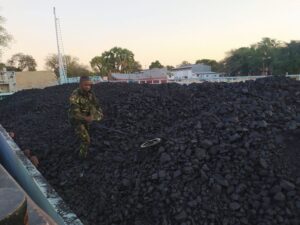
ZBS Online further reported that it was carrying 1,100 metric tonnes of coal destined for Portland Cement in Balaka.
The owner of the coal was identified as Aaron Mwasoka, who indicated to the media that he has a contract to supply 6,400 metric tonnes of coal every month for a year.
The reports posted on social attracted attention and questions were asked on how it sailed all the way from the North to Mangochi without being spotted by the authorities and also how the authorities were not aware of the coal supply contract.
“Really?” Chisambazi CJ Mwanalilenji Nyirenda was incredulous. “Mwasoka simply decided to load a Tanzania ship straight to Malawi without following procedures?
“And we were not aware of this contract? Come on, people! Whats wrong with us and our systems?” Nyirenda wrote as response to the report.
Ambroce Kalembanyanja Chibwato chipped in to indicate that this development “should make every patriotic Malawian pause” and reflected that “procedures exist for a reason”.
“…Beyond this incident lies a much bigger conversation that we have avoided for years,” he said. “Our fishermen in Karonga know this reality better than anyone.
“Many cannot sail beyond what Tanzania considers the boundary in the middle of Lake Malawi without risking arrest, having their boats impounded or being confronted by Tanzanian patrols.
“Whether one agrees with Tanzania’s territorial claim or not, that is the lived reality on the water.
“Think about that for a moment. A lake internationally recognised as Lake Malawi, yet many of our own citizens fish with fear while foreign patrol boats enforce another country’s interpretation of the boundary and refer to it as Lake Nyasa.

“National sovereignty is not defended through press conferences or Facebook arguments — it is defended through institutions, diplomacy, preparedness and long-term national planning.
“The recent plane crash investigation exposed another painful truth. During testimony, an MDF officer reportedly remarked, “Tizangopemphera, tilibe weapons“.
“Those words should disturb every citizen, regardless of political affiliation. They speak to the broader question of whether we are investing enough in the institutions entrusted with protecting our country.
“We have been here before. After the death of President Bingu wa Mutharika, there were discussions about strengthening emergency medical response, aviation safety and disaster preparedness.
“Years later, another national tragedy forces us to ask many of the same questions. My fear is that we will repeat the same cycle,” he said.

Advertisement
Meanwhile, in March the Ministry of Transport announced on its official Facebook account that water transport in Malawi “is far from obsolete” and “will make a big comeback”.
The report indicated that water transport “is steadily emerging as one of the country’s most practical and cost-effective transport solutions, easing pressure on road networks, lowering logistics costs, and improving access to remote lakeshore communities”.
“Every crossing on Lake Malawi represents more than travel, it represents connectivity, trade and opportunity.
“At the centre of this resurgence is Malawi Lake Services (MLS), which is restoring confidence in structured passenger and cargo services along the lakeshore.”
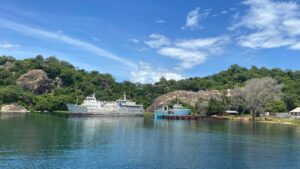
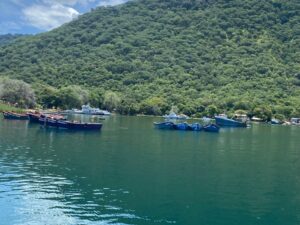
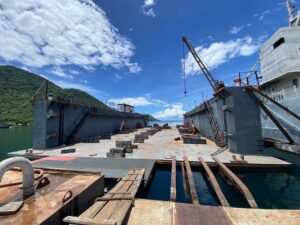
On beyond transport, the Ministry indicated that MLS also offers:
* Docking services — that include vessel repairs at floating dock facilities;
* Warehousing — secure storage in Nkhata Bay and Chilumba;
* Berthing fees — for private vessels loading cargo; and
* Heritage tours — public visits to historic ships.
“MLS is not just a transport provider — it is a driver of trade, tourism, and community development, steering Malawi toward a more connected future,” reported the Ministry.
In its manifesto ahead of the September 2025 General Election, the Alliance for Democracy (AFORD) highlighted trade facilitation infrastructure such as water cargo transportation.


Chapter 6 page 8 of AFORD’s high-level manifesto document
AFORD then formed an electoral alliance with the Democratic Progressive Party (DPP), and after winning the polls, AFORD president Enoch Chihana was declared Second State Vice-President.
Water transport has long been neglected and plans to revive it is truly welcome news for economic livelihood transformation of people along the lakeshore and as a country.
In Parliament in April, Minister of Transport & Public Works, Jappie Mhango, reported that the government is pursuing the acquisition of new vessels to replace the ageing MV Ilala as part of efforts to modernise water transport on Lake Malawi and reduce the cost of doing business.
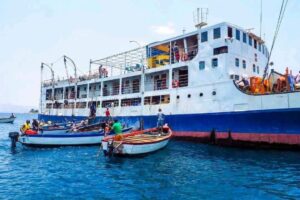
MV Illala
He added that the Government was in negotiations with National Bank of Malawi Plc and other prospective investors to finance the procurement of modern vessels.
The Minister noted that MV Ilala, which has been operating on Lake Malawi since 1951, has served the nation for 75 years and has outlived its operational lifespan.
He said replacing the vessel was a priority under Government’s broader strategy to modernise the country’s water transport system.
Mhango revealed that National Bank has expressed its willingness to support the acquisition of two new vessels, while discussions are also underway with other investors interested in investing in Malawi’s water transport sector.
He further emphasised that increasing the use of rail and water transport for cargo movement will lower transportation costs, reduce pressure on the road network, and enhance the efficiency and sustainability of the country’s logistics system.
He reported that during his administration between 2014-2019, President Arthur Peter Mutharika launched a National Transport Master Plan in 2017 to begin moving goods from roads to either rail or water.
On his visit to the country’s marine training school — which produces artisans, engineers, and captains for the sector — Mhango is reported to have raised concern over a growing skills shortage in the maritime sector.

Minister Mhango
The Minister observed that the country is facing a capacity gap due to an ageing workforce and insufficient lecturers, with few replacements entering the system — hence the need to rejuvenate the school.
In reaction to this, Praise Samuel Gondwe advised there are many artisans who studied mechanical or electrical engineering that are lying idle and can be a good fit for some marine training.
Powell Maimba agreed to the Minister’s assertion that that moving goods from roads to either rail or water was cost-effective, saying there is need to “priotise transporting fuel from the North to Chipoka in Salima, which would loaded into train wagons to the Southern and Central regions.
“Trucks from Tanzania can offload at Chilumba. In all these places fuel handling infrastructure is idle which was developed,” he said, while also indicating that in Tanzania, Malawi has fuel infrastructure that is not being used which comprises a terminal in Dar es Salaam.
He suggested that rail wagons can transport fuel from Dar es Salaam to Mbeya where Malawi also has good infrastructure that is not being used.

Fuel tankers operated by Nacala Logistics

National Oil Company of Malawi (NOCMA) fuel reserve at Matindi for both road and rail
“A trip from Mbeya to Chilumba by road is a day-long. This would cut the cost of fuel into Malawi by a significant amount.
“Malawi Lake Service has fuel tankers which are also idle. This is where we need to collaborate with Ministry of Energy and specially MERA and NOCMA.
“The government just needs to activate this and make a clear policy and directive to utilise these facilities for fuel movement. Prices will definitely come down.
Meanwhile, the Ministry of Transport reports that the government has committed additional funding towards the completion of the Likoma Jetty project to strengthen marine transport infrastructure and improving connectivity on Lake Malawi.
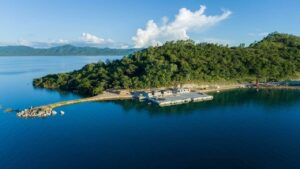
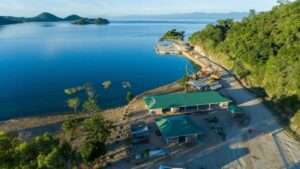
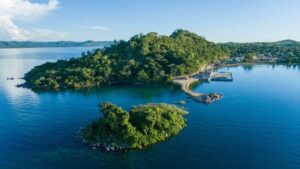

“The funding, provided through the Department of Marine Services, in the Ministry of Transport and Public Works, will be disbursed to the project contractor, Mota-Engil and the supervising consultants to facilitate works on the jetty,” reported the Ministry last week.
“The completion of the Likoma Jetty is expected to enhance safe and reliable water transport for passengers and cargo, improve access to essential services, stimulate tourism and trade, and support the socio-economic development of Likoma Island and surrounding communities.
“The latest investment underscores Government’s continued commitment to modernising Malawi’s marine transport sector as part of broader efforts to develop an integrated, efficient, and sustainable national transport network.”

Advertisement