

* Public-private partnerships (PPPs) must be considered as a key option for financing the delivery of housing
Analysis by Washington Chimuzu, certified project management professional
October is World Habitat Awareness Month. Two numbers in recent headlines tell a compelling story — the Ministry of Lands plans to build 135,000 housing units by 2031 under a K8.1 trillion strategic plan.
Meanwhile, the Malawi Housing Corporation’s (MHC) Project 250 targets 250,000 houses over 10 years, at an estimated cost of K20-K25 trillion.
The scopes differ, but the message is clear: Malawi’s housing ambitions are enormous, and public money alone cannot deliver them.

Advertisement
World Habitat Day, observed on October 5, reminds us that housing is more than bricks and mortar. It encompasses human dignity, economic opportunity, environmental sustainability and the development of inclusive communities.
The importance of home ownership cannot be undermined. The challenge is not simply to build more houses, but to deliver homes that people can afford, supported by reliable infrastructure.
Public-private partnerships (PPPs) could help bridge this gap. However, as the Reserve Bank of Malawi’s Deputy Governor recently observed, public revenues and conventional bank lending cannot close the huge infrastructure.
Mobilising private capital is, therefore, essential, but capital follows credible projects, not ambitious announcements.
For project owners, the guiding principle is simple: bankability matters. What does this mean in practice?
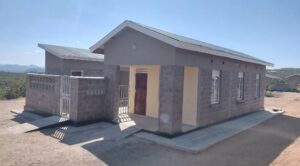
House construction as compensation to communities affected by Mpatamanga hydropower project in Neno

* First, structure the financing — Mortgage interest rates of 25-35% place homeownership beyond many households. Yet pension funds and insurers hold substantial long-term savings that could support housing investment.
Innovative structures, including secondary mortgage markets and dedicated housing investment vehicles, could connect these savings to long-term housing needs.
Credit guarantees and other enhancement mechanisms can help bridge the gap between perceived project risk and investor appetite.
* Second, remove legal and regulatory barriers — Capital cannot flow efficiently when legislation restricts investment or creates uncertainty. Reviewing relevant pension, financial services and land laws could unlock new financing opportunities.
The Project Management Institute (PMI), through its PMBOK® Guide, emphasises identifying risks early, assigning responsibility and planning responses. Legal obstacles deserve the same disciplined treatment as construction risks.
* Third, invest in enabling infrastructure — Land without planned roads, water, sanitation, electricity and drainage is not a complete housing solution.
Servicing land before inviting private investment helps developers assess costs, price risks and plan delivery.
Public infrastructure must be sequenced to enable private development, not treated as an afterthought.
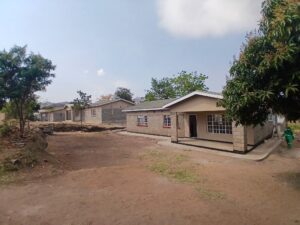
Construction of more housing units by MHC at Ngumbe, Blantyre along road to Lunzu
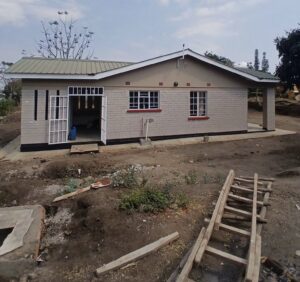
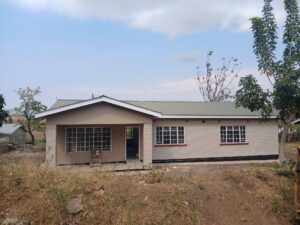
* Fourth, make affordability central — Malawi’s urban inequality is widening, while the cost of living continues to rise. MHC’s reported waiting list exceeds 100,000 clients, demonstrating substantial demand.
But demand does not automatically translate into purchasing power. Housing strategies must accommodate different income groups through appropriate designs, financing arrangements and delivery models.
A development that investors can finance but intended residents cannot afford fails the broader test of value.
* Fifth, allocate risks realistically and demonstrate delivery discipline — Land acquisition, construction costs, financing, demand and environmental conditions carry different risks.
PPP agreements must assign each risk to the party best placed to manage it. MHC’s reported delivery of an Area 49 house for K178 million against a K201 million budget, within 90 days, offers an encouraging demonstration of execution and vital lessons for the proposed Project 250.
* Finally, governance and collaboration matter — Transparent procurement, credible project pipelines, reliable information and clear accountability attract investors.
Government, councils, developers, banks, pension funds, professionals and communities must collaborate.
Holistic planning must also feature from the outset, ensuring that housing does not reproduce the problems of unplanned urban growth.
Malawi’s housing shortfall is estimated at 1.8 million units, with roughly 100,000 new homes needed annually to keep pace with demand.
Meeting this challenge requires more than construction targets. It requires projects with sound business cases, viable revenue models, credible governance and measurable social benefits.
Resolving the housing gap in Malawi with urgency can transform the economy via direct and indirect job creation, stronger communities and lasting economic value.
PPPs must, therefore, be considered as a key option for financing the delivery of housing.

Washington Chimuzu
* Editor’s Note:
Washington Chimuzu is a prominent Malawian corporate executive who currently serves as the Chief Executive Officer (CEO) of Eris Properties Malawi and ICON Properties Plc, both of which are prominent real estate subsidiaries of the Malawi Stock Exchange-listed NICO Holdings Plc.
Appointed to the executive leadership role in May 2025, Chimuzu is a certified Project Management Professional (PMP) and a registered civil engineer with extensive expertise in property development, infrastructure, and corporate strategy.

Advertisement