
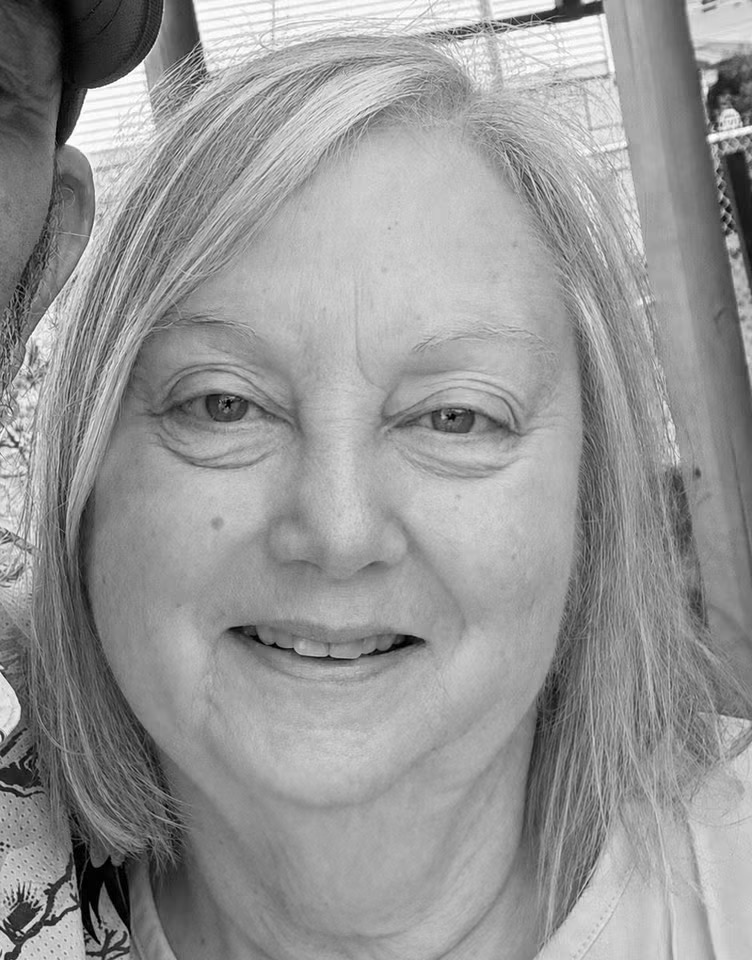
* Susan Studebaker brings over 50 years of experience in nursing and community health with extensive experience in public health leadership
* To align with Othakarhaka’s provision of vital community-led health services alongside its core educational and economic empowerment initiatives
By Duncan Mlanjira
In order to build a stronger community health systems, Mulanje’s Othakarhaka Foundation welcomes Susan Studebaker, its new Peace Corps Malawi Virtual Service Pilot Participant (VSPP), to co-design a Community Health Volunteer Training Toolkit.

Advertisement
On its official Facebook and LinkedIn accounts, Othakarhaka-Passing On the Kindness reports that Studebaker brings over 50 years of experience in nursing and community health.
It includes “extensive experience in public health leadership, women’s health, midwifery, health education and community-based programme development”.
“From 2014 to 2023, Susan co-designed and implemented training programmes for community health workers and traditional midwives in Nicaragua — developing practical training manuals, facilitator guides and educational resources.
“We look forward to learning from her experience and working together to strengthen the capacity of our community health volunteers and the health services we provide to our communities,” says Othakarhaka.
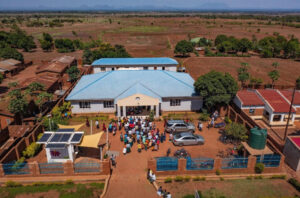
The non-profit organisation — located at its complex at Chambe, along the road from Mulanje to Phalombe — provides vital community-led health services alongside its core educational and economic empowerment initiatives.

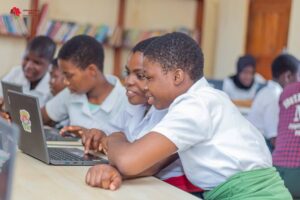
Education is its core purpose
The foundation delivers essential health interventions aimed at rural communities that would otherwise have to walk long distances for medical care.
Every Friday, Othakarhaka’s clinic offers free cervical cancer screening to help the its communities’ underprivileged rural women with early detection and treatment.
The community clinic offers basic consultations, treatment, and lab and pharmacy services.
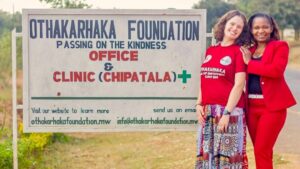
Othakarhaka founder, Ida Puliwa-Mwango with one of international volunteers who visit the foundation
While many programmes target vulnerable populations for free, the clinic also operates an approved paying service for community members who can afford it to help sustain operations — as approved by the Medical Council of Malawi.
Palliative and home-based care is also the flagship pillar of Othakarhaka’s health programming, providing medical, physical, and emotional support to elderly and terminally ill patients suffering from incurable diseases such as advanced HIV/AIDS and cancer.
The clinic also provides women’s reproductive health services that includes ongoing family planning advocacy as well as distribution of reusable sanitary pads and conducting hygiene education to keep girls in school to prevent dropouts.
The Foundation recently expanded its clinic infrastructure to include a dedicated paediatric corner — in partnership with I Demand Access.
I Demand Access is a US-based nonprofit founded in 2019 by a group of passionate students from the University of Michigan-Stephen M. Ross School of Business, after they travelled to Malawi for a MAP consulting project with Othakarhaka Foundation.
The paediatric medical service focus on early childhood stimulation and targeted medical care for babies and young children.
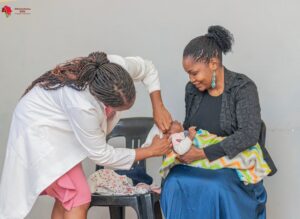
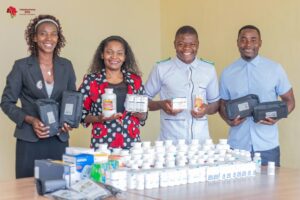
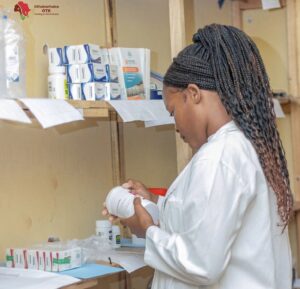
Twice a week, Othakarhaka’s health workers, community-trained caregiver volunteers, and student interns studying in medical fields, visit the Foundation’s palliative care patients at their homes.
The patients they support live with a range of conditions including different forms of cancer, advanced HIV, diabetes, chronic arthritis, cerebral vascular accident (stroke), severe cerebral palsy, and leprosy.
“For many of them, these home visits are a vital connection to medical attention, monitoring, and day-to-day support.
“This is one of the ways the Othakarhaka Foundation is strengthening community based healthcare in Malawi,” highlights Othakarhaka on its media platforms.
Thus the Community Health Volunteer Training Toolkit to be co-designed with Susan Studebaker shall build a stronger health systems around its very wide catchment area.

Advertisement