
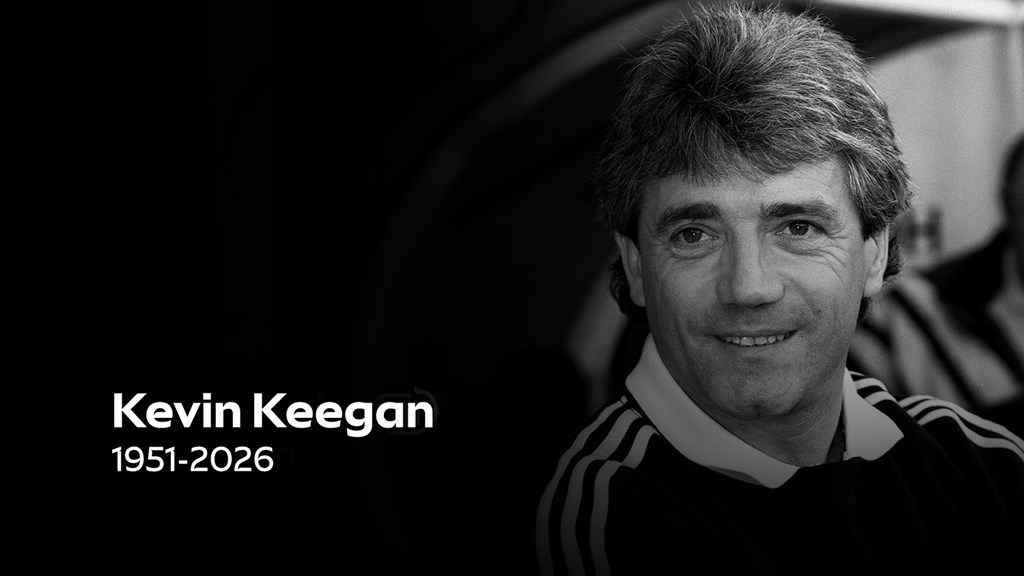
* Tributes pour in on the passing of the legend of English and world football, who died on Monday aged 75
* Keegan wore the jerseys of Scunthorpe United, Liverpool, Southampton, and Newcastle in England, and Hamburg in Germany
* With Liverpool, he won 1 European Cup, 2 UEFA Cups, 3 Premier League titles, 2 Charity Shields, and 1 FA Cup — and with Hamburg, he won 1 Bundesliga title
* He was awarded the Ballon d’Or twice (1978, 1979) and in 1982, he was appointed Commander of the Order of the British Empire (CBE)
Maravi Express
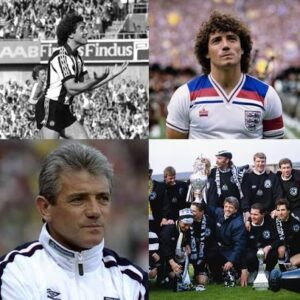
Kevin Keegan, the legend of English and world football, died on Monday, July 20, aged 75, and tributes pour in that include erecting a statue or the naming of a stand in his memory.
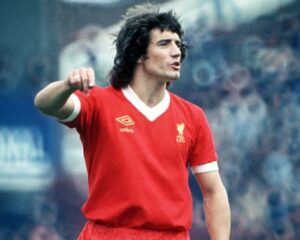
Keegan wore the jerseys of Scunthorpe United, Liverpool, Southampton, and Newcastle in England, and Hamburg in Germany.
With Liverpool, he won 1 European Cup, 2 UEFA Cups, 3 Premier League titles, 2 Charity Shields, and 1 FA Cup — and with Hamburg, he won 1 Bundesliga title
He was awarded the Ballon d’Or twice (1978, 1979) and in 1982, he was appointed Commander of the Order of the British Empire (CBE).
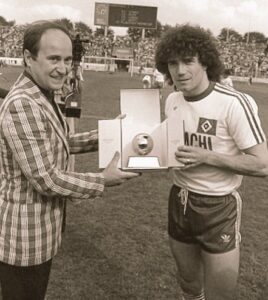
The 1979 Ballon d’Or
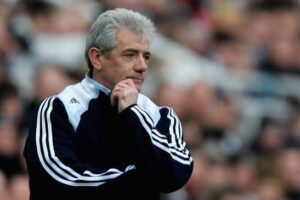
As a manager, he had a career spanning more than a decade with various English clubs and the England national team.
“Keegan was a great player who became a brand,” writes The Conversation in its tribute. “In an era before the internet and social media, he didn’t achieve the global influence and untold wealth of Cristiano Ronaldo or David Beckham.
“But back then there was no road map to the kind of celebrity that Keegan achieved – and he paved the way for footballers who came after him.”

Advertisement
Manchester United’s great manager, Sir Alex Ferguson, speaking on Track Radio, said: “I had utmost respect for Keegan. We had many duels when he was manager of Newcastle, but I have to say the job he did at Newcastle was fantastic.
“He re-energised that club and he brought that enthusiasm and fanaticism that great supporters can give. That’s the job he did.
“And he also brought three great players to the club — (David) Ginola, (Faustino) Asprilla, Philippe Albert — and added a bit of class to the team, and I must say the challenges we had with Newcastle at that time at United were huge.
“Kevin carried the love of the game on his sleeve, there’s no question about that, and that carried right on to the fans, to the players.
“That period at Newcastle was of emotion, it was excitement. They brought these great players to the club too and they added to it, and it gave Newcastle —I think — their best ever team.”
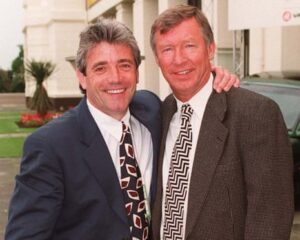
Sir Alex Ferguson with Keegan in their younger days
David Ginola himself, the French winger starred under Keegan for two years after joining from Paris Saint-Germain in 1995, said: “It is with immense sadness that I learned of the passing of Kevin Keegan.
“Kevin was much more than a manager to me. He was a man who believed in people, who inspired confidence, and who helped bring the very best out of those fortunate enough to play for him.
“When I arrived at Newcastle United, Kevin gave me the opportunity to express myself on the pitch and to play football with freedom, passion and joy. For that, I will always be grateful.”
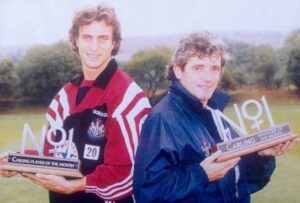
David Ginola and Keegan
Newcastle CEO David Hopkinson said Keegan’s legacy “demands” a physical tribute such as a statue or the naming of a stand after the club legend.
Speaking from outside St James’ Park, Hopkinson said he was “moved” by the number of fans who turned out to mourn Keegan: “Kevin’s impact on this community is evident in the faces of everyone here.
“We didn’t plan this, these people have shown up to gather, come together and remember him. It’s really touching and an incredible, spontaneous tribute to him.
“I was aware of Kevin’s impact on football. What he meant to this community I have learned more of since taking up this role a year ago. You can’t really move far without someone telling you a story about Kevin. His legacy is a rich one and this is a tough day.
“Clearly, we have a statue of Alan Shearer here and Sir Bobby Robson,” Hopkinson told BBC Newcastle.

Alan Shearer, the club’s all-time record goalscorer, who was signed by Keegan for a then-world record fee in 1996, and also captained England during Keegan’s time in charge of the Three Lions.
“He was my hero. He was my manager. For Newcastle and England. He was my friend — a man everyone loved for his passion, for his energy but most of all for his friendship.
“He loved football and he loved Newcastle more than anything. I’m so honoured to have known him. We will miss you Kevin.”
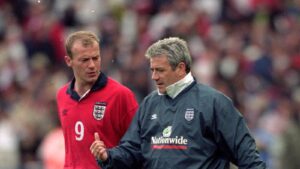
Alan Shearer with Keegan on national duty
Andy Cole, who was signed by Keegan from Bristol City in 1993 and his goals fired Newcastle into the Premier League, where he continued to score prolifically until his departure in 1995 for Manchester United, shared how he met the legend:
“Kevin believed in me. He gave me the opportunity to come to Newcastle. He thought I could score goals there and play in the Premier League, when at that stage not many believed I could.
“The belief he had in me is something I won’t forget. Back then, £1.75 million was a hell of a lot of money for an unknown and for him to get Sir John Hall to stump up that much money on a kid with a handful of games was very, very special.
“He’d come down to watch me at Bristol City and I was injured — my knee was strapped up. He only ended up staying half an hour and that was it.
“Kevin said to Terry (McDermott); ‘that’s it, we’re going to sign him‘. Terry said, ‘what do you mean? It’s only been half an hour‘. And Kevin said, ‘that’s more than enough‘.
“That’s how the deal was done, basically. I think that made his mind up about my attitude and what I was about, that I was prepared to go out there and play when I was injured.”
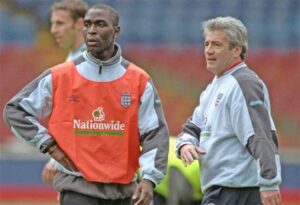
Andy Cole
Writing on his X platform, Michael Owen said: “It goes without saying Kevin was a brilliant player and adored at every club he played for but I will always remember him for the man he was off the field.
“He was a genuine, caring, funny and fiercely loyal man who always had time for everyone regardless of who they were or where they came from.
“I have so many happy memories of the times we spent together and he will be very sorely missed. Rest In Peace Gaffer.

Michael Owen
Andy Carroll was a young forward breaking through into the first team when Keegan arrived for his second spell as manager in 2008, and the player eventually became an England international.
“A lot of people will remember Kevin Keegan as a fantastic player and manager who made people fall in love with football. I will remember him as a fantastic man and a true gentleman.
“He was someone who treated people with kindness and respect, and that is a legacy every bit as special as his achievements in the game.
My deepest condolences to his family and loved ones. I hope the love, memories and pride you shared with him bring you comfort and strength in the days ahead. Rest in peace, Kevin.”

Carroll, third from left, in training with Keegan in 2008
Former England goalkeeper David Seaman described Keegan as a “king” of football, saying: “I have wonderful memories of playing under him with England, before finishing my career at Manchester City, where Kevin was my coach, manager and my neighbour.
“I first met him when I was a 16-year-old apprentice at Leeds and he was a giant on the pitch. So working with him later was an absolute dream come true. What an absolute gent, sleep well legend.”
Sir Kenny Dalglish remembers Keegan, himself an English football legend as a former Liverpool international and later Newcastle manager said: “Kevin was one of the very best players of his generation and wore Liverpool’s famous number 7 shirt with great distinction.
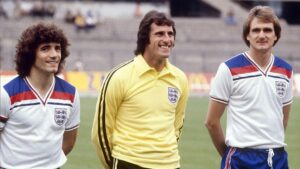
Kenny Dalglish (right), Phil Thompson and Keegan in England colours
“His achievements on the pitch were exceptional, but he was also a wonderful person and a genuine gentleman.
“Kevin’s qualities didn’t stop when he finished playing. He went on to become an outstanding manager, and what he built at Newcastle United brought belief, excitement and pride back to the football club.
“He gave so many people wonderful memories and his teams played the game in a way that supporters loved to watch. Football has lost one of its true greats.”
Les Ferdinand, who joined the Magpies in 1995 and was prolific under Keegan as Newcastle finished runners-up in the Premier League in both of his seasons on Tyneside, said:
“There was one other icon that I always felt Kevin was similar to, and that was Muhammad Ali. He had that ability to make you feel like you were the most important person in the world when you spoke to him.
“Not everyone has that — Kevin Keegan had that. He was a special human being. Not just a footballer, not just a manager, but a special human being.”
Simon Hinde of the University of Arts-London, wrote on The Conversation: Anyone old enough to remember Kevin Keegan in his heyday as a player will also have etched on the memory his 1980 television advert for the aftershave and deodorant brand Brut.
Featuring Keegan working out in the gym and bantering in the locker room alongside boxing legend Henry Cooper, it was an early example of a footballer doing what would now be called “leveraging his personal brand”.
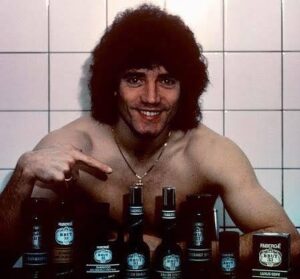
Keegan was not only Britain’s first footballing superstar, he was also, perhaps, the first to intuitively grasp the idea that his success as a footballer could be turned into something that held a wider cultural and commercial value – and could make him a celebrity in the world beyond sport.
Today’s footballing superstars are autonomously economic and cultural forces — global celebrities far beyond their sport — and Keegan was a bridge from that old world to the new.
Beyond football
Before the Brut ad, TV-watching Britain had been introduced to Keegan in a short public information film. Sharp and stylish in a wide-lapelled jacket with a broad black and white check, black polo-neck and chain, he tells a young boy how to cross the road safely.
He seems confident and poised; a natural TV performer. The Brut ad came next, and then promotion for Lyons Maid ice lollies. In 1996, by now manager of Newcastle United, Keegan starred with the Honey Monster in a Sugar Puffs advert that showcased the self-deprecating humour that had become an integral part of his public personality.

Today, top players cultivate, trademark and market their names, personalities, goal celebrations and much else.
Consider the star names who turned out for the Nike and Adidas FIFA World Cup 2026 ads, Lamine Yamal and Ronaldinho promoting McDonalds, or the ubiquity of David Beckham in half-time commercial breaks.
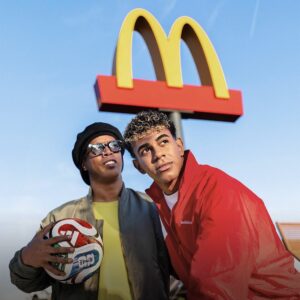
Lamine Yamal and Ronaldinho promoting McDonalds
But in the 1970s and 1980s this was very new. There were famous footballers, of course – some, like George Best, had pop-star appeal – but football was a working-class industry and players functioned as labour in the service of their clubs.
Less than 20 years previously, footballers had gone on strike to overturn the iniquitous maximum wage, which meant that even the biggest stars could earn no more than £20 a week – £25,000 a year in today’s money.
It would be another 20 years before the Bosman ruling gave players the freedom of movement that created the circumstances for today’s astronomical salaries.
Down-to-earth, sharp and articulate, Keegan was ahead of the game. In 1976, at the height of his Liverpool career, he appeared on the BBC’s Superstars, a show that attracted massive prime-time audiences by pitting athletes from different sports against each other in a decathlon-style competition.
He competed tigerishly, but fell off his bike during the cycle heat, suffering cuts and abrasions on his back and arms.
Expected to pull out, he opted to continue, saying: “These people here in the stands have come here to see me make a fool of myself and they’ve got a right to it!”
That moment – in today’s social-media world it would have gone viral – and his self-deprecating reaction to it, helped to establish Keegan as a personality beyond football.
Personal brand
The self-confidence and curiosity that drove Keegan to become the first Englishman to appear in the German Bundesliga, also allowed him to appear in a pioneering 1979 documentary Brian Moore meets Kevin Keegan.
We’ve grown used to behind-the-scenes, fly-on-the wall TV shows today. But back then, there was something extraordinary about hearing Keegan talk frankly about his problems.
He discussed settling in Germany, the way he was ostracised by his Hamburg teammates and the anger issues that culminated in an eight-week suspension for punching an opponent.
His ability to be authentic and vulnerable were in startling contrast to the macho inarticulacy that dominated both football and wider society.
Today, it is well understood that authenticity (or at least the performance of it) increases spectators’ identification with football stars. But this was uncharted territory in the 1970s.
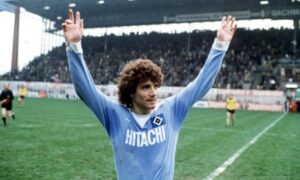
Keegan at Hamburg in Germany
Characteristically, Keegan overcame his rocky start in Germany and won over the Hamburg fans. They christened him ‘Mighty Mouse’ after the famous cartoon character.
Along with ‘King Kev’ – bestowed on him by Liverpool supporters – these were more than just nicknames, but further components in a developing personal brand that prefigured ‘CR7’ (Cristiano Ronaldo) ‘O Fenômeno’ (Brazil’s Ronaldo) and ‘Cold Palmer’ (Cole Palmer).
Keegan’s personal style added to his fame and cultural influence. In the mid-1970s he pioneered the bubble perm – a bouncy, tightly curled hair-do.
It stood out in a football world defined by rugged, utilitarian cuts like the mullet. After initial bemusement and mockery, Keegan’s style was widely copied by other players and became one of the defining male hairstyles of the era.
He also developed his own clothing line, influenced by the idiosyncratic and highly stylised Avengers TV series.—Reporting by The Conversation, BBC Sport, Sky News Sport & Newcastle Media; editing by Duncan Mlanjira, Maravi Express

Advertisement