

* At the heart of any constitutional democracy lies a simple but non-negotiable principle: individuals are arrested for alleged offences, not for political affiliation
* To suggest otherwise, without the backing of judicial findings, unintentionally legitimises the dangerous idea that the rule of law is subordinate to political identity
By Chief Economist Chifipa Mhango
Former President Lazarus Chakwera’s recently publicised direct call to current President of Malawi, Prof. Peter Mutharika regarding the arrest of individuals perceived to be affiliated with the Malawi Congress Party (MCP) raises important questions about constitutionalism, leadership responsibility, and the careful boundaries between justice and politics.

Advertisement
There is no dispute that Malawi’s democratic journey has, at times, been marked by selective enforcement, politicisation of institutions, and public mistrust in the neutrality of state power.
These are legitimate concerns that deserve sober reflection. However, framing arrests primarily through a partisan lens, or characterising law-enforcement actions as targeting “MCP people” without due legal determination, risks weakening the very democratic norms that Malawians have worked hard to protect.
At the heart of any constitutional democracy lies a simple but non-negotiable principle: individuals are arrested for alleged offences, not for political affiliation. To suggest otherwise, without the backing of judicial findings, unintentionally legitimises the dangerous idea that the rule of law is subordinate to political identity.
This is a narrative that no former head of state, regardless of personal or party grievance, should reinforce. From a legal standpoint, it is neither the role of political leaders nor former presidents to adjudicate the propriety of arrests. That responsibility rests with the courts.
Where there are genuine concerns of abuse of power, selective prosecution, or violations of due process, the appropriate remedy lies in judicial review, independent commissions of inquiry, and institutional reform, not in public political contestation over ongoing or past law-enforcement actions.
Morally, leadership — especially from those who have occupied the highest office — demands a higher standard of restraint. Former President Chakwera built much of his public standing on the promise of ethical governance, respect for institutions, and the depoliticization of state power.
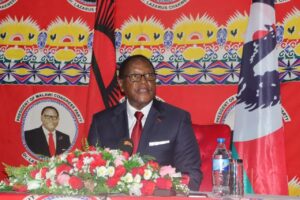
Chakwera
That legacy is best preserved not by defending perceived political allies, but by defending principles that protect all citizens equally, regardless of party affiliation, as justice is for all, including the poor masses.
The more constructive path forward would be one of measured reflection rather than accusatory rhetoric. Instead of calling out arrests as politically motivated, former President Chakwera could:
* Reaffirm his commitment to judicial independence and due process;
* Call for transparent investigations wherever abuses are credibly alleged;
* Encourage institutional reforms that prevent the misuse of state power by any administration, past or future; and
* Emphasise national healing over partisan grievance.

Advertisement
Malawi does not benefit when former leaders appear to relitigate political battles through the language of victimhood. The country benefits when its statesmen rise above factional loyalties and speak to the enduring values of fairness, legality, and accountability.
History ultimately judges leaders not by how fiercely they defend their political camps, but by how steadfastly they defend the rule of law when it is inconvenient to do so.
In this moment, Malawi would be better served by voices that cool tensions, strengthen institutions, and remind citizens that justice must remain blind, not partisan.
Ultimately, Malawi’s democratic maturity will be measured by its ability to heal without erasing accountability and to pursue justice without politicisation. Reconciliation does not mean silence on past wrongs, nor does it require the defense of individuals based on political identity.
It requires a shared commitment to truth, lawful process, and institutional integrity. Former President Chakwera, as a national figure whose voice still carries moral weight, is uniquely positioned to champion this higher path — one that encourages dialogue over division, institutions over personalities, and national unity over partisan grievance.

7th President of the Republic of Malawi, Prof. Arthur Peter Mutharika
Such leadership would not only honour the Constitution, but also contribute meaningfully to the long-term cohesion and stability of the Malawian state. While the intention behind former President Chakwera’s call to President Peter Mutharika may have been to seek accountability, the approach itself was misdirected.
Publicly calling upon a sitting Head of State to answer for arrests carried out through state institutions risks personalising what should properly remain a legal and institutional matter. In a constitutional order, responsibility for such actions is determined by evidence, judicial processes, and formal records, not by public appeals between political principals.
A more appropriate course would have been to allow current President Prof. Peter Mutharika’s conduct to be assessed through established legal channels, or to engage his response within a framework that reinforces, rather than blurs, the separation between political dialogue and the rule of law.


In this context, current President Peter Mutharika’s response can be regarded as appropriate in tone and restraint, insofar as it reaffirmed respect for institutional processes rather than engaging in political escalation.
By situating the matter within the framework of law and due process, his reply avoided validating the notion that arrests should be interpreted, or defended, through a partisan lens.
Such an approach does not pass judgment on the arrests themselves, nor does it celebrate them, but instead reinforces the principle that accountability must ultimately be determined by independent institutions.
This posture, while not beyond scrutiny, contributes more constructively to national stability than reciprocal public confrontation between leaders.
Ultimately, Malawi’s long-term political and economic stability depends on an unwavering commitment to the rule of law and respect for independent institutions.
When legal processes are allowed to function without political interference or public contestation, confidence is strengthened, not only among citizens, but also among investors, businesses, and development partners.
Economies grow where institutions are trusted, contracts are enforced, and justice is administered impartially. Upholding these principles is therefore not merely a legal obligation, but an economic imperative.
In this regard, restraint, institutional fidelity, and respect for constitutional order remain the most reliable foundations for national stability and sustainable development.

Chifipa Mhango
* The author, Chifipa Mhango is Chief Economist & Director of Economic Research & Strategy for Don Consultancy Group. He is a public policy analyst, offering independent commentary on governance, institutional integrity, and their implications for economic stability and development.


Advertisement