* SMEDCO shall recommend and facilitate access to business loans for successful trainees to business financing service providers
* Subject to terms and conditions of the service provider, allocate mentors and continue monitoring establishment and growth of such businesses
By Duncan Mlanjira
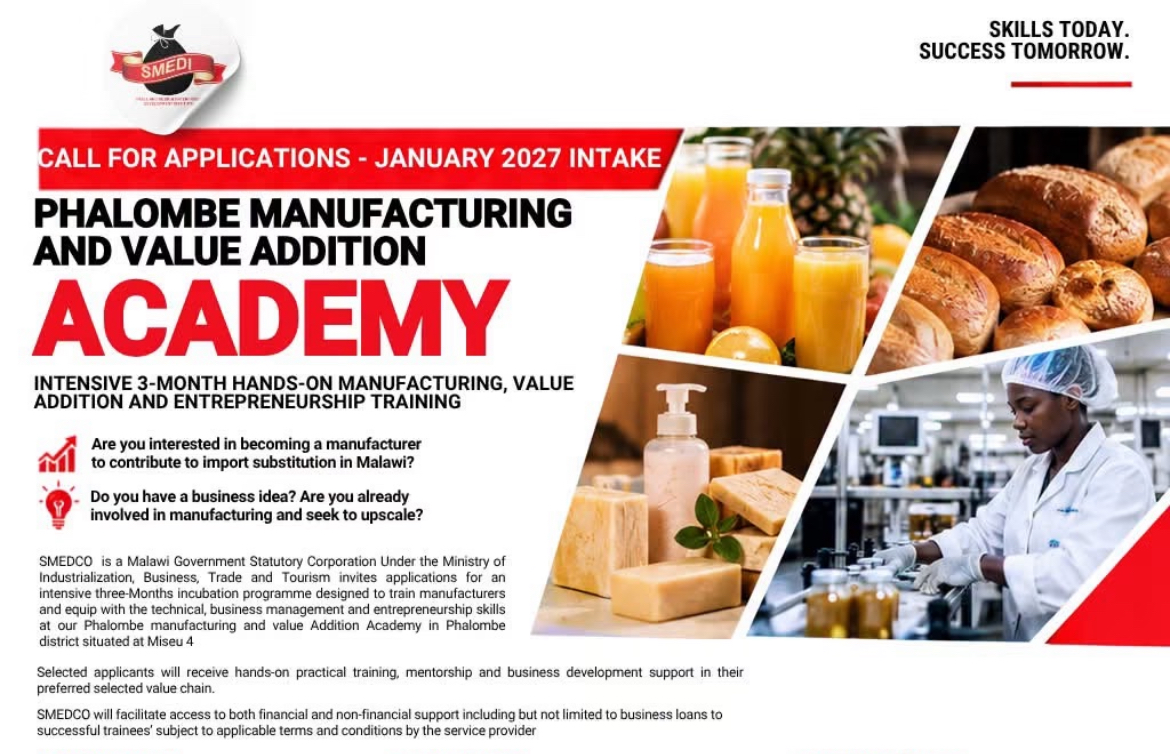
Small and Medium Enterprises Development Corporation (SMEDCO) has opened applications for January 2027 intake for an intensive 3-months hands-on training on manufacturing, value addition and entrepreneurship at its Phalombe Academy.

Advertisement
It is inviting entrepreneurs who are interested in becoming manufacturers to contribute towards import substitution and to upscale their ideas.
In a public notice, SMEDCO — which is a Malawi Government Statutory Corporation under the Ministry of Industrialisation, Business, Trade & Tourism — indicates that participants shall be equipped with technical business management and entrepreneurship skills in their preferred selected value chain.
“SMEDCO will facilitate access to both financial and non-financial support including, but not limited to business loans to successful trainees subject to applicable terms and conditions by the service provider,” says the notice.
Eligible applicants include:
* Entrepreneurs with viable business ideas interested in manufacturing and value addition;
* Existing manufacturers seeking to improve, diversify or scale up their products; and
* Entrepreneurs interested in commercialising locally available raw materials through value addition.
SMEDCO adds that “successful participants who satisfactorily complete the incubation programme shall be awarded a Professional Certificate of Competence in their selected value chain”.
The milestones from the training include that during the 3-months period, SMEDCO will ensure that before leaving the incubation centre, all enrolled manufacturers have been assisted with registration for their business and Malawi Revenue Authority (MRA) tax services.
And where applicable, they shall be assisted with registration for Public Procurement and Disposal of Public Assets (PPDA); Business Patent as well as Malawi Bureau of Standards (MBS) Conformity Testing for new products.
Other milestones include product development & commercialisation and business website & social media accounts.
The minimum entry qualification is for applications to have a genuine interest to become a local manufacturer as education and academic qualifications are not a basis for admission.
Language as mode of learning is a mixture of English and Chichewa, with sessions scheduled for both day and evening hours with practicals for both shifts.

Advertisement
The value chain training in food products are:
* Bakery — bread, buns, zimtuwisa, wedding cakes, pizza, puffs, sweets and biscuits;
* Fruits & vegetable processing — fruit juices, wine production, sauces, purées pastes;
* Dairy processing — powder milk, soya milk, ice cream, maheu; and
* Grain processing — flour & blended flours, peanut butter, soya pieces.
Non-food products include soap, detergents & personal care (tablet power soap, glycerine, perfume) and household & chemical (methylated spirit, car and tile polish).
In addition to technical/value chain, the training will include:
* industrial business management and entrepreneurship;
* viable business plan development and pitching;
* business financial literacy (plan, save and investment;
* business operations management;
* business marketing, selling, advertising, procurement and bid preparation — including the MSME Order, 2020;
* business formalisation; understanding international trade, forex, import and exports;
* basic computer literacy, e-business, business social media management and artificial intelligence (AI).

Participation fee is K300,000 per participant covering training and accommodation (bed, mosquito nets and mattress only) with participants to bring own beddings.
The participants are encouraged to keep some funds for their business registration, MBS test charges which will be subsidized at 50% rate.
Self catering for meals will be allowed with SMEDCO providing cookers while restaurant services will also be available at average price of K5,000 per meal plate.
SMEDCO shall recommend and facilitate access to business loans for successful trainees to business financing service providers subject to terms and conditions of the service provider, allocate mentors and continue monitoring establishment and growth of such businesses.
A non-refundable applications fee of K10,000, indicating preferred value chain of interest, should be paid to National Bank of Malawi; SMED Incubation; account No. 1004776239; City Centre Branch.
To be clearly indicated ‘Phalombe Manufacturing and Value Addition Academy’ on the envelope or the subject line on email; academy@smedi.mw.
Physical address: (SMEDCO, P/Bag 393, Lilongwe 3.
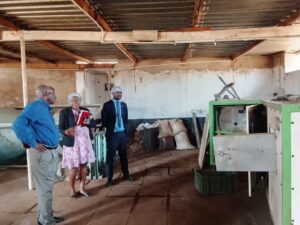
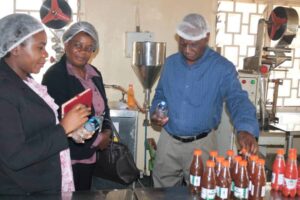
Minister of Industrialisation, Business, Trade & Tourism, Simon Itaye visited SMEDCO facilities in Mponela in Dowa District last week, he was impressed with various initiatives being implemented in supporting small and medium entrepreneurs.
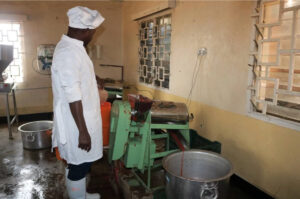
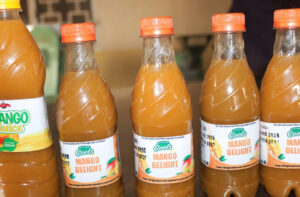
SMEDCO is processing jam from tomatoes, starch from cassava and polishing and processing gemstones, among other products which would help SMEs add value to their products and reduce post-harvest losses.
The Minister stressed the need to replicate similar initiatives in other areas to enable more farmers and entrepreneurs to access the services.
Itaye further encouraged SMEDCO to collaborate with universities such as the Malawi University of Business & Applied Sciences (MUBAS) to fabricate complex production equipment.
He took cognizance that SMEDCO is aligning with the MW2063 national vision under the first pillar of Agricultural Productivity and Commercialisation, and the second pillar of Industrialisation.
“To achieve this, SMEDCO should intensify advertising the facility and its services to ensure that more people are aware of the opportunities available,” he is quoted as saying by the Ministry’s Media.
SMEDCO Central Regional Manager, Catherine Malanga, said the institution assists people who have business ideas to develop them into finished products that can compete on the market.
“We are taking people from the ground level to somewhere they can compete on the market, having their products produced and refined to good standards,” she said.
SMEDCO is also buying surplus tomatoes amid concerns over low market prices and potential post-harvest losses by processing it into sauce for use when fresh tomatoes become scarce.—Additional reporting from Dowa by Droli Manyonga, Malawi News Agency (MANA)