
* With El Niño conditions forecast this year, the partnership matters more than ever to help turn weather forecasts into early, practical action
* As Ministry of Natural Resources & Climate Change urges all stakeholders to use the 2026/2027 Seasonal Rainfall Forecast to strengthen preparedness and reduce the impact of climate related shocks
* “A strong El Niño should not be met with despair but should be a call to readiness”—Minister Patricia Wiskes
By Duncan Mlanjira, Maravi Express & Jeremiah Mphande, Patience Kapinda, Malawi News Agency (MANA)
Through the UK-funded WISER ActionFirst initiative, the UK Met Office scientists are sharing their expertise with Malawi’s Department of Climate Change & Meteorological Services Climate (DCCMS) weather forecasters, to help shape early warnings so they’re clear, trusted, and easy to act on.

Advertisement
This was announced by UK in Malawi on its official Facebook account, saying with El Niño conditions forecast this year, the partnership “matters more than ever”.
“When the rains don’t come, or when they come too hard, early warning gives people the chance to prepare, protect their livelihoods, and stop it from turning into a disaster.
“Through the UK-funded WISER ActionFirst initiative, we are proud to be helping turn weather forecasts into early, practical action.
“This is what UK-Malawi partnership looks like — working together, before the storm.”
Co-designed by the UK Met Office in collaboration with global partners such as the World Meteorological Organisation (WMO), the core purpose of the UK-funded WISER ActionFirst is to help communities prepare for severe weather and climate change.
According to the WMO, WISER ActionFirst™ initiative was designed to strengthen early warnings across Eastern and Southern Africa.
The initiative, launched in April 2026, it to address systemic gaps taking cognizance that “Africa remains highly vulnerable to climate change, with increasing droughts, floods, cyclones, and heatwaves threatening lives and livelihoods across Eastern and Southern Africa”.
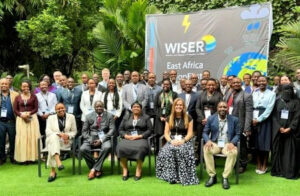
The launch in April 2026
WMO maintains that despite investments in forecasting and early warning systems, access to timely and actionable information remains limited, and forecasts often fail to trigger early action.
Thus the establishment of the WISER ActionFirst™ in Africa initiative, which represents “a fundamental shift from producing forecasts to ensuring that they are actionable, co-produced with users, and embedded in decision-making systems”.
“Working across 25 countries — nine in East African Community & Intergovernmental Authority on Development and 16 in Southern African Development Community (SADC) — the initiative aims to strengthen institutional capacity, develop national co-production roadmaps, operationalise action-based forecasting, and formalise early action protocols that trigger real-time preparedness measures.”
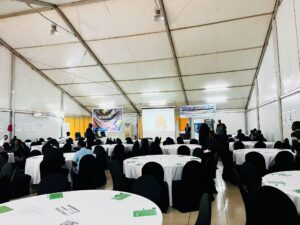
During the 5th National Climate Outlook Forum (NCOF) and Impact Based Forecasting under WISER ActionFirst Workshop at Sunbird Lilongwe Hotel in Lilongwe, Deputy British High Commissioner & Development Director, Ben Nicholson, stated that the UK government is strengthening its support for disaster preparedness and resilience in Malawi.
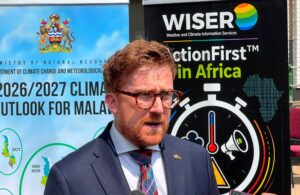
Deputy British High Commissioner & Development Director, Ben Nicholson
He said access to the right information at the right time can determine whether a forecast hazard develops into a major crisis or remains a manageable shock.
Nicholson said warnings are more effective when they are accessible, relevant and actionable, enabling people to take steps to protect their families, livelihoods and property.
“Early action is important in reducing the impact of climate shocks. Although weather forecasts carry some uncertainty, preparing early is more effective than responding after impacts have already occurred.
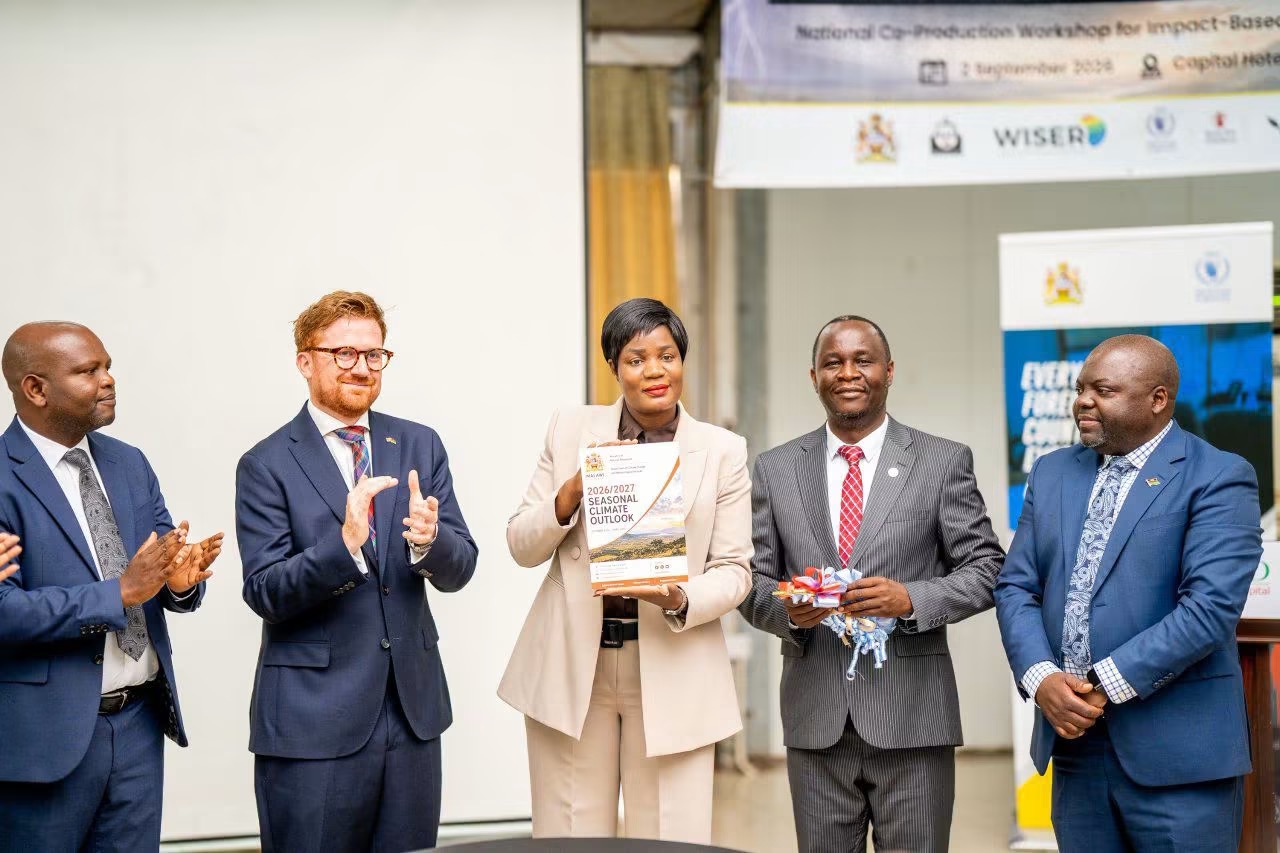
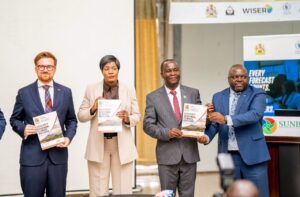
The event was graced by Minister of Natural Resources & Climate Change, Patricia Wiskes, who launched the 2026-2027 Rainfall Season Outlook that indicates the high chance of below-normal rainfall over most-areas of southern-and-central-regions — while normal to above-normal rainfall is expected over much of Northern Region.
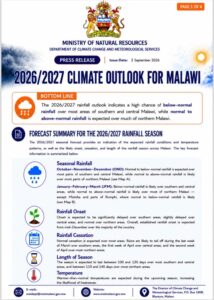
The Minister thus urged Malawians and all stakeholders sectors to use the seasonal rainfall forecast to strengthen preparedness and reduce the impact of climate related shocks.
According to the DCCMS in its 2026-2026 rainfall season report, El Niño Southern Oscillation (ENSO) projection, indicate that most global climate models indicate a high chance (over 90%) that a strong El Niño will develop and persist throughout the rainfall season.
Wiskes thus appealed to Malawians that “a strong El Niño should not be met with despair but should be a call to readiness”, adding that the forecast should guide planning and preparedness across agriculture, health, water, energy, transport and disaster management.
She added that Malawi needed to move from reactive responses to early and anticipatory action, with functional preparedness systems at district and community levels.
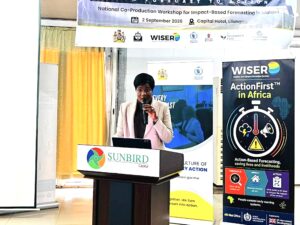
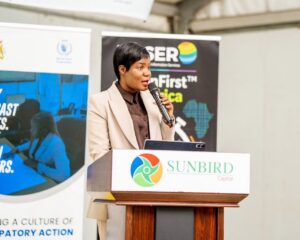
Minister Wiskes
Wiskes also called for stronger community engagement, farmer support and practical measures to strengthen resilience against climate extremes.
The Minister further said the seasonal forecast should be translated into practical action, adding that the forum provides an important platform for developing advisories and response strategies with users from climate sensitive sectors.
She further called for a review of the impact matrix, including triggers, actions and preparedness measures, to strengthen adaptation to the anticipated strong El Niño.
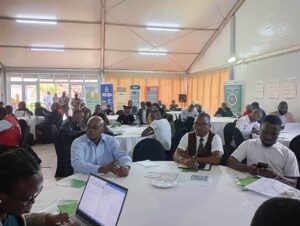
On the National Climate Outlook Forum (NCOF), the Minister stressed that it provides a platform for government, development partners, communities and climate-sensitive sectors to use scientific forecasts in planning and preparing for possible climate extremes.
“Malawi’s experience with climate extremes, including the devastating impacts of Cyclone Freddy and prolonged dry spells, demonstrates that failure to act on forecasts can increase the cost of disasters.
“This gathering marks the fifth of its kind in our beloved Malawi — a testament to our commitment to climate resilience and preparedness.
“Over the past five years, the seasonal forecast has grown from a modest technical briefing into one of the most anticipated fixtures on our national calendar — a moment when Government, our partners, and the communities we serve come together in anticipation of the coming season,” she said.

Advertisement