
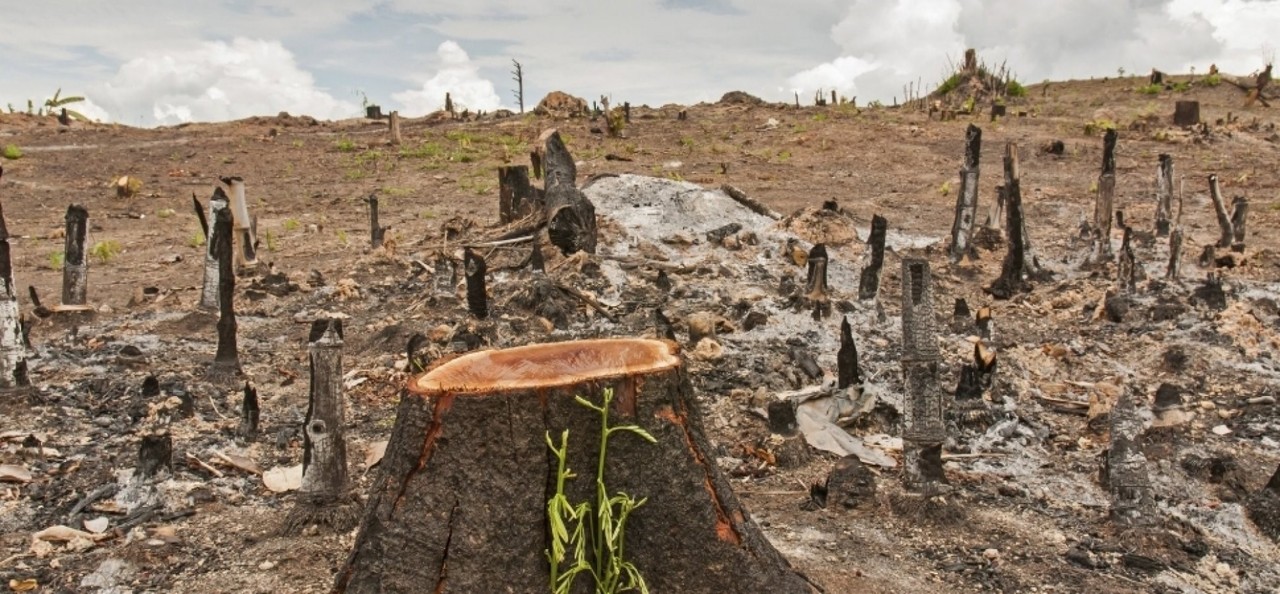
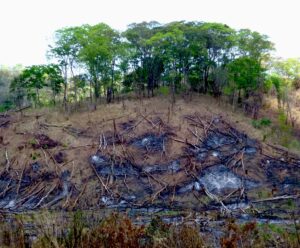
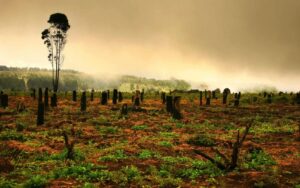
* As Malawi loses over 25,757 hectares of forest annually with degradation rate standing at 0.77%, and deforestation at 0.66%
* Where wood remains necessary, brick makers should be encouraged to obtain it from legally managed rather than customary woodlands or other unauthorised areas
By Tarcizio Mondwe, Malawi News Agency (MANA)
Ministry of Natural Resources indicates that Malawi loses an estimated 25,757 hectares of forest annually through human activities, with 14,192 hectares degraded and 11,565 hectares permanently deforested.

Advertisement
In an interview with MANA, the Ministry’s public relations officer, Tikondane Vega, said the annual forest degradation rate stands at 0.77%, while deforestation accounts for an annual rate of 0.66%.
Vega explained that deforestation involves the complete conversion of forested land to other uses, including agriculture, mining within forest reserves, settlements and total clearance of vegetation for activities such as charcoal production.
“Forest degradation refers to the reduction in forest quality and canopy cover, primarily driven by brick burning and illegal logging,” Vega said.

Tikondane Vega
He added that government is now promoting alternative building materials, including cement blocks, as part of efforts to phase out burnt bricks in public infrastructure and reduce demand for firewood.
“Where wood remains necessary, brick makers should be encouraged to obtain it from legally managed rather than customary woodlands or other unauthorised areas.”
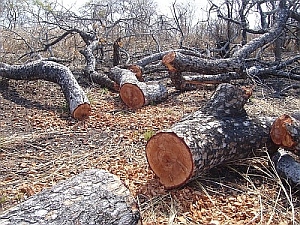
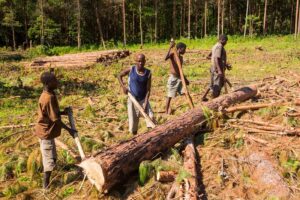
Vega emphasised that illegal felling, cutting, destroying or removing trees in a forest reserve or protected forest area can attract a fine of K5 million and imprisonment of up to 10 years, while those who cause or connive in such activities can face a K10 million fine, and up to 15 years’ imprisonment.
Lighting, or causing unlawful fires in forest reserves, protected forest areas, village forest areas or plantations can attract up to 20 years’ imprisonment without the option of a fine, while allowing a fire to spread out of control can attract up to 10 years’ imprisonment.
Vega, therefore, urged Malawians to use alternative energy sources and energy-saving technologies; report illegal forestry activities and fires to authorities; participate in tree planting, natural regeneration and community forest management.
Leader of environmental conservation at Namkumba Community Based Organisation in Blatyre, John Machika, described lack of security as one of the factors that leave vegetation prone to harsh people who cut down trees unnecessarily.
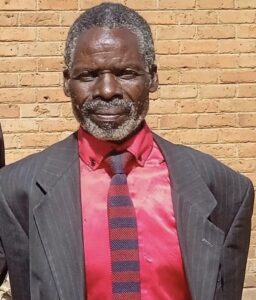
Machika cited areas like Milare in Blantyre, where trees are being stolen by communities
He thus called for firebreaks to maintain the survival rate of recently planted trees, and collaboration between communities and traditional leaders in reporting malpractices to police, so that alleged offenders can appear before court and answer to the charges.
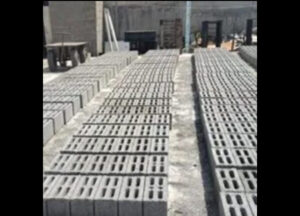
Meanwhile, Chikwawa-based PressCane ethanol manufacturing company has found ways to conserve the environment by producing durable construction hollow blocks from the waste product generated after burning coal in its factory boilers.
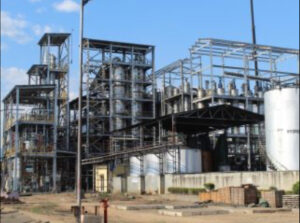

PressCane Limited made headlines early this year when its factory’s effluent discharge affected the surrounding Dyeratu communities, causing environmental damage in nearby homes and fields — thus finding innovative ways to conserve the environment while providing the nation with energy needs and other solutions.
With expertise from the engineering department of Malawi University of Business and Science (MUBAS), PressCane has developed and refined the hollow blocks for the past three years — which was certified by Malawi Bureau of Standards (MBS).
They are being produced from fly ash — a waste product generated after burning coal in boilers to produce steam used during the ethanol production process which are selling at economic price.—Editing and additional reporting by Duncan Mlanjira; Maravi Express

Advertisement