
* Given the significant public interest implications and the importance of sustaining confidence in Government’s fiscal management, the provision of clear, quantified, and auditable evidence on these matters would materially enhance transparency and policy credibility
By Duncan Mlanjira
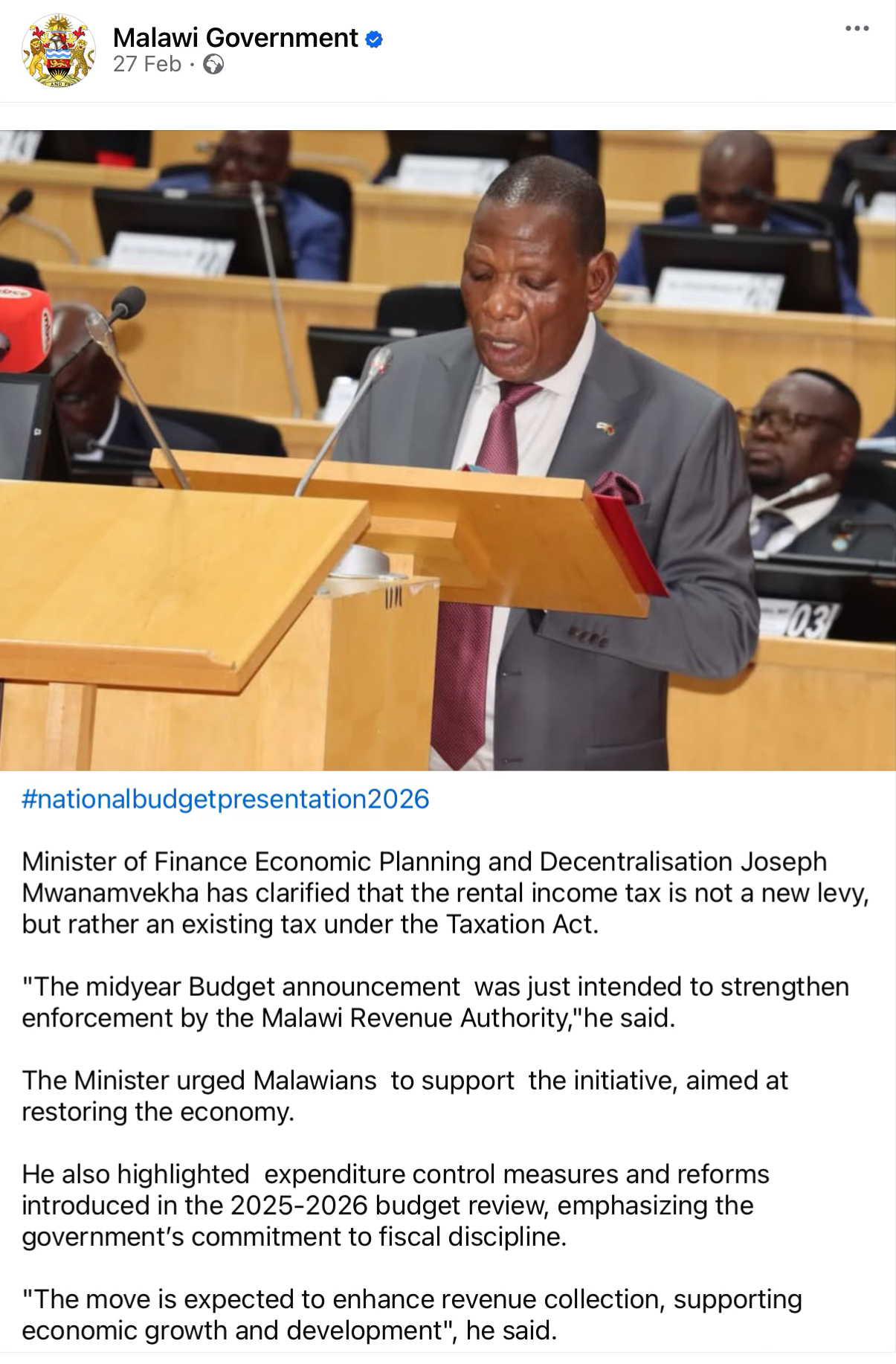
Consumer Association of Malawi (CAMA) has asked the government to provide evidence on the implementation and fiscal outcomes of expenditure control (austerity) measures, which the Democratic Progressive Party (DPP) administration introduced during the 2025/26 Mid-Year Budget Review.
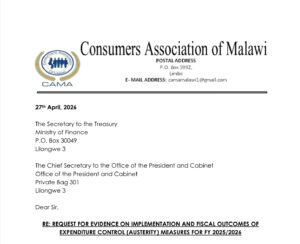
In a letter to the Secretary to the Treasury in the Ministry of Finance and the Chief Secretary to the Office of the President & Cabinet (OPC) — copied to the media — Executive Director, John Kapito asks for fiscal consolidation efforts made through Circular Ref: SC/S/001 (November 6, 2025, including the Addendum issued by the Chief Secretary on November 20, 2025 (Ref. No.: CS/S/001 titled ‘Expenditure Control Measures for 2025/2026 Financial Year — International Travel’).
Kapito also refers to the communication issued on February 27, 2026 by the Secretary to the Treasury (Ref. No. MFEPD/ST/2026/6/2 titled ‘Expenditure Control Measures’).
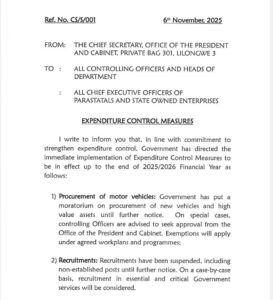
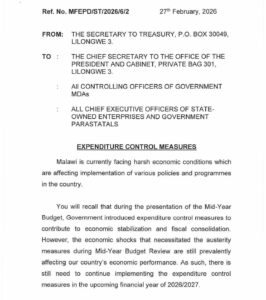
“These measures were introduced against a backdrop of heightened fiscal stress, constrained domestic revenues, elevated debt-service obligations, and the urgent need to restore macro-fiscal credibility,” says Kapito.
“In this context, and in the spirit of transparency, accountability, and evidence-based public financial management, CAMA respectfully requests the Ministry of Finance to provide verifiable evidence on the progress, effectiveness, and fiscal impact of the austerity measures implemented to date.
“In particular, clarification and supporting documentation are requested on the quantified fiscal impact of the measures, including the gross savings realised to date — disaggregated by major expenditure categories such as international travel, workshops, allowances, vehicles, and procurement rationalisation.”

Advertisement
Further, CAMA emphasises that “it would be important to understand the net savings that have accrued to the national budget after accounting for any offsetting costs, enforcement-related expenses, or substitution effects — as well as how these realised savings compare against the baseline expenditure projections that existed prior to the issuance of the expenditure control circulars”.
“Relatedly, information is sought on how the savings generated have been utilised or reallocated within the broader fiscal framework. Specifically, clarification is requested on whether these resources were directed towards debt service and arrears clearance, social protection and essential service delivery, capital expenditure and growth-enhancing investments, or deficit reduction and the rebuilding of fiscal buffers.
“In this regard, it would be useful to establish whether there is a clear and traceable budgetary link between the austerity measures and identifiable expenditure or financing outcomes.”
CAMA also requests further clarification on “compliance, enforcement, and institutional accountability, [which] includes evidence on compliance levels across Ministries, Departments, Agencies, Statutory Corporations, and State-owned enterprises — particularly with respect to international travel restrictions”.

John Kapito
“Information on the number of non-compliance cases identified through internal controls, audits, or reviews — and the administrative actions taken in response —would be particularly instructive.
“In addition, an assessment of the effectiveness of existing procurement, financial control, and audit systems in enforcing the measures as prescribed in the circulars would greatly assist in evaluating their credibility.
“The Ministry’s assessment of the broader distributional and operational effects of the expenditure controls would also be of interest; specifically, whether the measures have resulted in unintended operational constraints, service delivery bottlenecks, or the shifting of costs to less visible or off-budget lines, and how Government has balanced expenditure restraint with the need to maintain core public sector functionality, particularly in priority sectors.
“Finally, clarification is sought on the contribution of the current austerity measures to medium-term fiscal sustainability beyond short-term cash containment. This includes whether the Ministry has assessed the extent to which these measures are structural and durable as opposed to largely administrative and temporary, and how their outcomes are being incorporated into the medium-term expenditure framework and the broader fiscal reform agenda.
“Given the significant public interest implications and the importance of sustaining confidence in Government’s fiscal management, the provision of clear, quantified, and auditable evidence on these matters would materially enhance transparency and policy credibility.
“CAMA trusts that the Ministry will treat this request with the seriousness it deserves and look forward to your considered response.”

Advertisement