

* Plans to introduce a digital identity platform, the Nzika Wallet, which will allow citizens to access digital ID credentials on smartphones
* And apply online for services such as national IDs, birth certificates and death certificates
By Duncan Mlanjira
National Registration Bureau (NRB) announces that it has launched its 2025–2030 Strategic Plan, which focuses on expanding inclusive identity registration, strengthening legal frameworks and establishing a secure Digital Public Infrastructure to support modern identity services.

Advertisement
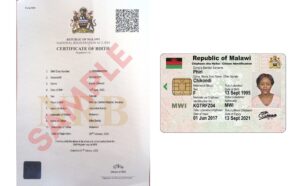
A report on Malawi Government’s official Facebook account, indicates that as part of this modernisation drive, NRB plans to introduce a digital identity platform known as the Nzika Wallet, which will allow citizens to access digital ID credentials on smartphones and apply online for services such as national IDs, birth certificates and death certificates.
The bureau is currently conducting district-based outreach programmes across all 28 districts to ensure rural and hard-to-reach communities participate in the renewal exercise, with traditional leaders and local authorities playing a key role in mobilizing citizens.
It has intensified the national ID renewal exercise, with over three million Malawians expected to renew their documents to ensure they remain valid and accessible for essential services.
NRB public relations officer, Norman Fulatira, is quoted as saying the the exercise is crucial in maintaining an accurate and updated national database of citizens, which strengthens national security and reduces risks such as identity fraud and impersonation.
Fulatira reiterated that valid national IDs enable citizens to access a wide range of services including social protection programmes, government subsidies, banking services and mobile money platforms that require proper identification under Know Your Customer (KYC) regulations.
He added that the renewal programme will also support government planning and policy development by ensuring that demographic and biometric data remains accurate.
“A country cannot talk of security if it does not know its people, and no country can talk of development without security,” Fulatira said.
In his State of the Nation Address (SONA) made in Parliament on February 13, President Arthur Peter Mutharika announced that the Government is piloting a Digital Identity Wallet to modernise identity services and establish non-expiring identity (ID) cards.
He took cognizance that most of the National ID cards have expired and thus this year, his administration is undertaking the mass renewal of all expired cards. Early this month the NRB launched an intensive outreach programme in Blantyre District aimed at renewing over 25,000 national IDs that have been lost, expired, damaged, or defaced.
NRB Principal Registration Officer for Blantyre Samuel Mongora told Malawi News Agency (MANA) that as an ongoing outreach programme, and it will be intensified depending on client demand.
He cited key centres for the exercise that included primary schools of Chirimba, Sigerege, South Lunzu, Lirangwe, Chikuli Trading Centre, and Mdeka Teacher Development Centre to ensure wide coverage — and that in addition to these centres, people can also renew their national IDs at already existing registration points such as the Blantyre Main Office and six post offices, namely Lunzu, Ndirande, Soche, Mpemba, Limbe, and Bangwe.

President Mutharika presenting his SONA in Parliament on February 13, 2026
Mongora underscored the importance of establishing multiple centres to bring essential services closer to citizens, noting that IDs expire daily based on individual registration records.
He assured the public that the renewal process is smooth and efficient, encouraging residents to patronise the centres in large numbers, saying: “Under normal circumstances, renewed IDs are typically printed within 30 working days.”
Mongora reminded the public that while the outreach focuses on renewals, national registration remains a continuous government function available at all designated district offices.
In December, NRB Principal Secretary, Patrick Machika issued a public notice that the Government has extended the validity of expired IDs to January 1, 2027, indicating that all expired cards will remain valid for all purposes until after the period.
This is to give the NRB adequate time to complete the renewal, printing and distribution of about 2 million experience national ID cards across the country and also ensured citizens’ uninterrupted access to essential services and prevents administrative or financial disruptions for all Ministries, Departments, Agencies (MDAs) and private institutions.
And NRB emphasised that during this period, all MDAs and private sector institutions are directed to continue accepting expired national IDs as valid for all official and transactional purposes until January 1, 2027.

Advertisement