
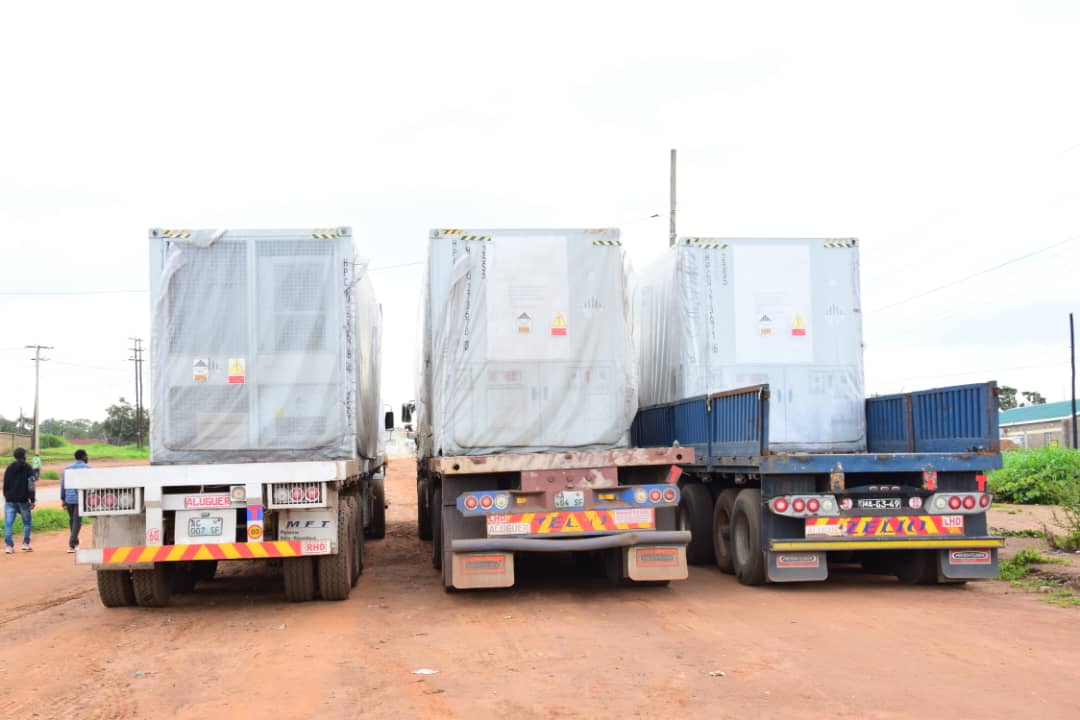
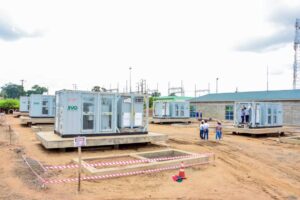
Set to be commissioned in February
* To serve three critical functions: frequency regulation; integrating renewables and reducing load shedding
* We are moving from the design phase to the reality of a modernised power system for all Malawians—acting CEO Eng. Maliano
By Duncan Mlanjira
The battery energy storage system (BESS) project being undertaken by Electricity Supply Corporation of Malawi (ESCOM) Limited towards Malawi’s stable energy evolution, is now firmly on track following the arrival of 12 BESS containers 20MW units at project site, Kanengo in Lilongwe on Tuesday.

Advertisement
In a statement, ESCOM says the 12 units are essential for a stable and reliable electricity supply in Malawi as the BESS will serve three critical functions:
1. Frequency regulation: The grid must maintain a precise frequency to avoid equipment damage or blackouts. The BESS will act as a ‘shock absorber’ — reacting in milliseconds to balance supply and demand;
2. Integrating renewables: Solar energy is intermittent. The BESS will stabilise the fluctuations of solar power, ensuring that clouds or sunset do not lead to immediate power drops; and
3. Reducing load shedding: By storing energy during the day and discharging it during peak evening hours, the system reduces the need for loadshedding.
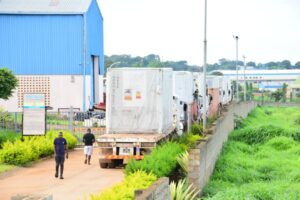
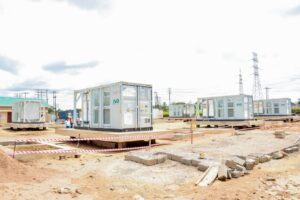
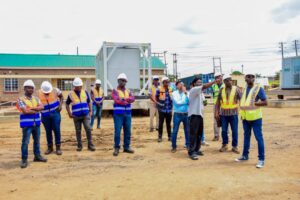
ESCOM described the pivotal milestone in the nation’s energy evolution — marking a game-changer for the national grid and keeping the project firmly on track for its February 2026 commissioning deadline.
It has been funded by a US$20.245 million grant from the Global Energy Alliance for People and Planet (GEAPP), and ESCOM maintains that “the project represents a giant leap toward cushioning load shedding and modernising Malawi’s power infrastructure”.
ESCOM’s acting Chief Executive Officer, Eng. Sinosi Maliano is in quoted in the press release saying: “The arrival of these containers is the physical manifestation of our commitment to a resilient grid. We are moving from the design phase to the reality of a modernised power system for all Malawians,” Eng. Maliano said.


Advertisement