
* I know what you are doing regarding money laundering and other illegal money transactions, and authorities are on the ground to act
* I do not want to see a situation where a bank has been closed solely because it facilitated this malpractice. Let us all work together to manage this economy
By Memory Kutengule Chatonda, MANA
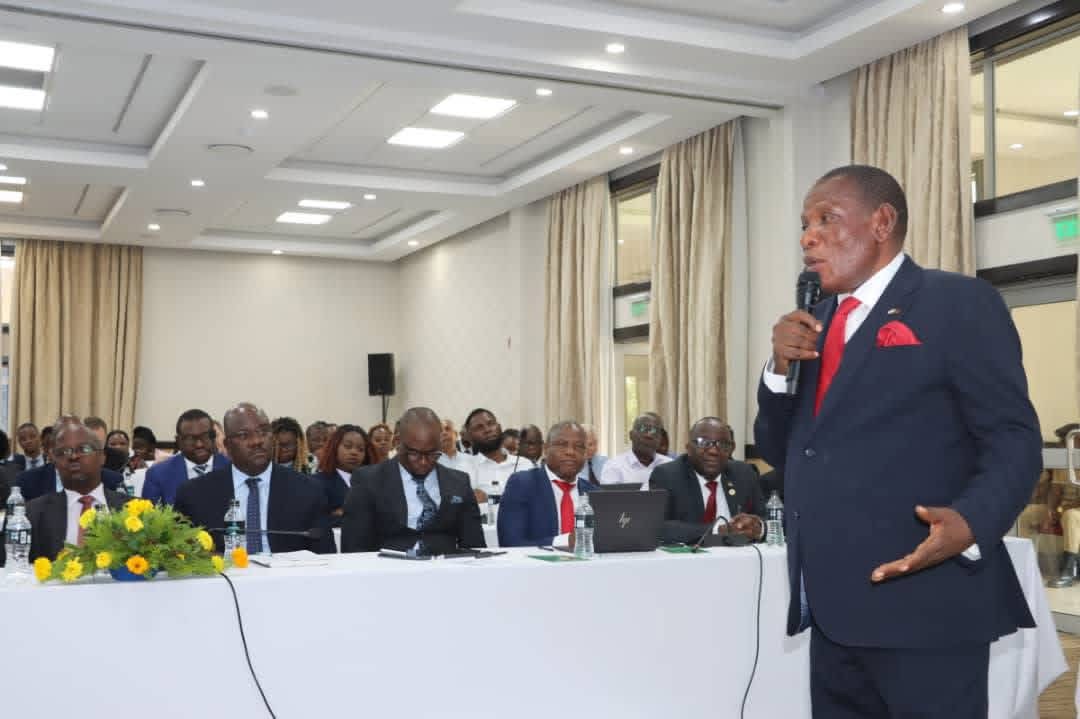
Minister of Finance, Economic Planning & Decentralisation, Joseph Mwanamvekha, has warned business leaders, banks and money transfer operators, against engaging in illegal financial transactions and money laundering, saying such practices have the potential to collapse the country’s economy.

Advertisement
Mwanamvekha issued the warning yesterday in Blantyre during the 2026/27 national pre-budget consultation meeting with stakeholders drawn from the private sector, academia, business community, faith-based organisations and civil society.
“I know what you are doing regarding money laundering and other illegal money transactions, and authorities are on the ground to act.
“I do not want to see a situation where a bank has been closed solely because it facilitated this malpractice. Let us all work together to manage this economy,” he said.
The Minister added that Malawi is facing several economic challenges, including high public debt and low foreign exchange reserves — thus urged Malawians to remain resilient as government implements tough economic measures aimed at stabilising the economy, including cutting expenditure and improving revenue collection.

“We are cutting down on expenditure. We have also taken measures to improve revenue collection through the Malawi Revenue Authority, and we will be improving our collection of non-tax revenue to ensure we collect as much as possible.
“We need to close the gap between expenditure and revenue because if we do not do it, no one else will do it for us,” said the Minister, who acknowledged concerns from some economists who argue that the country is being overtaxed but said government has no alternative under the prevailing circumstances.
“I know some economists are telling me that we are overtaxing, but we have no option but to make these tough decisions, not out of bad intention, but for the betterment of Malawi’s economy,” he emphasised.
“The Malawi economy continues to face significant macroeconomic pressures, including persistent foreign exchange shortages, high inflation, climate-related shocks, infrastructure and energy constraints, which have weighed down on the overall economic performance.

Advertisement
“As a result, economic growth remains modest, with real GDP growth slightly revised downward to 2.7% in November 2025 from an earlier projection of 2.8%. Nonetheless, the medium-term outlook remains cautiously positive, with GDP growth projected to strengthen to 3.8% in 2026 and 4.9% in 2027, supported by targeted investments and policy reforms under the National Economic Recovery Plan.
“To date, inflationary pressures have remained elevated largely driven by shortages of food, foreign exchange and fuel. Annual inflation averaged 32.3% in 2024 and is projected to decline to 28.5% in 2025 and further to 20.7% in 2026.
“However, in the short to medium term, the anticipated improvements in key productive sectors will moderate the inflation further,” said the Minister, further indicated that foreign exchange reserves are showing signs of improvement while inflation is gradually declining.

Finance Minister Mwanamveka delivering Mid-Year Budget review in Parliament in November
On the 2026/2027 National Budget, Mwanamvekha said it will be anchored on the National Economic Recovery Plan (NERP), with continued focus on economic stabilisation and investment in key productive sectors, including agriculture, tourism, mining, manufacturing and small and medium enterprises.
In its contribution, the Malawi Confederation of Chambers of Commerce & Industry (MCCI) called for increased investment in manufacturing, tourism and agricultural commercialisation to stimulate economic growth.
On its part, the Institute of Chartered Accountants in Malawi (ICAM) proposed that the budget should consider increasing the tax-free threshold to K250,000 to cushion Malawians against the high cost of living.—Additional reporting by Duncan Mlanjira, Maravi Express


Advertisement