Mac Mallewa flanked by Associate Prof. Benjamin Kumwenda (left) and Dr. Tonney Nyirenda
* As KUHeS is set to host its 4th Research Dissemination Conference (RDC) be held at Amaryllis Hotel from October 1-3
* Under the theme; Multidisciplinary health research and innovation: Key to economic development
By Duncan Mlanjira
Kamuzu University of Health Sciences (KUHeS) is set to host its 4th Research Dissemination Conference (RDC) with the message that health research and dissemination of its results are key towards behavioral change, clinical practice and further research.

Advertisement
It will be held at Amaryllis Hotel from October 1-3 under the theme; ‘Multidisciplinary health research and innovation: Key to economic development’ — and the presentation include infectious diseases; maternal & child health; health economics; epidemiology & public health; environmental health; social science in health; nutrition; reproductive health; health systems & policy, non-communicable diseases as well as environment & climate change.
At a press briefing to announce the dates and the theme, KUHeS Vice-Chancellor, Prof. Mac Mallewa said guest of honour will be one of KUHeS’ strong stakeholders and supporter of the health system in the country, Hitesh Anadkat, who is founder and vice-chairman of the First Capital Bank (FCB).
The keynote speaker is expected to be Prof. Melissa Gladstone from University of Liverpool and that the rest of the sessions will be graced by a number of internationally recognised researchers from various fields.
He added that they organise this annual RDC as this is within KUHeS’ aspirations of being excellent in research innovation and consultancy as stipulated in its second and third strategic pillars of its University Strategic Plan.
The Plan has eight strategic pillars that responds to both Africa Agenda 2063 and MW2063 national vision — which are teaching & learning; research, innovation & consultancy; services & community outreach; financial management & resource mobilisation; governance & management; partnership & networking; students’ welfare and staff welfare.
“The aim of the conference is to share knowledge, insights and innovation that University has generated through research but also brings researchers from different disciplines together both locally and internationally,” said Prof. Mallewa.

“The RDC 2025 will disseminate research results, which will feed into policy, behavior change, clinical practice and further research. KUHeS has a professional obligation to feedback its work to the society and government to inform policy and behavioral change in response to many health challenges that our country face.”
He announced that over 600 participants have already registered and there is still a small window to register and that over 300 abstracts for poster and oral presentations have already received and reviewed.
After Anadkat’s official opening of the conference and the keynote speech by Prof. Melissa Gladstone, there will be a Science Café on the second day, October 2, which is a science discussion on real life and practical issues affecting the Malawi society — as the research leaders will be expected to drive the discussion and engage with the general public.

FMB founder Anadkat
Prof. Mallewa added that the RDC 2025’s budget is about MK300 million, of which one third will realised from the University and conference fees with the remainder from partners and research affiliates.
He thus called on other stakeholders from the corporate world to join the partnership to make it a success, with emphasis that it is through research that important questions to health challenges are answered.
He cited that previous researches led to many innovations that include creating vaccines to various health challenges; reduction of the mortality rate through malaria and HIV; communicable diseases, among others.
The university is just over four years since its birth as KUHeS on May 4, 2021 by the Act of Parliament number 20 of 2019 after merging two constituent colleges of the University of Malawi — College of Medicine (est. 1991) and Kamuzu College of Nursing (est. 1979).
KUHeS’ vision is to maintain a world class university status in health, education, research and innovation — with the motto; ‘Excellence for Life’. It has five schools where teaching, learning and research is conducted in various specialties: School of Medicine & Oral Health; School of Nursing & Midwifery; School of Neonatal, Maternal & Reproductive Health; School of Life Sciences & Allied Health Professions; and School of Global & Public Health.
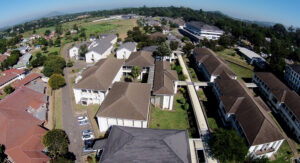
KUHES campus in Blantyre
The University has a student population of nearly 5,000 of which 60% are girls and has the Institute of Postgraduate Studies and Research with the overall mandate of managing postgraduate studies and coordinating research.
“KUHeS is privileged to have research affiliates who are dedicated research centres that investigate various health issues in different areas,” Mallewa said. “These research affiliates are also linked to international universities and they include: Johns Hopkins Project, Malaria Alert Centre, Blantyre Malaria Project, Malawi-Liverpool Wellcome Programme and Malawi Epidemiology & Intervention Research Unit (MEIRU).
“These research affiliates are key partners in the RDC and their research output will be visible in various RDC sessions,” he said.

To register online, stakeholders are encouraged to visit; www.rdc.kuhes.ac.mw, who fees are MK150,000 for undergraduate students, MK200,00 for postgraduates, MK300,000 for KUHeS staff, MK450,000 for local participants and US$350 for international participants.
At the graduation of 193 students — marking KUHeS’ second congregation since its unbundling from the University of Malawi (UNIMA), the Vice-Chancellor, Prof. Mallewa highlighted that despite its young age, the university towards the country’s development of sound health care system.
He singled out projects such as the development of Changu, an innovation created jointly by KUHeS students and scientists from the University of Australia for rapid diagnosis of syphilis — a tool which he said has been instrumental in preventing children from being born with the disease.
The university had also developed rapid malaria tests being used in rural settings to improve patient outcomes where resources are limited and also reintroduced electronic disease surveillance tools in Blantyre health facilities — which have enabled timely reporting of cholera cases.
The second graduation ceremony was also an achievement as a total of 193 graduands received master’s degrees, first degrees, diplomas and certificates — of which 102 were women while 91 were men, representing diverse disciplines in health sciences.


Advertisement
* Weather update