
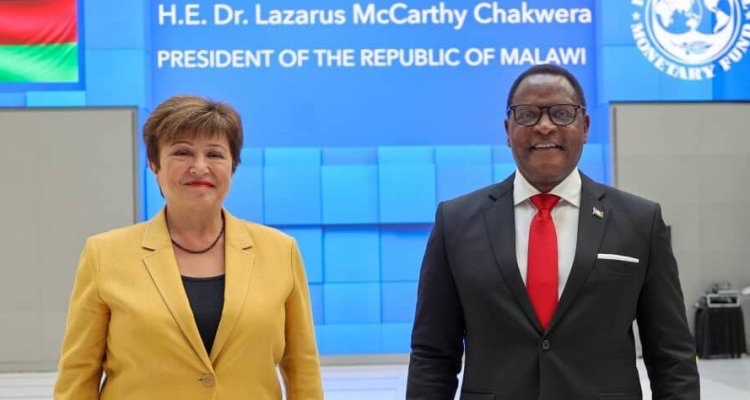
* A 4-year arrangement under the ECF has been approved of US$175 million with an immediate disbursement of US$35 million
* To support the country’s macroeconomic adjustment and reform agenda aimed at restoring macroeconomic stability
* Building a foundation for inclusive and sustainable growth, and addressing weaknesses in governance
By Duncan Mlanjira
An economic expert contends that the main reason for the devaluation of the kwacha and the subsequent measures that President Lazarus Chakwera has made in his address to the nation yesterday are some of the conditions set by the International Monetary Fund (IMF) to grant Malawi the extended credit facility (ECF).

Advertisement
The IMF Executive Board has approved a 4-year arrangement under the ECF of US$175 million with an immediate disbursement of US$35 million to support the country’s “macroeconomic adjustment and reform agenda aimed at restoring macroeconomic stability, building a foundation for inclusive and sustainable growth, and addressing weaknesses in governance”.
In its statement, the IMF takes cognizance that Malawi “continues to face a challenging macroeconomic environment” and that “years of unsustainable domestic and external borrowing and the adverse impact of multiple external shocks have resulted in the widening of macroeconomic imbalances, including protracted balance of payment needs”.
The statement continues to say that the country “has struggled to sustain growth for decades despite large inflows of official development assistance” and that in the past three years of Chakwera’s administration, there have been “particularly difficult with stagnating growth and widening macroeconomic imbalances due to unsustainable debt and the effects of multiple shocks — including an outbreak of cholera and Cyclone Freddy this year alone”.

Advertisement
“Malawi’s external debt is unsustainable and debt service needs are eroding limited fiscal space. Despite sizeable external emergency financing, the large fiscal budget deficit necessitated domestic financing.
“This has been addressed in large part through monetary financing, putting pressure on the exchange rate and increasing the rate of inflation. The ECF arrangement aims to support the authorities’ commitment to restore macroeconomic stability, build a foundation for inclusive and sustainable growth, including to strengthen resilience to climate-related shocks, and address weaknesses in governance and institutions.
“The arrangement is also expected to catalyze grant financing and capital inflows including foreign direct investment and trade credit.”
An hour after the IMF approved the ECF, President Chakwera addressed the nation, saying the injection of US$175 million is over the next four years, as well as resumption of direct budget support from international partners after a 10-year absence because of Cashgate and the financial mismanagement of the previous administration.
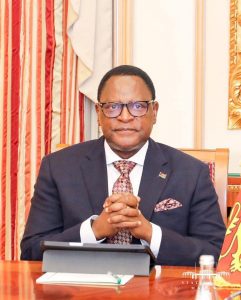
He emphasized that the benefits of the ECF include unlocking foreign direct investments into the country to strengthen productivity, saying “several development partners have already lined up a number of financial facilities that will boost the supply of foreign exchange”.
“This includes the World Bank’s US$60 million trade finance facility that will assist domestic banks to support importation of strategic commodities like fertilizer, pharmaceuticals and industrial raw materials.
“It also includes the World Bank’s US%217 million package in response to the fiscal reforms we have implemented, one third of which will be made available immediately.
“It also includes US$250 million from the World Bank for the agricultural commercialization project, which I will be launching tomorrow, from which US$30 million has been set aside for the procurement and distribution of maize to address the threat of hunger that is looming over several parts of the country.”


Advertisement
The President further said the support is also set to help his administration to meet all the requirements for 70 million Euros in budget support from the European Union, US$30 million in budget support from the African Development Bank, and US$6 million in support from the International Fund for Agricultural Development.
“These injections of foreign investment from our partners over the next four months will greatly enhance our foreign exchange reserves position and provide the macroeconomic stability needed for economic and business growth.
Apart from the injection of liquidity into our system, the ECF signals to private sector international investors that Malawi is back on track with being an investment friendly economy whose economic and financial reforms have met the strictest international standards.

Advertisement
“It is these investments that will power our plans to ramp up production in agriculture, tourism & mining in line with our ATM strategy, which includes scaling up the development of mega farms for exports, reorganizing and monetizing our minerals for reinvestment, and creating friendly conditions for eco-tourism.
“Additionally, many of you who run your own businesses and whose operations have been hampered by acute forex shortages can look forward to better and busier days for your business ahead, because the cornerstone of a strong economy is a strong private sector.
“In other words, the investment and business friendly environment that this IMF program will stimulate in our economy over the next four months is a fresh opportunity for us to rebuild our economy.”
He thus stressed that securing the ECF for rebuilding the economy “has come at a painful cost of enacting reforms in the management of our economy, our financial institutions, and our historic debt.
“I know that all of you are feeling the agony of the painful corrections we have had to make in order to give our economy a fresh start, and I want you to know that I have not made these painful corrections lightly.

Chakwera as he was being sworn in in June, 2020
“At my inauguration on Independence Day three years ago, I carried in my heart the heavy burden of knowing that you had trusted me to correct the mistakes in economic management I had inherited.
“In that moment, I knew that I had the choice of either telling you the truth about how bad things were or continuing the lies of the past that claimed that our economy was built on sound principles and practices.
“But I chose to tell you the truth that day, which is why I told you that the principles and practices our economy had been built on previously were so unsound like a dislocated bone that even correcting them to create economic liberation would cause enormous pain for all of you.
“That pain I spoke of is the pain we are all feeling now, and that pain is going to continue for the next few months as we complete the process of putting the dislocated bones back into place.
“But once this short painful season of sowing ends, I assure you that a season of joyful harvest will come but that joyful harvest will only come if we put this fresh opportunity for international support coming back to Malawi to good use.”

Advertisement