
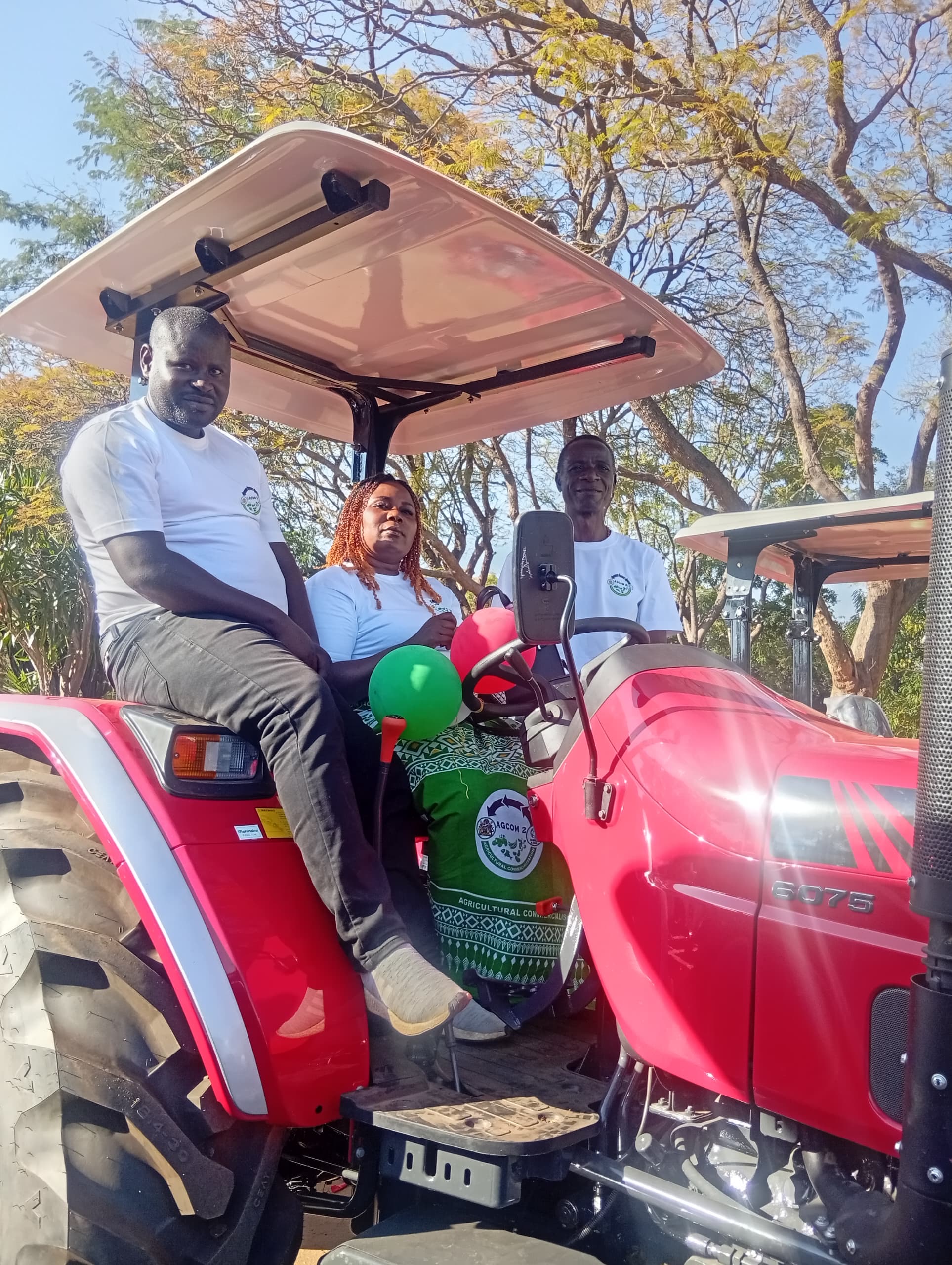
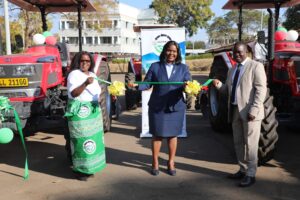
Amadoda Cooperative boosted with a tractor. In the middle is one of its women leaders, Jane Banda
* Alone, it is difficult to access resources and markets, but together, we have a stronger voice and better opportunities
* Cooperatives empower farmers to improve their livelihoods and build resilient communities
* I believe in the power of collective action, especially for women farmers who often face barriers in accessing resources and good markets
By Denis Mzembe, contributor
Women farmers have been encouraged to join agricutural commercialisation cooperatives as these associations help empower farmers to improve their livelihoods and build resilient communities.

Advertisement
“Alone, it is difficult to access resources and markets, but together, we have a stronger voice and better opportunities,” maintains Jane Banda — a proud member of the Amadoda Cooperative in Mchinji.
“Cooperatives empower farmers to improve their livelihoods and build resilient communities,” says Banda, whose serves on the executive committee of Amadoda, which is a beneficiary of Malawi’s Agricutural Commercialisation (AGCOM) project II.
The AGCOM project II is leaving an indelible mark and transforming the country’s agriculture mindset among many in the country and Amadoda, whose AGCOM funding included a tractor set to enhance its capacity to produce and market soya efficiently.
“As a woman leader, I am deeply committed to advancing the interests of our members and promoting inclusive growth within our cooperative,” she says. “I joined the cooperative because I believe in the power of collective action, especially for women farmers who often face barriers in accessing resources and good markets.
“Being part of Amadoda has empowered me to overcome these challenges and contribute meaningfully to my community’s development,” she says, adding that the cooperative specialises in high-quality soya beans production while collectively marketing the commodity and securing better prices and access larger, more profitable markets.
“This collective approach, she says, strengthens the cooperative’s bargaining power and economic independence,” says, while asking that the cooperative would appreciate more training focused on women’s leadership, modern soya farming techniques and cooperative management.
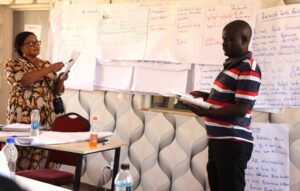
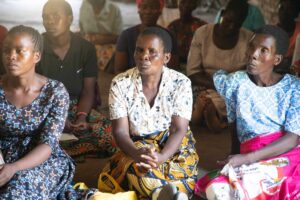
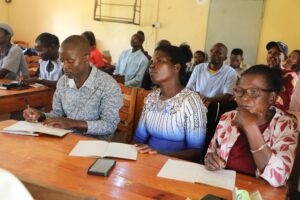
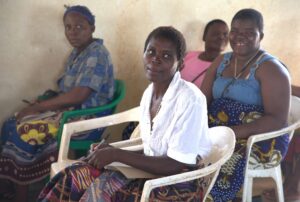
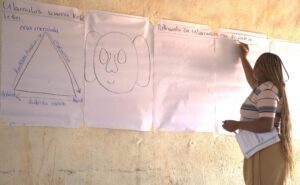
Cooperative members are properly trained in financial management skills
“Support in accessing new markets and women financing would also help us scale up our activities. We have already benefited from cooperative management training, which has improved our governance and inclusivity.
“Through the cooperative, I have gained access to vital resources like trainings and the aggregation centre, which is nearing completion. These have also boosted my confidence as a woman farmer and leader. The cooperative has been a platform for learning, growth, and empowerment.”
Banda adds that women often juggle multiple roles at home and in the community, which can limit their participation in most economic activities. Additionally, cultural norms sometimes discourage women from taking leadership roles.
“My advice to women is to be bold and persistent. Cooperatives are powerful vehicles for women’s economic empowerment — they provide a space to build skills, access resources, and influence decisions.
“I urge women to support one another and claim their rightful place in these organizations,” she says, adding that AGCOM’s support through grants has been transformative.
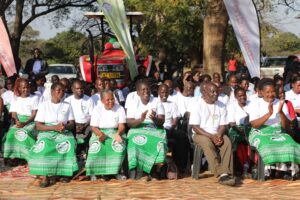
She emphasised that women are a vital force in agriculture and community development and through cooperatives, they can break barriers, gain economic independence, and lead change.
Amadoda treasurer, Fred Mwafulirwa, attests that that soya farming has potential, but better cultivated as a cooperative than an individual because together they are assured of better prices and affordable inputs.
“Together we are strong,” he says. “And AGCOM ensures that we access cheaper inputs, better soya prices, welfare support, pulled capital in shares, training opportunities in modern farming and cooperative operations.”
Mwafulirwa says Amadoda — which was formed in 2020 and has 63 members — has since received a K152 million package including construction of an aggregation centre, the tractor and much-anticipated implements to facilitate storage, grading and selling of soya in bulk.
“We are also being trained in good soya farming methods, we are linked to large soya buyers, helped with a processing machine and irrigation,” says Mwafulirwa.

Advertisement