

Ngoma (centre), a graduate from the Polytechnic in Mechanical Engineering Summary of Industry Skills & Experience (1986)
* It will attract foreign savers to deposit their money in Malawi commercial banks
* Thereby contributing to the accumulation of the foreign reserves
* Foreign direct investment (FDI) to Malawi will increase because of the stable economy
* And because the risk of kwacha exchange devaluation will be eliminated
By Duncan Mlanjira
Thomas Ngoma — a UK-based executive management consultant with over 35 years’ experience advising clients on strategic business transformation both in public and private sector regulated environments — envisions that investors’ confidence in Malawi economy is bound to increase.

Advertisement
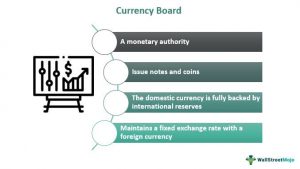
This is contained in his assessment of the Currency Board Administration (CBA) in Malawi, which he authored in September 22, in which he explained that a currency board is where a currency (M0) is backed either 50% or 100% by an anchor foreign currency such as the US dollar, British pound or the euro at a fixed exchange rate.
Management of the exchange rate and the money supply are taken away from the traditional central banking and handled by the CBA separately or within the central bank.
In addition to maintaining a fixed exchange rate, a currency board is also required to manage foreign reserves of the underlying anchor foreign currency such as the dollar.
Ngoma is a graduate from the Polytechnic — ( now Malawi University of Business & Applied Sciences (MUBAS) — in Mechanical Engineering Summary of Industry Skills & Experience (1986) as well as B.Sc in Manufacturing Systems Engineering attained at University of Warwick, UK (1988).
In his summary of key benefits of the CBA, said low interest rates will converge eventually to mirror the anchor currency country interest rates, adding that in the US interest rates are typically below 3%.
He said there will be low core inflation rate due to fixed exchange rate and elimination of the government deficits.
On the investors’ confidence, Ngoma said this “will attract foreign savers to deposit their money in Malawi commercial banks thereby contributing to the accumulation of the foreign reserves”.
“Foreign direct investment (FDI) to Malawi will increase because of the stable economy and because the risk of kwacha exchange devaluation will be eliminated.
“Malawi will never run out of forex again because:
a) foreign reserves will be invested overseas to earn dollar interest to grow;
b) attracting increased FDI will increase foreign reserves; and
c) and increased savers to deposit their money in Malawi commercial banks thereby contributing to the foreign reserve accumulation.”


Advertisement
He further said the kwacha will never be devalued again since it will be fixed to the dollar permanently and that the CBA will offer Malawi economy a platform to grow the economy and to industrialise.
“To industrialise, Malawi must initially import manufacturing machinery before eventually be able to make its own machine tools,” he wrote. “ There will no longer be economic crises in Malawi i.e., balance of payment dislocations that necessitate the need for borrowing from the IMF.
Highlights of the CBA include:
* Malawi will transparently exit the ECF program forever. This will mean no more following IMF lending conditionality;
* Malawi will no longer be under duress to go begging for funds to carry out normal economic activities;
* The CBA will also provide Malawi with a platform to launch portfolio investment such as Eurobonds since it will no longer be under IMF conditionality;
* Malawi will be able to launch derivatives markets. Currently Malawi has a gap in this area. It is missing out on this lucrative global market of quadrillion dollars financial derivative market;
* CBA will help usher in disciplined fiscal policy in the government to eliminate waste and prevalent deficits;
* Malawi credit rating will improve because it will no longer be operating in economic crisis mode under the IMF program as it has done since 1979;
* Implementation of the CBA will also help combat corruption because things will be transparent and based on the rule of law;
* CBA will be accountable to the public by regularly publishing its balance sheet and not to be secretive as is usually the case with discretionary monetary policy;
* The Malawian public will not need to get used to a new currency as they will continue to use their beloved Kwacha as before, only this time it will be a ‘hard currency’ kwacha convertible at any time to the dollar;
* The CBA route offers Malawi quicker economic reforms option than trying to reform the current discretionary monetary system to get it right;
* The new monetary system will support agriculture mechanisation importing of farm inputs thereby boosting farm productivity;
* Malawi will continue to earn seigniorage through interest rates on invested foreign reserves compared to ‘dollarisation’ (the use of dollar instead of the local currency) where no seigniorage can be earned by Malawi.

Advertisement
Ngoma also highlighted the advantages of the CBA system, currency board regime will bring economic stability to Malawi because it is rule-based in nature and it will offer stable exchange rates that will promote trade and investment.
“The discipline of not printing money to finance government deficits will restrict government actions to help tackle government wasteful or irresponsible practices,” he wrote. “The Currency Board will keep inflation low, stable, and predictable and it will keep interest rates low.
“CBA will encourage industrialisation in Malawi because initially investors will be able to import machinery for manufacturing without facing forex shortage or risk of devaluation.
“The increased investment has the potential to create millions of jobs and to spur rapid economic growth.
“CBA will improve Malawi external balance because of: i) increased influx of foreign savings; ii) increased FDI; ii) interest rates earned on accumulating foreign reserves and iv) reduced import levels due to government non-deficit spending restrictions.”

Advertisement
According to his background check, Ngoma’s work covers cross sectors in banking, finance & insurance, technology & telecommunication, mining & manufacturing, public sectors, aerospace industries, chemicals, oil & gas and pharmaceutical.
In terms of geography, he works across the globe in the US, Latin America, Europe, Asia and ANZ sharing industry best practices to address and solve business problems.
As well as devising strategies, Ngoma has extensive experience in managing program implementations controlling budgets, people management and scope as part of steering committees and influencing at corporate Board level.
He has extensive experience of industry application of macroeconomic accounting systems including ISIC 4, balance of payments (BPM 6), government finance statistics manual, monetary & financial statistics manual, SNA 2008 and debt sustainability analysis (DSA).
Based in London, Ngoma has successfully accomplished business analysis, strategy development and global corporate transformation implementations for the following public and private sector institutions around the world — that include:
* Zurich Financials, Zurich, Switzerland and US, Turnover US$70b an insurance and financials company;
* Axa Insurance, SA, Paris, France Turnover €103 bn, an insurance and banking global corporation;
* Deutsche Börse Group (Frankfurt Stock Exchange), Frankfurt Germany;
* Manchester Airport Group, Manchester, UK; Deloitte UK, Atos KPMG UK;
* IBM Global Services, Israel; Aramco, Saudi Arabia; Unilever/ Upfield PLC, UK , Turnover €52bn;
* The UK Dept of Business, Energy and Industry; National Grid/Cadent Gas, UK;
* London Net Solutions Ltd, Central Banking Policy and advisory;
* London Net Solutions Ltd, Currency Board Review of Estonia, Hong Kong and Russia;
* Boehringer Ingelheim Pharmaceutical, Germany, Mexico and Brazil, Turnover €21bn;
* ICL Mining and Chemical, Israel and Netherlands; Dell Computer Corporation, Ireland;
* Kellogg’s Australia and US, Turnover $13bn; Coca Cola Amatil, Australia;
* BASF Germany and in US, Turn over €78.6 bn;
* Vodafone Plc, Hungary;
* Sanofi Aventis, France;
* HCL Technologies Turnover $10bn;
* Evonik Industries €15bn turnover, Germany and Rolls Royce Plc.

Advertisement